Sunday, 22 March 2020

Reflections on characters and themes in "Spartacus" (1960)


Reflections on “Spartacus”

Written by Dalton Trumbo

Directed by Stanley Kubrick

Starring Kirk Douglas, Laurence Olivier, Charles Laughton,
Jean Simmons and Peter Ustinov


A video presentation of this material is available here.

This film from 1960 recounts the true and inspiring story of Spartacus and his fellow slaves who led a revolt against their Roman enslavement often referred to as the Third Servile War, in or around 72 BC. More broadly speaking, the film presents a denunciation of slavery and any society that prospers by incorporating subservience and subjugation in its ethos and laws.

The Roman Empire was founded on a society that embraced slavery, developed it and thrived on it, making it an integral part of social and economic systems for centuries. In the film, we are invited to observe the customs, attitudes and workings of this society, and the potential consequences of slavery, through a variety of Romans as well as slaves.

The quarry guards at the start of the film set the scene, showing no regard for the wellbeing, dignity or worth of their slave charges and treating them as animals to be commanded and directed.


Batiatus, the owner of a local gladiatorial training school, arrives at the quarry in search of candidates for training. He treats the slaves as objects or animals to be inspected, judged and bought if considered a worthwhile investment. Batiatus is depicted as cunning, obsequious and cowardly, but he is not cruel or vindictive. He accepts the status quo and acts as a typical Roman citizen, pursuing his own best interests in the established social order, fawning over Patrician visitors of high social rank while displaying little or no consideration for his slaves’ feelings, rights or thoughts. They are an investment, objects to be used, trained and sold off at profit with no thought for their self-respect or destinies.

The trainers at the school may be men who have fought as gladiators and received their freedom for having pleased their masters in the arena. As such, and having known the conditions and social position of slave-gladiators, they enjoy exercising authority over Spartacus and his co-slaves, seizing the opportunity to feel superior to someone and boosting their self-image.


The upper end of the social spectrum is represented by Crassus, one of the wealthiest men in Rome and one who seeks ways to realise his Patrician ambitions to become ruler of Rome and its Empire. He arrives at the gladiator school with some noble friends who wish to see a display of gladiatorial skill, including a fight to the death. Batiatus is most reluctant to accede to their request, realising the consequences on mood and morale of his trainees, but these noble visitors insist, offer to pay Batiatus well and go on to treat the spectacle of two men fighting to the death as mere entertainment and even haughtily and distractedly discuss matters of politics and position in the course of the life-and-death combat. This reveals a quite shocking indifference toward the lives of these slaves, but also toward humanity as a whole.


We are also introduced to Senator Gracchus, an ageing and wily opponent of Crassus who keeps slaves but is determined to maintain a happy household. His is the slightly more acceptable and more human face of Roman dictatorship. He even appears willing, at one point, to allow Spartacus and his followers to leave Italy, but can he survive the political chicanery at play, and the desire to protect and maintain Rome’s position and power based on authority and the merciless exercise of its might?

In terms of its attitude toward those who enabled it to survive, thrive and prosper, Roman society is portrayed as condescending, dismissive, self-centred and decadent. It sowed the seeds of its own destruction as it instigated and incited resentment and hatred based on a profound sense of injustice. The very lack of hope and expectation that permeated treatment of slaves and the lower orders, and which was intended to facilitate subjugation and compliance, only served to nourish bitterness, courage and daring among our slave-gladiators – if people are left with no reason to live, they may as well die in trying to find one.


From the opening scenes in the quarry, emphasis is laid on the deprivation of freedom, rights, dignity and personal choice of slaves. They are viewed as human objects, there to do the bidding of their master. Enslaved as a result of conquest, defeat or from birth, they are divested of hope and expectation as they belong to another.

Spartacus has refused to bow to this destiny and he displays resentment as he rebels against quarry guards who show no humanity or compassion toward weak and exhausted slave workers. In contrast, Spartacus shows a desire to help a fellow slave worker but is punished for it.
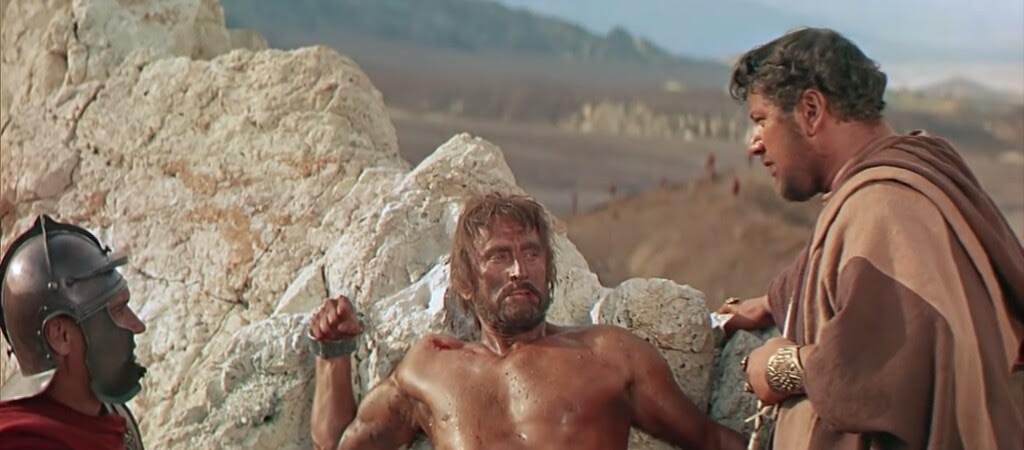


In training, he shows intelligence, self-control and some warmth toward his fellow slave-gladiators. When offered the company of Varinia as a reward for his performance in training, he shows respect and behaves with dignity, refusing to take advantage of her. Again contrasting with his Roman captors, Spartacus favours empathy, compassion and sincerity. He develops feelings for Varinia which he conveys through the gentle touch of a hand, a touch Varinia finds almost overwhelming as, like all the slave women at the training school, she is treated as a chattel to be used by her master as he sees fit, with no consideration of her feelings or emotions.

Communication and camaraderie are frowned upon or forbidden – fellow trainee Draba explains to Spartacus that offers of friendship are to be rebuffed as gladiators may have to kill one another in the arena. However, this common experience of brutality and a fight for survival creates its own underlying bond. Suffering unites and a spark of humanity and caring can be enough to ignite a sense of fraternity and rebellion, and may result in solidarity founded on loyalty, hope and above all a respect for the humanity and compassion of which they have been deprived. These elements, leading to community, spirit and mutual affection, cannot be matched by Rome’s discipline and offers of self-advancement.


This is embodied in the vain attempts of Crassus to win the respect and affection of Varinia after the defeat of the rebellion. Crassus fails to comprehend the difference between wealth, comfort and position and respect, principle and sincerity, suggesting that lower social orders, through experiencing deprivation, may have learned more about what is important in life than wealthy, conquering Romans.

The film is largely faithful to genuine historical events, though records are incomplete and poetic licence has been taken for dramatic purposes. Spartacus was indeed a Thracian but it is reckoned he may have spent time as a soldier and been sold into slavery after a defeat, especially given his skills in military strategy.


The script by Dalton Trumbo is literate, engaging and human. It incorporates references and details offering historical information on the lives of slaves and gladiators but this is personalised as the script focuses on Spartacus and his fellow slaves. Of course, the points made can be applied to many oppressed groups who find strength and humanity in the face of victimisation and injustice.

It is interesting to note that it is Draba, the African slave gladiator, who initially rebels against Roman callousness and indifference and whose death inspires and motivates the others to rebel, perhaps drawing attention to the situation of African Americans and the civil rights movement in early 1960s America.

The famous and immensely moving scene in which rebel slaves refuse to denounce Spartacus and proclaim “I am Spartacus”, thus sharing responsibility and condemning themselves to death, was undoubtedly a reference to events surrounding the House Un-American Activities Committee. This group investigated so-called communist infiltration of American society in the 1950s and condemned numerous Hollywood scriptwriters, many of whom refused to denounce others and paid the price by being blacklisted. Dalton Trumbo was himself blacklisted and his inclusion on the film’s list of credits is famously considered to have helped break the embargo on targeted writers.
The direction by Stanley Kubrick is intelligent, clear and emotionally engaging, and the music by Alex North complements and enhances both the battle and more intimate scenes.


In terms of performance, Charles Laughton and Laurence Olivier make their characters human and multi-facetted, lending complexity and compassion to what could easily have been two-dimensional antagonistic roles, while Jean Simmons beautifully conveys the resignation, hope and inspiration of her character. While Batiatus plays an essential role in the drama and general proceedings, Peter Ustinov manages to imbue his character with a certain vulnerability and even some comic relief. Kirk Douglas wreaks sincerity and belief in the cause which underpins his film, and this is certainly one of the highlights of his long and illustrious career.


My thanks for taking the time to read this article. I hope you found it of some value.

Stuart Fernie

I can be contacted at stuartfernie@yahoo.co.uk .


Friday, 6 March 2020

Reflections on "The Bridge on the River Kwai"


Reflections on “The Bridge on the River Kwai”

Directed by David Lean

Written by Carl Foreman and Michael Wilson,

Based on the book by Pierre Boulle

Starring William Holden, Jack Hawkins and Alec Guinness


A video presentation of this material is available here.


It is early 1943. A group of British POWs under the command of Colonel Nicholson arrives at a Japanese prison camp in Burma, commanded by Colonel Saito. Saito has been set the task of constructing a railway bridge across the river Kwai as part of the railway line intended to link Bangkok to Rangoon, and in part to ensure its completion by mid-May, he insists that all prisoners, including officers, should participate in the construction. Colonel Nicholson points out that the inclusion of officers in work parties contravenes the Geneva Convention, leading to a confrontation between the two commanding officers. Nicholson is beaten and then incarcerated in a corrugated iron container, next to his officers, as the Burmese sun beats down on them until one side or the other concedes.

Such is the opening of this gripping and thought-provoking, yet entertaining, anti-war film.


Saito’s insistence on officer participation and the conflict that entails is based not just on practical considerations, but also on a cultural divide. According to the Japanese viewpoint, these POWs, who were not defeated in battle as they were ordered to surrender by their superiors, are disgraced, have no honour, dignity or personal worth exactly because they surrendered. They are no longer to be considered soldiers but prisoners, to be used by their Japanese captors as they see fit, and this applies to all prisoners, enlisted men and officers. Saito states that the rules of war do not apply as his prisoners have not behaved as soldiers.

Clearly, by adopting and pursuing policies of threat and intimidation, Saito hopes and expects that his prisoners will accede to his authority and offer no resistance. However, Colonel Nicholson considers rules and principles the backbone of civilised society and he will not give in to physical abuse. He refuses to accept the yoke of defeat or bend with the wind of pragmatism. He and his men may have surrendered as ordered, primarily to save lives, but they remain who and what they were and retain the honour, dignity, pride and values they exemplified before their capture. Spiritually, they remain undefeated, and so the scene is set for a stand-off between these two men who represent different cultures and differing values.


Nicholson readily accepts responsibility for the conduct and wellbeing of his men, including the necessity to inspire belief and confidence in the values he and they seek to represent. Indeed, Saito’s actions inadvertently provide the means of maintaining the men’s fighting spirit. Not submitting to pressure provides a sense of purpose and value, and serves to unify the British soldiers against perceived injustice, when Saito sought to appeal to a sense of disappointment and a feeling of dishonour, a further consequence of differing cultures and perceptions.

In the meantime, work continues on the bridge but, under poor Japanese direction and planning, progress is slow and limited. It becomes clear that success will require not just a workforce but experience and knowledge as well, elements which, Nicholson points out, could be provided by the British officers currently held in isolation, if the rules of the Geneva Convention were to be upheld.

Saito concedes but contrives to find a way of maintaining his position and saving face, but it is clear that Nicholson has won the day. It is also clear that respect and co-operation are more likely to bring about success than attempts to coerce one side into submission.


Upon his release and recovery, Nicholson is concerned by the poor discipline and attitude of his men. He recognises the need to restore discipline and good order, and he decides the best way to do that is to give the men a purpose. He sees the construction of the bridge as a tool to maintain the spirit of his men, but also as a means of embarrassing and humiliating their Japanese captors by planning and building a bridge that is superior to anything their captors might produce.

Of course, the irony is that in so doing, the enemy cause is also being advanced. However, Nicholson refuses to see beyond the immediate effect on the morale and discipline of his men. This has the secondary, and unintended, consequence of steadily undermining Saito’s authority as the British officers take decisions and make demands regarding the bridge. Saito is acutely aware of this effect, but to take steps to reduce their input or to rail against their involvement would be counter-productive. Thus, Saito is embarrassed and weakened by the successful progress of his task because he cannot claim control or credit.

Counterbalancing these men of principle, we have Commander Shears, an American officer whose outlook is heavily and amusingly influenced by self-interest and survival. For all he lacks the moral fibre of Nicholson and Saito, Shears is intelligent, resourceful, courageous and determined. He manages to escape, along with two others who die in the process, and, suffering considerable hardship, he eventually makes it to a military hospital where he contemplates his discharge from the army on health grounds.


Shears is a sort of common-sense everyman who just wants to be allowed to lead his life as he wishes. In fact, we discover he is not an officer at all, but has merely impersonated one in order to take advantage of the better conditions offered to officers, a clear example of his resourcefulness. He is somewhat sceptical and is unswayed by matters of principle, and he offers a lighter and refreshing approach to the problems of war. He becomes involved in a plan to destroy the bridge because his military superiors have offered his services, indicating that as long as the war lasts, his life is not really his own. In the great scheme of things, he may be a little man but he is capable of great actions and recognises, however unwillingly, the value of the mission he is about to undertake. He also supplies a certain comic relief at times from the intense drama, while remaining likeable but at risk.

He is recruited by Major Warden, a commando in charge of an operation whose purpose is quite simply to disrupt the enemy war effort as much as possible, in this instance by ensuring the bridge on the river Kwai is destroyed.

Warden is a man of action. Something of an academic in private life, he trains men and leads them on dangerous undercover missions. In keeping with other British officers, he is keen on principle, planning and the application of rules for all eventualities, down to killing comrades rather than allow them to fall into enemy hands. There is no doubting his courage, determination and commitment, but while these are positive qualities, training and unquestioning loyalty can lead to a rather blinkered view of situations.


For Warden and his small group of men, the bridge is a target whose destruction will hamper the war effort of the enemy. As they move on the bridge, crossing hostile terrain and encountering enemy activity, there is ample opportunity to admire the skill, courage and resolution of these men.

We are reminded, however, of the human cost of their actions. Killings are quite brutal and painful, and not without physical and psychological damage to the survivors. At one point, the young and relatively innocent Lieutenant Joyce comes face to face with a young and terrified Japanese soldier. Both hesitate and both are afraid, suggesting, perhaps, that neither wants to be in this situation that has been inflicted on them and is not of their making. The human cost of conflict is brought home in this up-close-and-personal confrontation and quandary which is decided by Warden who is willing to take a life, painful though he finds it, for the sake of the cause he is fighting for.


By now the bridge is all but complete and is due to carry its first train and passengers. Nicholson’s plan has worked. He and his men have, indeed, produced a magnificent feat of engineering and construction, and it has served its purpose of sustaining discipline, order, pride and dignity, to the extent that even the sick are willing to leave hospital to help out and Japanese soldiers have been conscripted into service to complete the bridge on time. Effectively, Nicholson has taken over the running of the camp as he supervises all aspects of construction and issues orders regarding its completion. In the process, he has dealt profound psychological damage to Saito for Nicholson has achieved far more by appealing to the spirit and pride of his men than Saito could have done by force and brutality. Saito has virtually been reduced to a role of camp administrator and, with his ego and pride severely dented, he contemplates suicide.

Both Nicholson and Saito are so self-involved and obsessed by position, honour and principle that both fail to see the bigger picture and the obvious, that the Japanese war effort has been advanced by the building of this excellent bridge, yet the captives are celebrating what has become their victory over their Japanese guards while the captors are commiserating over what is viewed as their dishonour.

Warden, Shears and co see the bridge from a wider perspective and are set to blow it up, but as a result of the lowering of the level of the river, Nicholson spots wires which lead to a detonator and, wishing to protect his pride and joy, he sets out to investigate, putting himself, Saito and the commando unit at risk.


In the resulting fracas, Shears and Joyce are killed while trying to prevent Nicholson’s exposure of the detonator, and Saito and Nicholson are fatally wounded and die, though not before Nicholson comprehends what is happening and realises he has acted against the interests of the Allied forces. He falls on the detonator, destroying the bridge and the train which had started to cross it. Warden is the sole survivor of the group but he is riddled with guilt as, blindly following his training, he fired on his own men to save them from falling into enemy hands.

From a vantage point above all this mayhem and death, the British doctor, who has expressed doubt over Nicholson’s policies in the past, is left stunned and bewildered by what he has just witnessed, repeating “Madness, madness…”. Just as Warden and co saw the bridge from a wider perspective than Nicholson and Saito, so the doctor, from a suitably higher standpoint, sees the whole from an even loftier perspective. All the pain, effort, endurance, courage and determination on the part of both those who built the bridge and those who destroyed it, have led to this point – the destruction of everything and the deaths of just about all involved. Great things can be achieved with time, effort, co-operation and resolution, but they can be wiped out in an instant through petty differences, intolerance and conflict, with no winners or losers in the end, just devastation.


At the beginning and end of the film, birds of prey are seen circling, as if in wait for man’s inevitable self-destruction. The Earth and nature will continue even if man squanders his opportunity to thrive and develop.


The script by Carl Foreman and Michael Wilson cleverly and skilfully combines reflection, action and humour, while the direction and photography make you feel the heat, discomfort and pain endured by the POWs, allowing you to appreciate the natural beauty of the landscape at the same time. David Lean tells the story masterfully, capturing the feelings, motivations, personalities and development of his characters as well as creating tension and excitement in the action sequences.

All the lead actors handle their roles with confidence and flair, and receive superb support from their co-stars. It should be said, however, that third-billed Alec Guinness steals the show, perhaps because of the emotional intensity and the understated and inspirational, if slightly misguided, heroism he brings to the role.

The music by Malcolm Arnold and the use of “Colonel Bogey” only enhance our emotional engagement.


This is a great war, or anti-war film. It allows us to admire the personal qualities of the characters yet it invites us to see the whole from a wider perspective, emphasising the pain, wastefulness and overwhelming destructiveness and futility of war.


My thanks for taking the time to read this article. I hope you found it of some value.

Stuart Fernie

I can be reached at stuartfernie@yahoo.co.uk .


Saturday, 22 February 2020

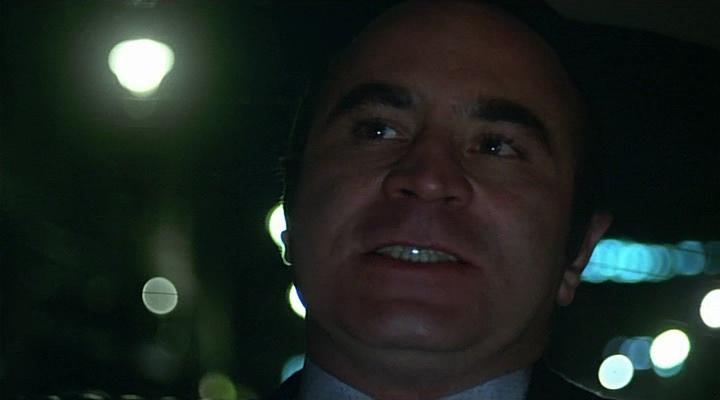
Reflections on "The Long Good Friday"


Reflections on “The Long Good Friday”

Written by Barrie Keeffe

Directed by John Mackenzie

Starring Bob Hoskins and Helen Mirren


A video presentation of this material is available here.


Gangster films may hold a certain fascination and present an intriguing insight into amoral chicanery, corruption and crime, but they rarely evoke sympathy or affection for their main character.

“The Long Good Friday” is an exceptionally fine example of a gangster film which manages to lay bare the potential realities and consequences of underworld activities and schemes while somehow retaining a degree of compassion and understanding for Harold Shand, the London gangland overlord of the film.


Interest and intrigue are created firstly by the format of the narrative – this is not merely an exposition of nefarious activities, but is presented as a mystery thriller. Crimes take place right from the start, aimed largely at damaging Harold’s “corporation”, though there is no clarity as to responsibility, motive and purpose. The audience is therefore in the same position as Harold, in terms of understanding, as he suffers bewildering and deadly attacks on his property and personnel, establishing a certain affinity from the start as Harold may be seen as a victim.

Harold presents himself as an ambitious, determined businessman with a plan to make it big in property and land development in the run-up to a potential bid for London to host the Olympic Games in 1988. He is keen to involve the “right people” and his friends in his scheme.

It is clear Harold wishes to succeed in legitimate property dealing and development but it is equally clear he is in the habit of using underhand and dubious tactics to achieve such “legitimate” success.


As in many other gangster films, our “hero” makes use of corrupt council and government officials and police officers who are more than willing to accept payment to facilitate whatever scheme Harold has in mind. Unlike other gangster films, however, these characters are developed to some extent, contribute to the film’s plot and allow us to see another side of Harold’s nature.

Harold is a complex character. He shows enthusiasm, dynamism, care, pain, regret, grief, nostalgia, sociability, loyalty, ambition and pride. He is also capable of acts of callousness, viciousness and brutality. Something of a rough diamond, he aspires to classy trappings and proceedings yet is relatively uncultured but genuine in his sentiments. Above all else, he is human.

His romantic companion is the upper-class Victoria, an intelligent and seemingly well-educated lady who appears to hold Harold in genuine affection and who is happy to nurture and direct Harold in his more legitimate business dealings and events.


For all that, Harold is the victim of deadly bombings and at least two of his “corporation” are killed, leading to his investigation to find and punish those responsible. As he gets more desperate, his thuggish nature comes to the fore and his methods become increasingly violent, from which we may impute just how he attained his exalted position in the London underworld. It is also in these circumstances that we feel the effect of the genius of the script, direction and performance, for despite Harold’s vicious and brutal assaults on others, we remain on his side.


Perhaps this is because within this amoral community, each is as bad as the other. Perhaps it is because we feel Harold is being unfairly targeted. Or perhaps it is because we have seen and shared his inner feelings, understand his ambitions and motivations and admire his familial attachment to loyalty. Whatever the reason, we feel he is defending himself and is using methods familiar to and accepted by his colleagues and enemies who all operate by the same rules.

Of course, peace between competing underworld groups will only hold if all are advantaged, and Harold is feeling distinctly disadvantaged. Gradually, the veneer of respectability, diplomacy and working relationships is revealed to be a façade as Harold takes ever more desperate measures to discover who is persecuting him.

Through no fault of his own, and as a result of coincidence and greed on the part of his underlings, Harold now faces the wrath of the IRA. Harold is warned by corrupt policeman Parky and especially his scheming protégé Jeff that he cannot deal with the IRA in the same way as he might deal with underworld competitors because they are political, are fighting for a cause and will not adhere to the accepted rules of underworld behaviour. This slight to his ego, combined with an unaccustomed sense of powerlessness and desperation to uphold his position, push him over the edge and, in a rage, he kills Jeff and goes on to try to deal with the IRA in the only way he knows how, by extreme violence.


In the end, Harold pays the ultimate price for his blinkered vision and too late realises the limits of his strong-arm approach based on intimidation against an enemy not motivated by mere greed and personal advancement.

What makes this film so compelling is not the comeuppance of a vicious gangland thug, it’s the fact that the clever script and direction build a picture of a very human and likeable gangster under siege and we have sympathy, even a certain affection, for him despite his awful deeds. A considerable achievement.

Bob Hoskins brings Harold Shand to dynamic life and we share his incomprehension, his loss, his fervour and his determination. Without the element of engagement and empathy he brings to the role, with the able support of his co-stars, this would have been a good but relatively ordinary gangster film, but instead it is transformed into a character piece of extraordinary power. Mr Hoskins may have produced many equally admirable performances, but I’m not sure he ever had a role that was more memorable.


Altogether, this is a fast-paced and emotionally engaging thriller made with vitality and verve, and special mention should be made of the catchy, dynamic and oh-so memorable music by Francis Monkman.

My thanks for taking the time to read this article. I hope you found it of some value.

Stuart Fernie

I can be reached at stuartfernie@yahoo.co.uk


Friday, 7 February 2020

Reflections on “Once Upon a Time in Hollywood”


Reflections on “Once Upon a Time in Hollywood”

Written and directed by Quentin Tarantino

Starring Leonardo DiCaprio, Brad Pitt and Margot Robbie


A video presentation of this material is available here.


The first point to make about “Once Upon a Time in Hollywood” is that, absorbing though it is, it does not have much of a plot. Essentially it is a snapshot, à la Tarantino, of Hollywood and its multitude of influences on popular culture in 1969, though there is a nod toward a linking plotline by incorporating references to the real-life Manson Family and the infamous murders they committed at that time. However, even that unifying plotline based on historical figures is manipulated and altered to suit Mr Tarantino’s vision for his film.

The film consists largely of a nostalgic revisiting of the atmosphere, fashions, music, films, television, transport, language and mores of what is frequently referred to as the end of the Golden Age of Hollywood. Virtually every scene recalls some element of the time in which it is set and that alone makes the film highly enjoyable for viewers of a certain age. We also encounter numerous actors and personalities of the time, adding to the sense of nostalgia and giving the audience some insight into their true natures, as perceived by Mr Tarantino.


All this is conveyed principally through the experiences of Rick Dalton, a former TV star whose career is on the wane, and Cliff Booth, Rick’s loyal and down-to-earth stuntman and friend. These characters, their relationship and their dealings with others are quite brilliantly captured and conveyed. There can be no doubt whatsoever about Quentin Tarantino’s talent as a writer. In this film, as in his others, he creates complex characters whose traits, strengths, weaknesses and quirks are all conveyed in exchanges with others without recourse to direct exposition. We have a clear idea of what makes these characters tick through their dialogue and their attitudes displayed in interaction with others.


Though recognisably derived from the careers of a couple of Hollywood icons, Rick is nonetheless his own character – he is sensitive but ambitious, talented but self-doubting and confident yet given to angst and stress. He stammers slightly when dealing with his own affairs yet speaks clearly and confidently when in character, suggesting he is at ease only in others’ skins.


Cliff, on the other hand, seems entirely happy in his own skin. He is quietly confident, does not impose his views but is willing to express himself and act on his convictions as required, and is loyal, reasonable, realistic and unburdened by huge ambition or ego. He appears to be happy with his modest lot and is Rick’s best friend.


They appear to balance, complement and enable one another, allowing each to be more successful than he would be without the other’s input. Cliff offers a calm foundation to Rick’s anxiety-laden but talented aspiration. In the end, Cliff deals with reality, values and action while actor Rick deals with ego, people and direction. Combined, they make an effective unit.

Brad Pitt is convincingly natural and thoroughly engaging as the solid, self-assured stuntman and friend who may serve as a source of security and authenticity for his friend and employer, Rick. Leonardo DiCaprio is equally impressive as the sensitive and angst-ridden Rick, capturing the insecurity, skill and drive of a dedicated and ambitious actor.

In contrast to Rick’s tortured approach to acting and fame, we see Sharon Tate enjoying her stardom and gaining pleasure and satisfaction from the audience reaction to her scenes with Dean Martin in “The Wrecking Crew”, a light and breezy James Bond pastiche. Quentin Tarantino may have intended us to draw comparisons between this airy and undemanding approach to film-making and acting, Rick’s desperate and self-absorbed efforts to prepare and get into character and, of course, the calculating, intelligent and professional 8-year-old Trudi Fraser (who may represent the coolly analytical younger generation of actors).


However, all of them compare badly to Cliff who may be Quentin Tarantino’s most admirable character to date as he behaves like a thoughtful and caring human being while the others act and indulge themselves. I wonder if Mr Tarantino is pointing out the difference between reality and façade.

Tarantino’s characters are always clearly defined, quirky and memorable, even his minor characters, and thus the interaction between them is always entertaining and of interest even if their encounters don’t always serve to immediately advance the storyline. He has the talent and confidence to spend time establishing and developing character rather than constantly drive forward the plot.

Of course, this can be a difficult balancing act to achieve. While the building of character may strengthen emotional and intellectual engagement with the figures in a film, if that film seems to be going nowhere or lack any clear or consistent direction, such engagement will tend to dissipate. Mr Tarantino does seem to invest heavily in characterisation, often at the expense of pace and plot development.


At various points in this film he injects, very effectively, unease and even foreboding with regard to the Manson Family. He creates a sense of danger and threat, though this is not really in keeping with the atmosphere of the rest of the film and it doesn’t provide an effective story arc that might have drawn together the various component parts. Each element works very well, but they don’t blend to make a harmonious and integrated whole.

The confrontation at the end of the film involves members of the Manson Family and although this is outrageously entertaining, it is certainly not in keeping with historical fact. It was only as the end titles appeared that it struck me Mr Tarantino was perhaps tilting at Hollywood’s tendency to re-write history and has provided a satisfying ending in which the perpetrators of a hideous and savage crime get their comeuppance, while the positive and touching portrayal of Sharon Tate serves to underline the tragedy and brutality of her murder. That said, within the framework of the film, this ending does rather call in to question the need for her very presence in the film.


I thoroughly enjoyed this film as I was watching it – I found virtually every scene involving and entertaining. It was only on reflection that I began to question its narrative strength and overall direction. Mr Tarantino’s great and undeniable strength is his writing of characters and their interplay, but they are not always supported by a lucid, engaging and consistent storyline. He has utter belief and confidence in his own judgment, imagination and constructed world. He exercises control over and teases his audience as he effortlessly and entertainingly dips into elements of different genres and explores character and relationships, but the danger is that substance and relevance may fall victim to his playful and often self-indulgent direction.


My thanks for taking the time to read this article – I hope you found it of some value.

Stuart Fernie

I can be contacted at stuartfernie@yahoo.co.uk