Friday, 4 March 2022

Reflections on character and themes in “Lonely are the Brave” (1962)


Reflections on “Lonely are the Brave” (1962)

Directed by David Miller

Script by Dalton Trumbo

(from “The Brave Cowboy” by Edward Abbey)

Starring Kirk Douglas, Gena Rowlands, Walter Matthau and Michael Kane

This is a deceptively straightforward tale of pursuit in which the very nature, framework and direction of our constantly expanding, increasingly complex and, perhaps, ever less compassionate society, are examined.

The main character is Jack Burns, an itinerant cowhand who objects to any infringement of his right to wander where he chooses and to any regulation he considers unreasonable and which impinges on the lifestyle he has chosen. Other characters are explored to some degree but they remain largely secondary in that their principal purpose is to shed light on or draw comparison to Jack Burns. That said, Sheriff Morey Johnson, unlike several of his robotic or seemingly dim-witted colleagues, offers an interesting juxtaposition to Burns’ calm and individually anarchic attitude in that while he enforces the laws to which Burns objects, he displays sympathy, understanding and humanity in his dealings with others, thus making for a more interesting and less unequivocal clash, and even adding a touch of pathos to the proceedings.

From the outset, our view of Jack Burns is one of a man of modest means at peace with himself and at one with nature. As he relaxes in the company of his frisky but friendly young horse, Whiskey, his reverie is disturbed by the noise of military jets flying high overhead. This image gently and rather poetically introduces us to one of the main themes of the piece – the conflict and contrast between the old and the new, or working with nature and attempted technological mastery of it. The fact these are military jets may also have served as a reminder of the influence of the military in society at that time.

Shortly after this introduction, we see Jack, astride Whiskey, try to cross a tremendously busy highway, a short journey that almost ends in disaster. Once again, this invites comparison between the relative simplicity of the old and the complexity of the new, with Jack and Whiskey’s old-fashioned, close and co-dependent partnership almost losing out to the fevered, relentless and ruthless modern traffic as Jack insists on going in the direction he has chosen in spite of the obvious danger and threat.

These scenes give us essential information about Jack’s determined yet modestly content character while also providing a broader comparison between the relatively calm and gentle world as it was, and the noisy, pressurised and mechanical world as it is. This is a theme that will be revisited, and we will return to the image of the highway at the end of the film.

After a considerable absence during which he has exercised his freedom to go where he wished and found transient work as a cowhand to earn his living, Jack pitches up at the home of his friends Jerry and Paul and receives a warm welcome from Jerry. When he discovers that Paul is in jail because he offered help to some illegal immigrants, Jack leaves half his money for Jerry and hatches a plan to get himself arrested in order to see and assist his friend. Values, friendship and self-respect appear to be more important to Jack than financial gain or personal ambition and security.

It becomes clear in the course of conversations with Jerry and Paul that Jack is a man who dislikes boundaries and laws that interfere with his view of natural order and justice. He is happy to lead a simple life and show respect and consideration to others if these qualities are reciprocated. However, it may be that as society has grown and developed, and as members of it have become increasingly self-absorbed and callous, they have distanced themselves from natural justice and have had to impose extensive rules to try to ensure order and fairness, rules Jack sometimes finds questionable. For example, he admires Paul’s attempts to lend a helping hand to illegal immigrants because he does not recognise such a categorisation, saying we are all human beings and implying we should all be humane, sympathetic and helpful to one another.

He sees and reluctantly accepts Jerry and Paul’s argument that Paul’s capacity for defiance is impaired by family commitments and responsibilities, but Jack is unburdened by such restrictions. He sets about manipulating situations and rules to his own ends in order to get himself arrested and then refuses to accept legal and physical constraints by breaking out of jail. He does all this out of loyalty and devotion to his friend but also because he feels rules and laws may not always serve the ends of natural fairness and justice, leading to personal doubt over their authority.

While in jail, Jack provokes the ire of a deputy sheriff as he advises against allowing anger and negativity to dominate the officer’s outlook. This officer abuses his position and authority to exercise dominance, covering, as we shall learn, fear and personal cowardice, and he takes revenge by beating Jack but Jack remains unbowed – he has been beaten physically but not spiritually. He rather calmly accepts his fate, offers no complaint and sets about his business of escaping. This episode reveals or confirms an inner strength and conviction in Jack. He expects trouble from others but he displays tolerance and understanding as he accepts their decisions and actions but he is quite undeterred from his path to personal freedom and independence. It seems that each person must follow his or her own existential path.

As Jack and Whiskey climb a mountain, beyond which lie Mexico and freedom, there is a series of pursuits and confrontations which underline the contrast between the old and the new, or nature and technology. The terrain is ill-suited to four-wheeled vehicles so Sheriff Johnson calls in a helicopter which all concerned rather smugly assume will bring Jack’s escape bid to an end. However, Jack cleverly manages to bring down the helicopter without overly endangering the pilots’ lives, emphasising his self-control and humanity, in contrast to the increasingly desperate and often undisciplined efforts of the authorities to catch him. Jack even shows restraint and self-discipline when he outwits Gutierrez, the officer who beat him in jail, leaving him unconscious but not seriously wounded when Gutierrez tries to capture him.

Jack limits himself to self-defence. He does not carry the fight to his pursuers as he merely seeks to exercise his freedom to go where he wants and do as he pleases, so long as no-one else is harmed. However, he is somewhat hampered in his efforts by Whiskey and her difficulties in climbing the steep mountainside. At one point he considers leaving her behind but his sense of loyalty and partnership overwhelm him. Just as Whiskey has helped him get this far, he feels he must help Whiskey get even farther. Again, this contrasts markedly with the cold technological efficiency (or inefficiency) of his pursuers.

Toward the end of the film, Jack and Whiskey once more arrive at a busy highway which they must cross in symbolic darkness, suggesting lack of clarity and hope, if they are to gain their freedom. The road itself may be viewed as a symbol of time and change and the heart-breaking collision between Whiskey and a noisy, speedy and stress-inducing truck may represent the clash between Jack’s old world and the new order of things.

When Whiskey is put out of her misery, Jack is traumatised. He is physically injured but more importantly, he has lost the tender and caring partnership he had formed with his horse and, by extension, with nature itself, and he is stunned and disorientated.

The old, represented by Jack’s hat, is being swept away in doom-laden darkness and a flood of relentless rain and change while in the last shot, Jack is carried off to hospital for treatment and, perhaps, rehabilitation.


In an act of compassion that gives us hope for humanity, Sheriff Johnson decides not to delve into the identity of this injured and traumatised cowboy, perhaps because he knows that the cowboy has lost everything that was of value to him.

Sheriff Johnson appears to be a reasonable and professional man who shows understanding and patience and we can’t help but feel he and Jack share certain traits and would get along perfectly well together. The essential difference between Jack and Johnson is that while Jack questions society’s rules, Johnson sees purpose in the rules he upholds, and uses them as a means of protecting people. It should be noted that Johnson and his assistant are also used quite effectively for comic relief.

Kirk Douglas stated he was drawn to make this film, which he proclaimed to be his favourite of all the films he made, because he was fascinated by issues and conflicts surrounding the place of the individual in society, an interest he pursued the following year when he played McMurphy in “One flew over the Cuckoo’s Nest” on Broadway.


With a literate script, engaging direction and winning performances, this absorbing and touching film explores themes of conformity, individuality, principle, friendship, loyalty, freedom and the sense of no longer fitting in society or the time in which one lives, themes also usefully explored by Sam Peckinpah in his series of westerns.

Although “Lonely are the Brave” is well regarded and appears in a few lists of “cult classics”, it appears to have largely and undeservedly disappeared from sight – a real shame as it remains a most rewarding and worthwhile modern western, and certainly merits inclusion in lists of most-appreciated films.


My thanks for taking the time to read this article. I hope you found it of some value.

Stuart Fernie (stuartfernie@yahoo.co.uk)

BLOG

YouTube channel


Friday, 21 January 2022

Discussion of characters and themes in "In the heat of the night", focusing on Tibbs and Gillespie


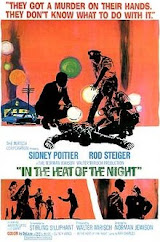
Reflections on “In the Heat of the Night” (1967)

Directed by Norman Jewison

Screenplay by Stirling Silliphant

Based on a novel by John Ball

Starring Sidney Poitier, Rod Steiger, Lee Grant and Warren Oates


A video presentation of this material is available here.

Industrialist Phillip Colbert was due to invest a small fortune in the construction of a factory in the small town of Sparta in the southern American state of Mississippi, but his dead body is discovered in the street late one night by police officer Sam Wood as he is doing his rounds. While seeking the person responsible for this crime, Wood checks the local train station and comes across a black man waiting for a connecting train. The colour of his skin appears to be reason enough to arouse Wood’s suspicions and Wood arrests the man who, answering a few simple questions from police chief Gillespie, reveals he is Virgil Tibbs, a homicide detective in Philadelphia. Gillespie verifies this, considers him above suspicion and, angry and frustrated, declares he is free to go.

These opening scenes, embellished by a wealth of visual detail and strong characterisation, are sufficient in themselves to underline the consequence of misguided and hasty conclusions based on prejudice and racism. However, this is only the beginning of a tale whose murder plot may be viewed as little more than a device to explore underlying themes of racism, justice, principle, social justice and friendship, achieved in good part through a study of the characters of Tibbs and Gillespie and their burgeoning if somewhat forced relationship.


Police chief Bill Gillespie has many characteristics in keeping with his upbringing and his social environment, but he is a fundamentally good man who is perhaps out of his depth. He cares about his position and seeks to protect the inhabitants of Sparta. He takes responsibility seriously and appears to be aware of the shortcomings of his department and staff. Gillespie tries to set standards but seems to be fighting something of a losing battle as several officers are complacent and idle, though they do not appear to be corrupt or malicious, leading to frustration for Gillespie and displays of short temper and anxiety or nervousness as he tries to exercise control but finds no real solution to his problems.

Gillespie is not complacent and is aware of his own limitations and perhaps even his prejudices which he is willing to try to rise above.

He is unaccustomed to being tested professionally and he recognises a murder investigation is probably beyond his scope – he is used to minor infringements of the law and has a relatively simple or blinkered view of procedure. He lacks sophistication, instruction and experience but he is honest, direct and firm but fair. He is certainly able to recognise the valuable contribution Virgil Tibbs can bring to the investigation even if it hurts his pride and he is uncomfortable with what he regards as Tibbs’s haughty involvement.


Gillespie’s intensity and his determination to question and gently challenge traditional environmental and social outlooks and attitudes, until now focused on the complacency and attitude of his staff and already the cause of frustration and loneliness, is brought to a head by the arrival of black detective Virgil Tibbs. This event will put Gillespie’s underlying and perhaps even subconscious sense of principle to the test and will bring about something of an evolution in his character.

Virgil Tibbs works in Philadelphia and his big city background suggests he is accustomed to a broader, more liberal and tolerant outlook than that displayed by his fellow police officers in Sparta. Tibbs is reasonable, intelligent and educated, and he is invited by his superior to share his skills and prowess with those colleagues in Sparta who are willing to dismiss him based merely on the colour of his skin.

He investigates using evidence, facts and scientific knowledge, jumping to no hasty or unsubstantiated conclusions, unlike his fellow police officers in Sparta, but he is treated with scant regard and respect due purely to his ethnicity. Unaccustomed and tired of this misplaced professional and personal antipathy, Tibbs decides to leave Gillespie and his officers to their own bumbling conclusions, though he insists on passing on essential evidence to higher authorities to ensure justice is done.


It is at this point that Gillespie is first put to the test. He knows he needs Tibbs and his expertise and he is willing to put principle above self-regard, position and the local mindset to solve Colbert’s murder. He also applies intelligence and a keen understanding of human nature in his attempt to persuade Tibbs to stay. He appeals to or challenges Tibbs’s vanity and a natural desire for retribution by pointing out the satisfaction Tibbs will derive from proving himself superior to those who have treated him and his conclusions as unworthy of consideration, a challenge Tibbs reluctantly recognises and accepts.

At one point, Tibbs extends this frame of mind and displays personal prejudice and a blinkered view not entirely dissimilar to that shown by the local police as he is determined to find evidence to support his desire to depose a local businessman whose wealth has been built on the backs of black employees and who displays condescension toward African-Americans while also displaying immense pride, arrogance and a sense of superiority. Gillespie is quick to point out this chink in Tibbs’s armour of apparent infallibility and reason and his human desire for retribution, summed up by Tibbs’s historic retaliation when he is struck by the businessman, and he reminds Tibbs, almost ironically, of the need for a solid case built on evidence and fact.

Tibbs may be feeling somewhat overwhelmed and is left a little out of his depth as he comes face to face with blatant, vicious and unreasonable racism which has evoked resentment and diverted him from the path of reason and truth, while Gillespie’s historically prejudiced and biased mind has been focused on evidence, fact and deduction by the reasonable and intelligent Tibbs. It seems that in these circumstances each man finds direction and benefit from the other’s presence and input.

Tibbs solves the murder case after further focused investigation and he and Gillespie end up sharing a drink and a revealing conversation in Gillespie’s apartment. It transpires these apparently very different men have much in common from a personal and social perspective, though Gillespie reacts badly when Tibbs offers a well-intentioned sympathetic comment which perhaps trespasses into the realms of familiarity and friendship. Gillespie interprets this as pity rather than friendship and closes down the conversation.

It appears that each has focused on career and professionalism to the detriment of building a network of friends and relationships and while each is willing to take steps toward friendship, neither is socially skilled enough or comfortable enough to know how to readily develop their budding friendship. They are drawn together by common experience and vaguely similar character traits such as professionalism and belief in principle, yet they are divided by other vaguely similar traits such as independence and pride.

In the end, after a perfunctory and polite exchange of good-byes, Gillespie, upon reflection, appears to offer not just respect but a sense of gratitude and even warmth as he smiles and tells Tibbs to take care, a gesture Tibbs is happy to reciprocate.

Each man has been challenged by the situation and each has derived strength and encouragement from the presence and actions of the other. Tibbs’s calm reason and deduction were tested by emotion, prejudice and racism while Gillespie learned to appreciate the advantages of principle, reason and deduction and to place them above personal or professional expediency and prejudice. Reason and principle are seen, then, as superior to rash and emotional judgment and are a means of professional and social advancement.


There were two sequels, both significantly less successful than “In the heat of the night”, perhaps because they focused on plot and crime rather than character development and conflict focused on social and cultural themes.

In terms of performance, Sidney Poitier and Rod Steiger are simply superb as the dignified and reasonable Tibbs and the distressed and even tormented Gillespie. Each endows his character with humanity and interest and each ensures total audience engagement.

The script and direction bubble along at considerable pace with wonderful characterisation and tremendous atmosphere, using the murder plot as a context for sometimes explosive conflict and character development.

Special credit should go to Quincy Jones for his music, especially the catchy and oh-so memorable theme song.

At times deliberately uncomfortable to watch, this is a gripping, entertaining and thought-provoking film that delivers with every viewing.


My thanks for taking the time to read this article. I hope you found it of some value.

Stuart Fernie (stuartfernie@yahoo.co.uk)
Sunday, 19 December 2021

Style, Character and themes in "The League of Gentlemen" (1960)


Reflections on “The League of Gentlemen” (1960)

Directed by Basil Dearden

 Script by Bryan Forbes (from the book by James Boland)

Starring Jack Hawkins, Nigel Patrick, Roger Livesey,

Richard Attenborough, Bryan Forbes et al.


A video presentation of this material is available here.

What really distinguishes “The League of Gentlemen” from other caper films is its style. Despite being in existential and film noir territory, the audience is never in any doubt that this is an intriguing and engaging piece of entertainment. It is written and made with a lightness of touch which lends charm, and it is peopled by sympathetic, if deeply flawed, characters who ensure audience empathy and even complicity.

After some 25 years of faithful, dutiful and unblemished service in the British Army, Lt-Col Hyde is somewhat unceremoniously made redundant and this unleashes a tidal wave of disillusion, bitterness and resentment. Feeling not just unappreciated but betrayed by the very establishment he served and protected all these years, he doubts and rejects the moral code by which he has lived and worked, and Hyde decides to plan and execute a daring bank robbery with his customary military precision. This outrageously self-serving and uncharacteristic act will not only fill his coffers but will constitute his revenge on an establishment that has disrespected him and turned its back on him.

This transformation could have been depicted in an intense and introverted manner, focusing on Hyde’s deteriorating mental health etc., but instead we are presented with a positive and confident outlook honed by a determination to see his plan through. We see he is pained and wounded by the way he has been treated, but he has channelled his feelings into a plan for amoral revenge and because we understand the injustice of his situation, admire his spirit and may even sympathise with him, we are happy to go along with him and his plan.

To bring his plan to fruition, Hyde enlists the aid of seven former army officers, chosen with great care and attention to detail, whose skills and training will contribute to the success of the mission. Of course, they all have at least one other thing in common, apart from their military background – they are all crooks to one degree or another.

We are shown a series of vignettes which indicate that each “Gentleman” is struggling with his circumstances and each has a reason to seek change or escape his present situation. Again, each man’s tale is potentially gloomy but melancholy is avoided in favour of a reasonably positive attitude, especially as Hyde offers them a path to financial independence and freedom.

We learn more about their dubious backgrounds at the first meeting arranged by Hyde at the Café Royal. It is clear we are not dealing with murderers or criminal masterminds, but rather a group of guys who, by and large, simply refuse to accept restrictions imposed by social propriety, customs and laws as they try to make their way in life. They may even be regarded as nice guys capable of loyalty and hard work, if the situation benefits them, but they appear to have lost their moral compass and indeed may have lost much direction and control of their lives, leaving them rather downtrodden and perhaps demoralised, a position they seem to have more or less accepted as they show little ambition or spirit.

However, Hyde provides stimulus, purpose and a sense of self-worth when he invites them to join him in his daring bank raid. Hyde offers leadership, spirit and direction, qualities the other “Gentlemen” are lacking, while the group offers Hyde hope, purpose and a chance of achieving vengeful satisfaction.

Each man gains from his participation, and not just financially. Making a valued contribution to their common objective within a framework of discipline and careful planning brings out the best in each and they develop considerable camaraderie and fraternity which may even be said to extend to the audience as we feel complicit in their scheme.

I would point out that this is a format and strategy used most effectively in later films such as “Ocean’s Eleven”, “The Dirty Dozen” and “The Italian Job”, but their origins seem to lie in this much more modest British film.

Scenes of practice and preparation emphasise the care and precision with which the operation is mounted, but these scenes also serve to underline the fraternity and sense of common purpose of our “Gentlemen”. They also provide amusement, entertainment and a sense of connivance and even conspiracy for the audience. We know that what they are doing is wrong, but we have shared their at times affecting, morally ambiguous and emotionally challenging background stories, and we have witnessed their efforts and burgeoning fellowship, with the result we are actually rooting for them as they swing into relatively non-violent action.

If an acceptable definition of film noir is one that invites the audience to challenge the traditional and accepted perception of morality, I can’t help but feel this film fits the bill despite its positive and amusing style and, as I suggested at the beginning, its style is what sets it apart. Amusing and lightly told films noirs are rare and hard to achieve and I find their combination of light comedy and moral challenge quite irresistibly entertaining.

In the end, we are somewhat disappointed and saddened when our “Gentlemen” are defeated by chance and the innocent actions of a child, the true and quite unpredictable enemies of professional planning.

All in all, this is a playful, amusing and thoroughly engaging piece of knowing entertainment in which the characters are endowed with sufficient individuality, personality and flaws to make them dubious and intriguing, yet touching and involving at the same time. Add to this a deft humour and self-awareness and you end up with an engaging confection intelligently and skilfully crafted for our enjoyment.


My thanks for taking the time to read this article. I hope you found it of some value.


Stuart Fernie (stuartfernie@yahoo.co.uk)

BLOG

Monday, 15 November 2021

Reflections on the nature of film noir, with reference to Double Indemnity, The Maltese Falcon and Dirty Harry


Reflections on the nature of Film Noir

With reference to Double Indemnity, The Maltese Falcon and Dirty Harry


Recently, I sought the definition of the term “film noir” in Google and found the following in a post from Oxford Languages, “a style of film marked by pessimism, fatalism and menace”, while in Wikipedia the film noir article starts with “a cinematic term used primarily to describe stylish Hollywood dramas, particularly those that emphasise cynical attitudes and motivations”, and this article goes on to outline a variety of problems in providing a definition with any degree of precision.

After looking through a few more attempts to characterise film noir, I couldn’t help but feel that while the descriptions I read offered insight into the tone, atmosphere and even the format or structure of films noirs, an element was missing – something that offered insight into their purpose or their raison d’être.

In my mind, I have always associated film noir, or at least what I regard as its most engaging and reflective examples, with existentialism and its fundamental premise and challenge that God and morality do not necessarily exist and therefore we are free, though that very freedom implies responsibility toward others when our actions have an impact on their lives.

A classic film noir will, in my opinion, contain elements of challenge to the traditional or accepted view of morality or moral conduct, and will explore the consequences, in terms of the effects of action on characters and on society, of such a challenge.

This will frequently involve an amoral character attempting to advance his or her cause by involving or influencing another who is apparently a normally upstanding citizen, but who may be open to suggestion or corruption, while a figure of authority or principle will also be present to remind us of social convention and to allow the audience to draw a comparison.

Of course, not all films noirs will follow the same pattern and many variations are possible.

Another fairly common means of exploring the implications of existential freedom in society was to involve private detectives, often presented as apparently morally neutral characters driven not by ambition or greed, but by a desire to seek truth. They demonstrate an understanding of human nature and the workings of the mind and they may err from strict observation of laws and social niceties while dealing with both the moral and the amoral in order to get by and make ends meet, allowing the audience to gain insight into the machinations of a world seemingly without natural order or justice.

A third possible solution to the problem posed by existential freedom is to apply the maxim “treat others as you would expect to be treated yourself”, potentially bringing characters into conflict with society’s laws and raising the question of justice and freedom within society.

To illustrate my points, I will refer to three films.

The first is an example of “pure” film noir in which we, the audience, gain insight into the workings of the moral challenger’s mind and how she manipulates events and people to advance her cause, and the effect she has on the lives of others. Her actions may initially be presented in an almost positive or sympathetic light, promoting our understanding and engagement, but this will ultimately contribute to our outrage as we eventually become aware of the extent of her manipulation and devious contrivance at the expense of others’ lives and freedom.

In “Double Indemnity”, Phyllis Dietrichson is an amoral and calculating opportunist who inveigles her way into a family, bringing manipulation and death for her own advantage. To help advance her plans for physical and financial independence from her previously widowed husband she involves insurance salesman Walter Neff, a relatively ordinary fellow whose base desires and confidence leave him open to temptation and emotional manipulation. Phyllis applies a combination of seduction and emotional blackmail to gain Walter’s sympathy and co-operation to do away with Mr Dietrichson – she even manages to manipulate him into proposing and planning Dietrichson’s murder.

All this is laid out in a vaguely reasonable and compassionate way and although we may not approve of the action to be undertaken, Mr Dietrichson is presented as fairly unpleasant and Phyllis’s plight appears genuine, so her plan appears almost defensible.

It is only after we discover a few pertinent but carefully undisclosed facts that we realise that we, just like Walter, have been misled and deceived by the devious and singularly determined Phyllis.

However, Walter has abandoned principle and morality in favour of sexual and emotional indulgence with Phyllis. He has committed murder for her benefit and indirectly for his own and as a result he enters the world of amorality in which, with no foundations of truth or honesty, he loses all trust and gains paranoia.

Neff was a sort of everyman out for himself but operating within certain limits. However, his involvement with the deceitful and conniving Phyllis has plunged him into a dark, murky world without clarity, dependability or boundaries.

In the aftermath of the murder, he comes to understand there are consequences for others of his obsessive feelings and self-centred actions, and lies and deceit beget ever more mind-bending deceptions and duplicity. When he realises the chain of events he initiated for selfish reasons is spiralling ever further out of his control and he may even become Phyllis’s next victim, he comes clean to his straight-as-they-come colleague, Barton Keyes.

Keyes clearly represents traditional legal and perhaps moral standards, though it is interesting to note that he is an insurance claim investigator and not an officer of the law, and so his primary concern is not so much morality in itself but the saving of money for his employer. Perhaps even traditional morality is not quite as straightforward as it might appear…


The perfect embodiment of an apparently neutral but curious private detective, willing to deal with the moral and the amoral while investigating and clarifying a situation, is one of the most admired and influential - Sam Spade in “The Maltese Falcon”.

Sam Spade is a survivor who keeps his head above water in a sea of amoral goings-on. To make ends meet, he digs into other people’s problems and situations (as his highly appropriate surname suggests) without real involvement or personal responsibility, to reveal truth or unravel a twisted tale. He is good at his work because he is intelligent and curious.

Once again, we witness attempted manipulation and distortion of facts by several characters through repeated and varied lies and deceit, all in an attempt to advance their cause at the expense of others and at the expense of truth, principle and honesty. Indeed, at one point Brigid, Spade’s client, even states she can no longer tell truth from fiction.

Morality and principle do not exist and most of the characters on display are simply out for themselves as they pursue easy wealth and fortune rather than pursuing worthwhile lives. Their greed and obsession have blinded them to moral and social values to the extent that Spade’s partner, Archer, is killed merely as a ploy in the game to find the invaluable Maltese Falcon.

Sam Spade, however, plays these people at their own game as he applies his wily intelligence to manipulate people and events in an effort to uncover the truth. Not just, as we are led to believe, to find the Falcon and earn a share of its worth, but to discover the identity of his partner’s killer.

Spade is no saint – he has had a casual affair with his partner’s wife, among other things - but he is no great sinner either as he discovers loyalty, depth and principles he may not have realised he had in him but which niggle away at him in the background. He has played the game of social interaction and investigation while maintaining a certain personal detachment and has become disillusioned with his clients’ humanity and society’s values, but when he is put to the test, a deep-seated code of conduct is triggered by the death of his partner. He tries to be glib and hide his emotions by seemingly being unfeeling and pitching in with these pursuers of fortune, or referring to how he is supposed or expected to react to the loss of his partner, but he invests himself fully in the investigation and goes through a lot, including quite a beating, all in the name of justice for his partner.

Events may have brought out the best in him, but on the way, he has fallen in love with the guilty Brigid, and apparently, she with him. However, Sam has learned not to concede to emotion and desire – that is a route to potential existential disaster. He recognises that indulgence of his feelings for Brigid would leave him open to distrust, blackmail and corruption and that she, and she alone, must take responsibility for her action in killing Archer while he must maintain his freedom to continue his life as he sees fit by denouncing Brigid to the authorities. He accepts this will cause him great pain, given his genuine feelings for her, but he consoles himself with the existential reasoning that his pain will pass with the passage of time. 

In the end, it transpires that the Falcon they have managed to acquire is a fake and so, still consumed by greed and obsession, Gutman and Cairo set off to repeat the cycle of criminality in pursuit of ill-gotten gains, perhaps suggesting mankind will forever indulge in this type of conduct and we must all be wary in our dealings with people and careful in our choice of the code by which we live.


In “Dirty Harry”, society is presented as drifting toward decay due, in part, to what may seem like indulgence of freedom and a sense of entitlement, and avoidance of responsibility toward ourselves and one another.

In practical terms, law and order also seems to be failing as the legal and enforcement agencies seem riddled with careerism and focus seems to be set on technicalities and precision of wording rather than the spirit and purpose of the law.

It is within this general context of laissez-faire that we are introduced to the film’s antagonist, Scorpio. We are given scant information on his background and motivation and are therefore encouraged to judge him by his actions which indicate he is a self-indulgent killer of random victims who shows no pity or remorse.

Investigating officer Inspector Harry Callahan appears to be something of an anachronism. He is held in some disregard by his superiors as they accuse him of frequently failing to apply politically correct departmental policies when dealing with cases. He is virtually accused of behaving like a vigilante, but it is essential to note he does not mete out his own brand of justice – he works within the law but he treats suspects as they treat others and he will shoot, but only if he is under threat. He appears to embody the maxim, “treat others as you would like to be treated”, a philosophy Clint Eastwood explored further in “High Plains Drifter”.

“Dirty Harry” is often referred to as an example of neo-noir, that is to say it shows characteristics of a classic film noir but updated to modern times. However, it strikes me there is a substantial difference, indeed I would say the moral conundrum is almost reversed.

In “Dirty Harry”, society is being challenged, but from within – clear moral direction is missing, perhaps even leading to the evolution of antagonists such as Scorpio, and Harry Callahan, far from being a figure of reactionary evil, is presented as a principled and practical saviour willing to use the antagonists’ own methods against them in order to defend society.

It is interesting to note that at the end of the film Harry throws away his official badge of office, perhaps rejecting a perceived weak or ineffective system of justice, but perhaps also suggesting principled action in the face of moral adversity is a matter of personal choice…


My thanks for taking the time to read this article. I hope you found it of some value.

Stuart Fernie (stuartfernie@yahoo.co.uk)

HOME

BLOG


Thursday, 21 October 2021

Reflections on characters and themes in Star Trek and The Wrath of Khan


Reflections on Star Trek,

with reference to the original series and Star Trek ll: The Wrath of Khan


Gene Roddenberry created “Star Trek” to give expression to studies of our most human traits and societal issues set against a backdrop of excitement and adventure in space. Over the years it and its offshoots have dealt with a myriad of aspects and issues of life such as racism, responsibility, friendship, religion and seeking God, duty and doubt over one’s purpose in life, and emotions such as love, anger, remorse, pity and envy, to mention but a few. And all of this is set in imagination-inspiring backgrounds and settings whose purpose was to offer clarification of the issues raised.

Inspiring viewers to reflect on life and treat the Star Trek characters as heroes and role-models, while also encouraging scientists to actually develop technology which appears in the series, and even inspiring some to study and learn the completely fabricated and artificial Klingon language, few TV shows can lay claim to have exercised such an influence on outlook and society as a whole, and the reason is not so much the sci-fi environment but rather the exploration of the profound humanity of its characters.

At the heart of Roddenberry’s creation is the United Federation of Planets, an administrative organisation that aims to promote principle, justice, benevolence and exploration. This idealistic body seeks to offer order, stability and fraternity to its members, though there is scope for disagreement and cultural conflict among its affiliates as they endeavour to work together for the common good.

Although set in the vast expanses of outer space, resolution of quarrels and friction frequently requires personal debate and reflection on moral or philosophical issues, leading to judgement, decision and action.

While the mission of the Enterprise may represent humanity’s desire to constantly expand and develop its knowledge and understanding, the crew may be viewed as a single unit pooling a variety of skills and acumen to undertake and complete their task. These range from engineering and motor skills to communication and health care, but all are supervised and steered by the triumvirate of McCoy, Spock and Kirk, and in these characters we have a trio who bear a remarkable resemblance to the Freudian model of the human psyche. Bear with me while I explain what I mean…

According to Freud, the ID is, very roughly, the emotional or instinctive part of the brain, and McCoy constantly evokes emotion and instinct, while Spock espouses logic, rules and order, representing the SUPEREGO which, Freud suggests, exercises control over our primitive desires. Between these two clashing components of our judgement system lies the EGO which has to take account of both views and reach a decision that leads to action. This would be the position occupied by Kirk who holds ultimate responsibility for whatever decision is taken, and action pursued. This dynamic contributes to many plots in the original series and provides the foundation for interplay and debate between these three characters in the script of The Wrath of Khan.

A recurring theme in The Wrath of Khan is ageing and death, and how we deal with them, and this is contrasted with the theme of renewal and the circle of life.

Kirk is restless and frustrated as he has been promoted out of the ranks of the active and, as he sees it, the worthy. He sees little future for himself. McCoy advises him to concede to his instincts and seek a command again, while Spock offers conformity and acceptance, and Kirk appears to go along with that view, if somewhat reluctantly and out of a sense of duty. However, when a potentially dangerous situation arises, Captain Spock willingly relinquishes command to the senior officer, Admiral Kirk, as it is judged the young and inexperienced crew will benefit from Kirk’s experience and leadership.

The refurbished Enterprise with its young crew and the very nature of Project Genesis, offering life from lifelessness, contribute to the theme of renewal and contrast not only with Kirk’s mid-life crisis, but also the fate and location of the film’s antagonist, Khan.

Having been deposited on an isolated planet by Kirk some fifteen years previously, as a result of a murderous plot to take control of the Enterprise, Khan and his cohort have suffered great loss and hardship due to the decay and destruction of a neighbouring planet which caused disastrous and irrevocable changes to their own orbit and environment.

However, Khan’s contribution is not restricted to the theme of ageing and decay. His entire outlook is at variance with the fundamental principles of compassion and brotherhood of the United Federation of Planets, and comes into conflict with its underpinning ambition of promoting humanity. The result of genetic engineering, Khan is hugely intelligent and that, interestingly, is also his principal source of weakness in terms of his antagonism.

We humans strive constantly to extend and develop our knowledge and understanding, but in so doing, and in recognising the limits of our existing knowledge and understanding, we show a certain humility and we recognise the value of fraternity as we help one another in the joint aim of development.

In contrast, Khan is self-satisfied and is smugly impressed with his existing knowledge and understanding, so his superior intelligence appears to result in his failure to recognise his own limits. Thus, he has no humility or great sense of fraternity. His crew are devoted to him and follow his commands in admiration and faith, but their loyalty and devotion are their value to him, not their thoughts or opinions.

As a result of all this, Khan is given to pride and that leads to obsession. When presented with the opportunity to escape definitively and avoid pursuit and conflict, he dismisses it in favour of pursuing and avenging himself on his old enemy Kirk, the only man to have outdone him.

The theme of Khan’s obsession is underscored by numerous references to Moby Dick, the famous tale of whaling captain Ahab hounded by the thought of revenge on a giant whale which, on a previous voyage, bit off a piece of his leg. These references include a prominently placed copy of the book in Khan’s home on Ceti Alpha V and quotations from it at various points.

These traits contrast with the underpinning precepts of Star Fleet in general, but in particular with Spock’s act of self-sacrifice to save the Enterprise and her crew. Spock may couch his act of courage in logical terms (the needs of the many outweigh the needs of the few, or the one), but there also had to be a willingness to act for the benefit of others at one’s own expense, and that is an act of humanity, not mere logic.

Spock’s death comes as a considerable shock and there is genuine sorrow and grief as we, the audience, are tested in exactly the same way as the trainees when they undergo the “Kobayashi Maru” exercise at the start of the film. Out of the blue, we are forced to confront death and defeat, and I have to confess I fail that character test each time I watch the film. We may admire Kirk’s ingenuity in finding a way through the test and his determination to snatch victory from the jaws of defeat, but Kirk did fail to address the issue at the time. His emotional yet controlled reaction to Spock’s demise, combined with his measured but poignant recognition of Spock’s self-sacrifice and his motivating insistence on the importance of humanity at his funeral, contribute significantly to the overwhelming sense of loss in the audience while demonstrating Freudian EGO-style leadership as he controls his emotions and exercises control of the situation. This may be viewed as a solution to the Kobayashi Maru test while holding on to a combination of reality and hope.

I suspect that when The Wrath of Khan was being developed, it was foreseen as the final Star Trek film, making its themes of decay, death and renewal all the more pertinent. It is somewhat ironic that it actually served to regenerate the series’ popularity and commercial viability, leading to four further films with the original crew, five if you include the handover film, Generations.


My thanks for taking the time to read this article. I hope you found it of some value.


Stuart Fernie (stuartfernie@yahoo.co.uk)


HOME


BLOG