Saturday, 22 February 2020

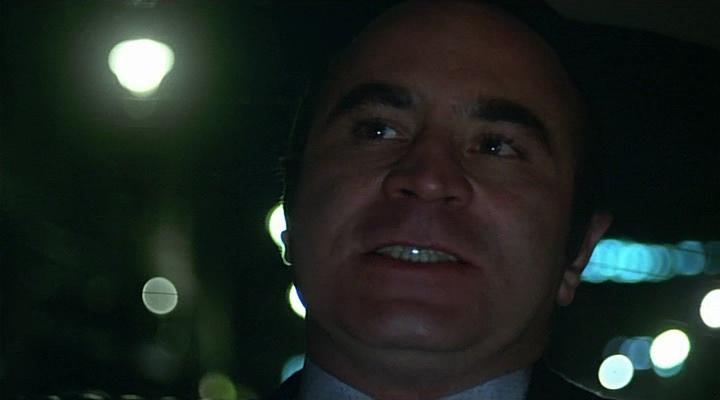
Reflections on "The Long Good Friday"


Reflections on “The Long Good Friday”

Written by Barrie Keeffe

Directed by John Mackenzie

Starring Bob Hoskins and Helen Mirren


A video presentation of this material is available here.


Gangster films may hold a certain fascination and present an intriguing insight into amoral chicanery, corruption and crime, but they rarely evoke sympathy or affection for their main character.

“The Long Good Friday” is an exceptionally fine example of a gangster film which manages to lay bare the potential realities and consequences of underworld activities and schemes while somehow retaining a degree of compassion and understanding for Harold Shand, the London gangland overlord of the film.


Interest and intrigue are created firstly by the format of the narrative – this is not merely an exposition of nefarious activities, but is presented as a mystery thriller. Crimes take place right from the start, aimed largely at damaging Harold’s “corporation”, though there is no clarity as to responsibility, motive and purpose. The audience is therefore in the same position as Harold, in terms of understanding, as he suffers bewildering and deadly attacks on his property and personnel, establishing a certain affinity from the start as Harold may be seen as a victim.

Harold presents himself as an ambitious, determined businessman with a plan to make it big in property and land development in the run-up to a potential bid for London to host the Olympic Games in 1988. He is keen to involve the “right people” and his friends in his scheme.

It is clear Harold wishes to succeed in legitimate property dealing and development but it is equally clear he is in the habit of using underhand and dubious tactics to achieve such “legitimate” success.


As in many other gangster films, our “hero” makes use of corrupt council and government officials and police officers who are more than willing to accept payment to facilitate whatever scheme Harold has in mind. Unlike other gangster films, however, these characters are developed to some extent, contribute to the film’s plot and allow us to see another side of Harold’s nature.

Harold is a complex character. He shows enthusiasm, dynamism, care, pain, regret, grief, nostalgia, sociability, loyalty, ambition and pride. He is also capable of acts of callousness, viciousness and brutality. Something of a rough diamond, he aspires to classy trappings and proceedings yet is relatively uncultured but genuine in his sentiments. Above all else, he is human.

His romantic companion is the upper-class Victoria, an intelligent and seemingly well-educated lady who appears to hold Harold in genuine affection and who is happy to nurture and direct Harold in his more legitimate business dealings and events.


For all that, Harold is the victim of deadly bombings and at least two of his “corporation” are killed, leading to his investigation to find and punish those responsible. As he gets more desperate, his thuggish nature comes to the fore and his methods become increasingly violent, from which we may impute just how he attained his exalted position in the London underworld. It is also in these circumstances that we feel the effect of the genius of the script, direction and performance, for despite Harold’s vicious and brutal assaults on others, we remain on his side.


Perhaps this is because within this amoral community, each is as bad as the other. Perhaps it is because we feel Harold is being unfairly targeted. Or perhaps it is because we have seen and shared his inner feelings, understand his ambitions and motivations and admire his familial attachment to loyalty. Whatever the reason, we feel he is defending himself and is using methods familiar to and accepted by his colleagues and enemies who all operate by the same rules.

Of course, peace between competing underworld groups will only hold if all are advantaged, and Harold is feeling distinctly disadvantaged. Gradually, the veneer of respectability, diplomacy and working relationships is revealed to be a façade as Harold takes ever more desperate measures to discover who is persecuting him.

Through no fault of his own, and as a result of coincidence and greed on the part of his underlings, Harold now faces the wrath of the IRA. Harold is warned by corrupt policeman Parky and especially his scheming protégé Jeff that he cannot deal with the IRA in the same way as he might deal with underworld competitors because they are political, are fighting for a cause and will not adhere to the accepted rules of underworld behaviour. This slight to his ego, combined with an unaccustomed sense of powerlessness and desperation to uphold his position, push him over the edge and, in a rage, he kills Jeff and goes on to try to deal with the IRA in the only way he knows how, by extreme violence.


In the end, Harold pays the ultimate price for his blinkered vision and too late realises the limits of his strong-arm approach based on intimidation against an enemy not motivated by mere greed and personal advancement.

What makes this film so compelling is not the comeuppance of a vicious gangland thug, it’s the fact that the clever script and direction build a picture of a very human and likeable gangster under siege and we have sympathy, even a certain affection, for him despite his awful deeds. A considerable achievement.

Bob Hoskins brings Harold Shand to dynamic life and we share his incomprehension, his loss, his fervour and his determination. Without the element of engagement and empathy he brings to the role, with the able support of his co-stars, this would have been a good but relatively ordinary gangster film, but instead it is transformed into a character piece of extraordinary power. Mr Hoskins may have produced many equally admirable performances, but I’m not sure he ever had a role that was more memorable.


Altogether, this is a fast-paced and emotionally engaging thriller made with vitality and verve, and special mention should be made of the catchy, dynamic and oh-so memorable music by Francis Monkman.

My thanks for taking the time to read this article. I hope you found it of some value.

Stuart Fernie

I can be reached at stuartfernie@yahoo.co.uk


Friday, 7 February 2020

Reflections on “Once Upon a Time in Hollywood”


Reflections on “Once Upon a Time in Hollywood”

Written and directed by Quentin Tarantino

Starring Leonardo DiCaprio, Brad Pitt and Margot Robbie


A video presentation of this material is available here.


The first point to make about “Once Upon a Time in Hollywood” is that, absorbing though it is, it does not have much of a plot. Essentially it is a snapshot, à la Tarantino, of Hollywood and its multitude of influences on popular culture in 1969, though there is a nod toward a linking plotline by incorporating references to the real-life Manson Family and the infamous murders they committed at that time. However, even that unifying plotline based on historical figures is manipulated and altered to suit Mr Tarantino’s vision for his film.

The film consists largely of a nostalgic revisiting of the atmosphere, fashions, music, films, television, transport, language and mores of what is frequently referred to as the end of the Golden Age of Hollywood. Virtually every scene recalls some element of the time in which it is set and that alone makes the film highly enjoyable for viewers of a certain age. We also encounter numerous actors and personalities of the time, adding to the sense of nostalgia and giving the audience some insight into their true natures, as perceived by Mr Tarantino.


All this is conveyed principally through the experiences of Rick Dalton, a former TV star whose career is on the wane, and Cliff Booth, Rick’s loyal and down-to-earth stuntman and friend. These characters, their relationship and their dealings with others are quite brilliantly captured and conveyed. There can be no doubt whatsoever about Quentin Tarantino’s talent as a writer. In this film, as in his others, he creates complex characters whose traits, strengths, weaknesses and quirks are all conveyed in exchanges with others without recourse to direct exposition. We have a clear idea of what makes these characters tick through their dialogue and their attitudes displayed in interaction with others.


Though recognisably derived from the careers of a couple of Hollywood icons, Rick is nonetheless his own character – he is sensitive but ambitious, talented but self-doubting and confident yet given to angst and stress. He stammers slightly when dealing with his own affairs yet speaks clearly and confidently when in character, suggesting he is at ease only in others’ skins.


Cliff, on the other hand, seems entirely happy in his own skin. He is quietly confident, does not impose his views but is willing to express himself and act on his convictions as required, and is loyal, reasonable, realistic and unburdened by huge ambition or ego. He appears to be happy with his modest lot and is Rick’s best friend.


They appear to balance, complement and enable one another, allowing each to be more successful than he would be without the other’s input. Cliff offers a calm foundation to Rick’s anxiety-laden but talented aspiration. In the end, Cliff deals with reality, values and action while actor Rick deals with ego, people and direction. Combined, they make an effective unit.

Brad Pitt is convincingly natural and thoroughly engaging as the solid, self-assured stuntman and friend who may serve as a source of security and authenticity for his friend and employer, Rick. Leonardo DiCaprio is equally impressive as the sensitive and angst-ridden Rick, capturing the insecurity, skill and drive of a dedicated and ambitious actor.

In contrast to Rick’s tortured approach to acting and fame, we see Sharon Tate enjoying her stardom and gaining pleasure and satisfaction from the audience reaction to her scenes with Dean Martin in “The Wrecking Crew”, a light and breezy James Bond pastiche. Quentin Tarantino may have intended us to draw comparisons between this airy and undemanding approach to film-making and acting, Rick’s desperate and self-absorbed efforts to prepare and get into character and, of course, the calculating, intelligent and professional 8-year-old Trudi Fraser (who may represent the coolly analytical younger generation of actors).


However, all of them compare badly to Cliff who may be Quentin Tarantino’s most admirable character to date as he behaves like a thoughtful and caring human being while the others act and indulge themselves. I wonder if Mr Tarantino is pointing out the difference between reality and façade.

Tarantino’s characters are always clearly defined, quirky and memorable, even his minor characters, and thus the interaction between them is always entertaining and of interest even if their encounters don’t always serve to immediately advance the storyline. He has the talent and confidence to spend time establishing and developing character rather than constantly drive forward the plot.

Of course, this can be a difficult balancing act to achieve. While the building of character may strengthen emotional and intellectual engagement with the figures in a film, if that film seems to be going nowhere or lack any clear or consistent direction, such engagement will tend to dissipate. Mr Tarantino does seem to invest heavily in characterisation, often at the expense of pace and plot development.


At various points in this film he injects, very effectively, unease and even foreboding with regard to the Manson Family. He creates a sense of danger and threat, though this is not really in keeping with the atmosphere of the rest of the film and it doesn’t provide an effective story arc that might have drawn together the various component parts. Each element works very well, but they don’t blend to make a harmonious and integrated whole.

The confrontation at the end of the film involves members of the Manson Family and although this is outrageously entertaining, it is certainly not in keeping with historical fact. It was only as the end titles appeared that it struck me Mr Tarantino was perhaps tilting at Hollywood’s tendency to re-write history and has provided a satisfying ending in which the perpetrators of a hideous and savage crime get their comeuppance, while the positive and touching portrayal of Sharon Tate serves to underline the tragedy and brutality of her murder. That said, within the framework of the film, this ending does rather call in to question the need for her very presence in the film.


I thoroughly enjoyed this film as I was watching it – I found virtually every scene involving and entertaining. It was only on reflection that I began to question its narrative strength and overall direction. Mr Tarantino’s great and undeniable strength is his writing of characters and their interplay, but they are not always supported by a lucid, engaging and consistent storyline. He has utter belief and confidence in his own judgment, imagination and constructed world. He exercises control over and teases his audience as he effortlessly and entertainingly dips into elements of different genres and explores character and relationships, but the danger is that substance and relevance may fall victim to his playful and often self-indulgent direction.


My thanks for taking the time to read this article – I hope you found it of some value.

Stuart Fernie

I can be contacted at stuartfernie@yahoo.co.uk


Tuesday, 26 November 2019

Reflections on "The Third Man"


Reflections on “The Third Man”

Written by Graham Greene

Directed by Carol Reed

Starring Joseph Cotten, Alida Valli, Trevor Howard and Orson Welles


A video presentation of this material is available here.


Post-war Vienna can be seen as something of a metaphor for battered and exhausted Europe shortly after WW2. While much remains intact, there is plenty of evidence of the Nazi-led conflict which plunged Europe and half the world into physical, emotional and moral turmoil.

Judged to be one of the first victims of Nazi expansionism, after the war Austria was declared an independent nation but was occupied by forces from the United States, Russia, the U.K. and France in order to rebuild the nation but also, presumably, to enforce rule of law and to protect against a Nazi resurgence. This was an area where political, social and moral systems had been undermined or even destroyed and the potential for humanitarian crisis, crime and corruption was readily recognised. The international character of this operation serves to underscore the potential universal nature of the themes touched upon, while linguistic problems emphasise the importance of communication and understanding.


It is against this background of existential crisis, pain, disillusionment, loss, distrust and confusion that pulp Western writer Holly Martins investigates the sudden death of his good friend Harry Lime. On the face of it this is a fairly straightforward matter but Holly’s dogged determination and persistent questioning bring him in contact with a series of dubious characters whose contradictory evidence and suspect accounts eventually lead to the revelation of truth and then to unexpected consequences.


Holly encounters several of Harry’s Austrian friends and acquaintances and while each has his own reasons for being involved with Harry, his schemes and his death, they all share a variety of characteristics. They all give the impression they are giving a false or incomplete account of themselves, may be involved in some chicanery, seem untrustworthy while trying to ingratiate themselves and seem to have little or no respect for truth or morality. They may be viewed as amoral pawns willing to participate in schemes that will benefit them without regard for others and it has been implied that Harry Lime was a master of such practices.

Other citizens, onlookers rather than participants, are keen not to involve themselves in the affairs of others. Having undergone years of dictatorship and moral, physical and political threat, they are reduced to adapting to whatever circumstance will best ensure their survival.

Major Calloway and Sergeant Paine represent authority, law and order. They, along with their international counterparts, enforce regulations. While they may appear officious, cold, inflexible and uncaring at times, we discover the fundamental purpose and humanity of their work as they try to protect against tragedy and defend the inhabitants of Vienna from scheming black-marketeers willing to put people’s health and lives in danger in order to make a quick and substantial profit.

It is interesting to note that religion plays no part in this affirmation of order, apart from nuns caring for sick children. Clearly thought out rules and regulations, based on fairness and fact, are to be applied assiduously in order to combat potential crime, corruption and unfairness.


Anna, Harry Lime’s staunchly supportive friend and lover, must have known duplicity, disillusionment and fear during the war years, but she has opted to be almost simplistically and insistently idealistic in terms of love, at least as far as Harry Lime is concerned. Her idolising love for Harry remains virtually unaltered even when she seems to accept evidence of his wrongdoing – she affirms that because she loved him in the past, she can and will do him no harm. At one point she even suggests that a person does not change just because you learn more about him or her. She appears to cling to this idealistic and blinkered form of love because she needs to believe in something positive, but surely this begs questions as to the validity and worth of such love or infatuation. It is worth noting that she is an actress by profession and she refuses to play tragedy. Is she trying to exercise control and avoid reality and pain by clinging to hope and making Harry a repository for her love?

Such complete and resolute devotion to love and idealism is surely indicative of denial and can lead to harm to both oneself and to others. She even turns against Holly when he eventually yields and agrees to aid the authorities in the capture of Lime, accusing him of base deceit and betrayal despite ample evidence of Lime’s crimes and selfish conduct. To carry devotion to this level is surely self-deceiving lunacy.

Much is made of the fact that Holly Martins is a pulp Western writer. Unlike actress Anna who attempts to control her own response to events and people, Holly is a writer who tries to understand and steer events and others’ perceptions. The fact he writes Western fare may reflect his core values.

In keeping with cowboy tradition, he may appear somewhat guileless at times – he falls for Anna almost instantly, is loud, brash, unruly and has a somewhat breezy approach initially, suggesting self-confidence and a certain lack of understanding and compassion for the time and place in which he finds himself. He shows loyalty and devotion toward his friend and cannot accept the authorities’ version of Harry’s motives and activities so he sets out to investigate the circumstances of his death, which he finds suspicious, in the hope of clearing his name. He is unpretentious, principled and honourable, if inexperienced and perhaps naïve and idealistic.


Eventually, Holly meets with Harry and Harry confirms the truth of the authorities’ accusations. Rather like Anna, Holly reluctantly accepts his friend’s guilt but will not take action against him until he is forced to confront the consequences of Lime’s latest money-making enterprise when he is shown the victims of Lime’s selling of diluted penicillin. He has also learned to act less like a principled cowboy and more like an astute participant in this game of life by setting a price for his involvement in Lime’s apprehension – Anna’s freedom to leave Vienna. Of course, this he does out of love and principle rather than for selfish reasons, though he clearly feels Lime is no longer worthy of his loyalty. That said, he agrees to act merely as bait and not to participate in his capture.

Reality and truth finally win out over brotherly love, devotion and idealism as Holly takes decisive action to stop Harry, with Harry’s shooting of Paine being the final straw. Holly acts out of humanity and disillusionment. He is visibly shaken, perturbed and upset but he has evolved as a human being. He has learned to respect doubt and truth above love and friendship, and that there comes a time when decisive action must be taken.

He is undoubtedly disillusioned in the end but is perhaps more fulfilled and complete. Of course, he will also learn that not everyone shares his newfound and hard-won outlook on life as Anna walks past him (and away from her own past) without a flicker of recognition, once again exercising control and demonstrating her continued commitment to blinkered love.

Before we meet him, we hear a great deal about Harry Lime, both good and bad, from a variety of characters, reflecting different aspects of Lime’s character and different perceptions of him. We see him for the first time more than halfway through the film and by that time we are thoroughly intrigued – is he the boyish extrovert, the faithful and jovial friend or the master criminal we have heard about?

The answer is that he is all of these things and more.


When Harry meets Holly at the Ferris Wheel, he exudes self-assurance and oozes charm, casually ignoring Holly’s questions and asking questions of his own. He takes control. He displays a disarming openness and self-belief that is persuasive and manipulative, leaving the audience quite breathless and charmed while he casually tries to convince Holly of his case…..

As he looks down (both physically and figuratively) at the “dots” of people scrambling around below their carriage, Harry suggests that the loss of a handful of humans is insignificant in the grand scheme of things and he clearly feels no remorse or sense of responsibility in making use of these “dots”, even indirectly causing their deaths, in order to benefit him financially.

With these outrageous affirmations pronounced with casual conviction, Harry reveals himself to be something of an existential thinker. He has reached the conclusion morality and order do not exist but has such an ego that he seems to regard others as his playthings and has lost all sense of humanity, if he ever had one.

He shows no regard or genuine feeling for his lover Anna whom he clearly charmed and manipulated and is now using as a pawn vis-à-vis the Russian authorities to ensure his own escape. Holly recalls incidents from their youth which he presumably found amusing at the time but which he now sees differently, realising they revealed selfishness and callousness in Harry. Unlike Anna, Holly does see a person differently the more you learn about him or her.


It appears, then, that Harry has always harboured such feelings of humanitarian indifference and moral disorientation but presumably these have been enhanced by his wartime experiences. He is, however, a cynical hypocrite willing to manipulate and take advantage of those who believe in love, friendship, humanity, justice and freedom. His brilliant speech about the Borgias producing misery, murder and bloodshed but also genius while peace-loving Switzerland merely produced the cuckoo-clock is his final attempt to justify his stance and persuade his pal Holly to join him. This speech underlines his charm and eloquence as well as revealing his nihilistic mindset.

Harry Lime is a warning. He represents what man can become if he is selfish and has no respect for others and values. Love and idealism may have taken a battering and man may have been led to question the existence of God and morality in the course of the war, but the same experiences gave rise to fighting for values, defending truth and showing humanity toward others.


“The Third Man” is frequently referred to as a film noir. While it clearly depicts the consequences of amoral actions and motivation and warns against the result of excesses in love and loyalty, it also establishes the principles of humanity and integrity which lead to Harry’s downfall and which offer hope for the future.

Director Carol Reed creates a tremendously noirish atmosphere. While darkness is used to convey lack of clarity and confusion, and is used ever more regularly as Holly becomes more deeply embroiled in the plot, light is used to accentuate understanding and clarity and is used to its greatest effect when Harry is revealed to us for the first time – the revelatory light offering a chink of comprehension and lucidity in the surrounding darkness of incomprehension.


Reed fills the screen with menacing close-ups, buildings reduced to rubble, ominous shadows and pursuits (often moving downhill, perhaps suggesting a descent into moral uncertainty) set in damp dark alleyways, all reflecting insecurity, doubt and uncertainty, both physical and spiritual, culminating in the pursuit through the sewers.

Perhaps representing the depths of humanity, this unsavoury underworld is a suitable setting for the comeuppance of one who has proved to be the lowest of the low, and it contrasts with other encounters with Harry - on the Ferris Wheel where he is cocky and superior, literally looking down on mankind, and as he approaches his final rendezvous with Holly, again looking down on the scene. Many shots of Harry are taken at an angle which suggests his superiority and even the shot of the cat licking his feet might be taken to suggest his power and charm.


The famous (and tremendously catchy) zither music by Anton Karas captures Harry’s playful, charming and domineering personality.

The script by Graham Greene is dense and largely character driven, and contains any number of sly, engaging and thought-provoking observations on life (the Viennese inhabitants’ desire to keep to themselves, Sergeant Paine’s unquestioning implementation of duty in striking Holly while cheerfully engaging with him, Harry’s friends who will do whatever they have to do in order to survive, Anna’s refusal to give up her bedazzled view of Harry and Holly’s slow abandonment of blind loyalty in the face of reality). This he manages to achieve while developing both the plot and the characters.

The acting is excellent throughout, though I would suggest that the scenes with Orson Welles in his playful, charming and challenging role, lift the whole to another level of entertainment and engagement.


My thanks for taking the time to read this article. 

I can be contacted at stuartfernie@yahoo.co.uk .


Stuart Fernie


Thursday, 17 October 2019

Reflections on "Finding Forrester" (2000)


Reflections on “Finding Forrester” (2000)

Written by Mike Rich 

Directed by Gus Van Sant  

Starring Sean Connery, Rob Brown and F. Murray Abraham


A video presentation of this material is available here.


This is a story of friendship (arising from dubious beginnings and circumstances), evolution and principle set in the Bronx and extending to a prestigious school in Manhattan. This gentle drama focuses on character development and relationships, with a relatively restrained and realistic conflict used as a dramatic device to provoke reflection and growth in the two principal characters.

16-year-old Jamal Wallace has a raw writing talent not hampered by his relatively impoverished social background, though his abilities could be honed and developed with focused tutelage of quality. Jamal has concealed his talent for and desire to write, jotting down his thoughts and observations in a series of notebooks he carries around with him in a backpack. Indeed, he has concealed his academic abilities in general, gaining no more than average grades in assessments. However, he does well in national testing and is offered a place at the prestigious Mailor-Callow school where he will encounter support, discipline, academic demands and privileged competition.

Jamal has learned to use his sporting prowess in the field of basketball as a means of achieving acceptance, success and communication. Mailor-Callow is, of course, happy to offer Jamal an academic education in exchange for sporting success, along with the attendant publicity and glory such success will bring them. Apart from displaying skill on the basketball court itself, Jamal uses a basketball almost as a prop, bouncing it regularly as a means of maintaining reassurance or to divert attention. He even bounces the ball during a conversation with his mother who appears to be incapable of exercising influence over his behaviour. It is interesting to note that later in the film, when he starts to act similarly in a conversation with Forrester in his flat, Forrester sees through his device instantly and brings Jamal’s diversionary tactic to a halt with a single look.


William Forrester is the author of a much-loved, highly praised and enormously successful book but apparently never wrote another and has led a reclusive life since shortly after his book’s publication.

We discover, after a number of conversations with Jamal and considerable soul-searching, that Forrester was profoundly affected by the death of his brother followed by, in the space of some five months, the deaths of both his parents. We learn of Forrester’s trauma and the key to his reclusiveness when Jamal invites him to a baseball game but the outing goes horribly wrong. Forrester fails to cope with crowds and the social encounters associated with such an event and he collapses, triggering a recounting of the circumstances surrounding his brother’s death and the catastrophic effect this had on Forrester and his attitude to life. Having made his brother’s post-war experiences the focus of his highly successful book, exploring his situation, feelings and the deterioration of his health, the loss of his only brother in a road traffic accident for which he feels in good part responsible, had a devastating effect on Forrester’s outlook and the conduct of his life, leading to social anxiety.


These feelings were exacerbated by the fact that a nurse caring for his brother at the time of his accident wished to discuss Forrester’s book and its significance to her rather than deal with the death of his brother. This seems to have triggered something of an existential crisis in Forrester, possibly prompting doubts concerning the value of art (in the form of his book), and perhaps his fame as its author, and questions as to how his work could take priority over reality. He appears to have been desperately disappointed in people if they are capable of casting aside understanding, compassion and interest in others and their genuine experiences for what amounts to a copy of life or an abstraction. This may have led to his rejection of the status of a famous author whose position derives from the work he has produced rather than his character, beliefs and actions.

Like most good writers, this intelligent and sensitive man (despite appearances) is adept at reading character and understands motivations, purpose and thought processes, as Jamal learns in his initial meetings with him, meetings in which Forrester is testy and provocative, but also insightful. Due to his trauma and his subsequent rejection of society, he is untroubled by the desire to be accepted or popular, especially as the continued success of his book provides him with the means to live while writing (though not necessarily publishing) provides him with stimulus and satisfaction. He rarely leaves his flat, preferring to insulate himself against the dangers, insecurities and disappointments of the world outside. Yet he continues to observe life outside, rather than participate in it, cleaning the windows regularly to ensure clarity of vision. He has preserved a natural curiosity and social intelligence which he has satisfied through surveillance of the local area by way of powerful binoculars and a video camera which enabled him to become vaguely acquainted with Jamal even before the dare from Jamal’s friends and his consequent breaking into Forrester’s home.


Forrester cannot hold himself back from reacting to the pieces of writing he finds in Jamal’s bag which he left behind in panic when Forrester disturbed his tentative and furtive exploration of Forrester’s flat. Their common bond of writing paves the way to friendship as they explore common curiosity, abilities and backgrounds, leading to shared thoughts, feelings and even affection, and then a willingness and desire to play a part in one another’s lives, to the point where one friend is willing to put the other’s interests above his own.

They have much in common:

Both are inspired to write due to family traumas – for Forrester, it is the return from war of his distressed brother and his descent into alcoholism and, for Jamal, there is the struggle with drug addiction of his father, the disintegration of his parents’ relationship and his father’s eventual departure from the family home.

Jamal hides his writing, scribbling in notebooks kept in a backpack, while Forrester keeps his writing hidden in a file in his flat.

Both use writing as an outlet for their feelings and a method of understanding and coming to terms with the world around them.

Family is essential to each of them. Jamal is clearly emotionally close to his mother and brother, even if he does not share his literary aspirations with them, while the loss of Forrester’s family had a catastrophic and deeply emotional effect on his life.

The fact that neither of the main characters has left his familial roots or neighbourhood may also be worthy of note. Each of us is deeply influenced by our background and family, and although ability and opportunity may lead to changes in circumstance and geography, our hearts remain tied to “home”. This may explain why one of the production companies listed in the film’s credits is “Fountainbridge Films”, undoubtedly named after the area of Edinburgh in which Sean Connery was born and raised.


Our two main characters are drawn together by writing and shared character traits and circumstances. Almost despite himself, Forrester recognises Jamal’s potential and offers him advice, while Jamal recognises the value of what is on offer and wants more. And so, Forrester becomes Jamal’s mentor.

Comparisons may be drawn between the teaching Jamal receives at Mailor-Callow and the mentoring undertaken by Forrester.

According to Jamal’s new friend Claire, teachers at Mailor-Callow are fonder of hearing their own voices than hearing those of their students and this is confirmed by our encounters with Robert Crawford, Jamal’s English Language tutor. He appears to take pleasure in vaunting his own knowledge and in so doing implies the relative ignorance and inferiority of his students, demoralising them in the process. His purely knowledge-based and lecturing approach to teaching is far more restrictive than the mentoring approach adopted by Forrester which depends on engagement. Although knowledge is incorporated, emphasis is laid on the fluid exchange of ideas and discussion, allowing the evolution of the student and quite possibly the teacher too, if he or she is open to it.


Jamal’s skill in basketball opens a pathway to acceptance and achievement in society. He is literally following the rules, playing the game and building a career and a place in society through developing his skills and putting them at the use of others. However, Jamal’s writing is where his true aspirations lie. Through his writing he can express himself and give value to his own thoughts and ideas, leading to his independence.

There comes a point where he must make a choice between the two pathways. After entering a writing competition, Jamal is accused of plagiarism and faces possible expulsion from school. His piece was indeed partially inspired by an article written by Forrester but Jamal went on to make it his own, though he retained the original title. Forrester happily recognises it is Jamal’s own work and is probably proud of the fact he exercised some influence in the development of the piece, but Forrester has asked Jamal to remain discreet about his identity and so Jamal will not reveal the source of his inspiration, leaving him in this difficult position in the school.

Certain authorities at the school are willing to use this situation to apply pressure to ensure sporting success, assuring Jamal his problems will disappear if he gains victory for his team and his school in an upcoming match. Of course, acceptance of such conditions could lead to perpetual blackmail so Jamal chooses the pathway of principle and shows he is willing to abandon a burgeoning career and education to protect the identity of his mentor and inspiration while insisting his writing is his own work.

Though he initially refuses to defend his friend because of the impact such action would have on his life, Forrester is forced to re-assess the direction he has allowed his life to take and the values by which he has been living. Because of his friendship with Jamal, the influence Jamal has exercised over him and the rediscovery of humanity Jamal has kindled in him, Forrester realises he must conquer his social anxiety, sacrifice his anonymity and appear in public to support his friend. After all, Jamal’s problems have come about as an indirect consequence of their friendship and he is facing life-changing repercussions due to his willingness to protect Forrester.


As suggested in the title of the film, Jamal found Forrester and that find changed his life. Sharing and developing his thoughts and aspirations with a kindred spirit gave him strength and confidence and allowed him to value his own efforts as an individual. Jamal was already a thinker but his relationship with Forrester not only helped evolve his talent but encouraged him to remain true to himself.

It is also true that Forrester re-found Forrester. Through sharing his love of writing, observation and thought with Jamal, Forrester also learned to share his innermost feelings, emotions and fears, allowing him to rediscover humanity, the warmth of friendship and a taste for life.

In the end, we discover that Forrester has died and has left his flat and its furnishings to Jamal. He has also left in his care a final novel for which Jamal is to write the foreword, completing, in a sense, his mentorship of Jamal.

At the heart of the plagiarism debate was the question of copying, but Forrester inspired Jamal through his writing and his counselling to produce his own work, thus encapsulating the means and purpose of art – to observe, consider and express ideas in order to inspire similar thoughts or ideas in others.

Jamal becomes not just Forrester’s friend and mentee but also his heir. Forrester bequeathed to Jamal all his worldly goods but also, and perhaps much more importantly, the essence of his writing spirit.


This is a film to which I can return again and again, and I consider that quite an accolade.

Writer Mike Rich and director Gus Van Sant created a slow-burn character piece that is entertaining, engaging, touching and thoughtful. The principal characters and their development are the stars here and the evolution of their friendship is logical, sensitive and emotive.

Rob Brown, making his debut at just 16, had a daunting task but coped remarkably well, giving a mature, rounded and natural performance.

F. Murray Abraham, totally controlled and self-assured, did his usual excellent job and made you dislike his superior, condescending and at times oily Robert Crawford.

Sean Connery, in what is almost certainly his penultimate film role, gives one of his best performances as the crusty yet vulnerable Forrester. Indeed, the multi-layered nature of his performance plays a pivotal part in the re-watchability of the film. Various aspects of the role may have resonated with him and Mr Connery is engaging, affecting and at times quite moving.


My thanks for taking the time to read this article. I hope you found it of some value.
Stuart Fernie

I can be contacted at stuartfernie@yahoo.co.uk