Monday, 23 November 2020

Reflections on "Collateral" (2004) as an existential thriller


Reflections on “Collateral” (2004)

Directed by Michael Mann

Written by Stuart Beattie

Starring Jamie Foxx and Tom Cruise
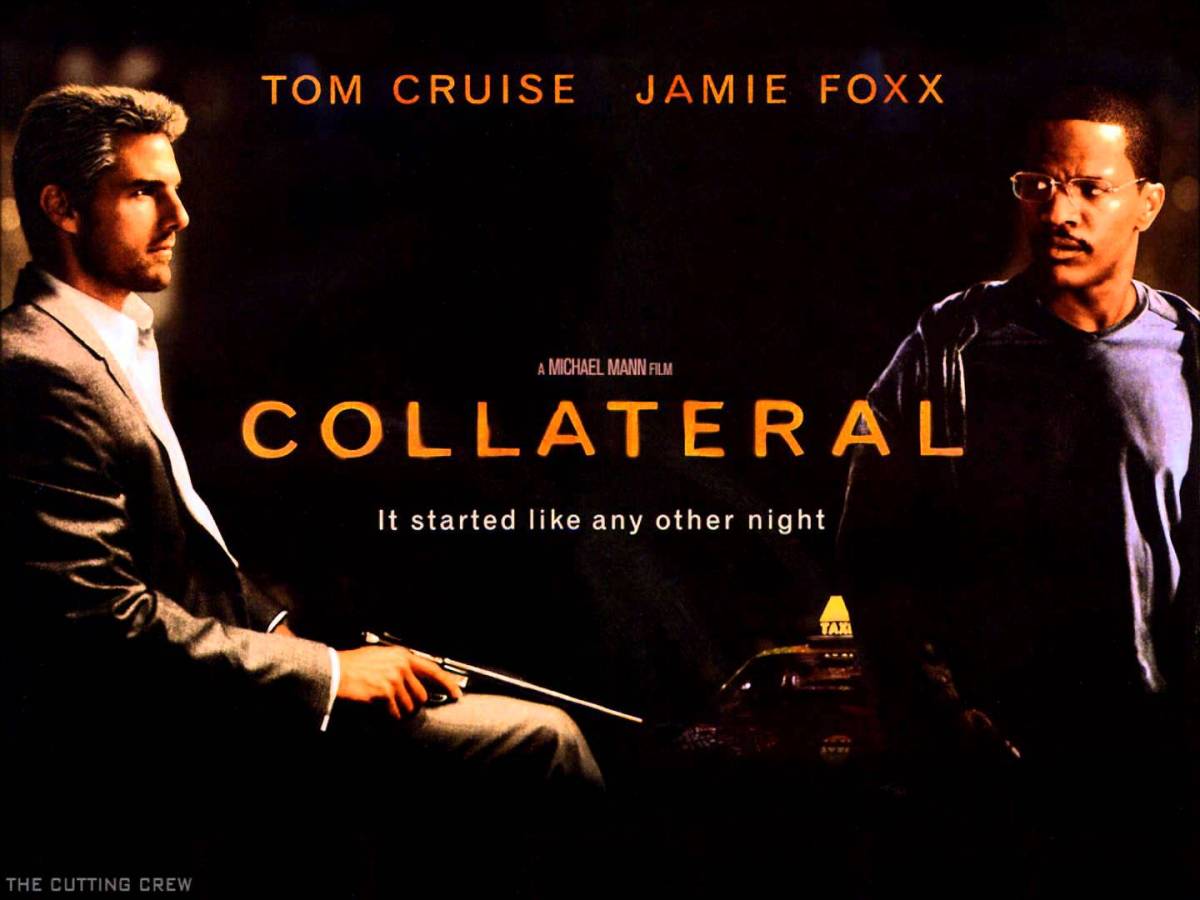


Although “Collateral” works perfectly well as an entertaining neo-noir suspense film, I am firmly of the opinion that our appreciation of the film is enhanced if it is also viewed as an existential thriller offering an intriguing representation of the conflict between existential humanity and nihilism, with Max and Vincent embodying these two viewpoints.

Max is a taxi driver and, in keeping with the principles of existentialism, he is keen to do his best to avoid negative impact on clients within his sphere of control and his working environment. He is fastidious, polite, helpful, respectful, thoughtful and resolutely honest. He takes pride in his work and he is independent and insular - when he closes his taxi door, he leaves behind the outside world and assumes responsibility for the service he provides to his clients. This is a professional service and there is little personal or meaningful engagement with clients as both driver and client are using one another for their mutual benefit, perhaps reflecting commercial and social interaction in society in general as we all contribute to society by offering services others can use without necessarily becoming involved in one another’s lives.

Max’s profession also incorporates the element of existential chance. He never knows who he will meet or where his encounters will take him and he generally remains fairly detached as he goes about his business.

However, after randomly picking up a fare, a lawyer named Annie, Max strikes up a conversation that leads to interest, empathy and engagement. Annie expresses social and professional anxiety which strikes a chord with Max and he offers words of comfort and advice while sharing his own thoughts and ambitions for the future. He reveals his strategy for coping with stress, which consists of contemplating a postcard of a rather symbolic island destination at times when he feels under pressure, tantamount to a form of meditation, and he insists on giving the card to Annie as her need is greater than his. He also discusses his idealistic plans for a limo hire company, aptly named Island Limos. Both Max and Annie are comforted by their encounter but neither seems willing or able to go from engagement to involvement.

We learn a lot about each of these characters in the course of their conversation but also, perhaps, about the place of the thoughtful individual in a career-driven society in which professional pressures to comply and achieve are almost unbearable and personal relationships are tentative and to be approached with caution and perhaps even apprehension.

Max’s next fare will provide a stark contrast in attitude and will present life-changing challenges to Max and his outlook on life.

 Once again underlining the role of chance and the impact of random choices on our lives, Vincent approaches Max for a ride and is ready to walk on to another cab when Max appears to ignore him, but Max calls him back and apologises for his reverie, clearly wishing to do his best for a potential client.

Max and Vincent chat pleasantly enough and their conversation is vaguely similar to the one Max has just had with Annie but it remains business-like and lacks engagement. Vincent is purposeful, confident, sociably curious and pleasant enough but he does not display the sympathy and empathy we witnessed in Max’s conversation with Annie. Vincent questions Max astutely about his career and Max reveals his dream plans for a limo company have been in the works for some twelve years, casting doubt on the probability of them coming to fruition. Vincent has thus gleaned the reality rather than the romanticised version shared with Annie. Vincent is intelligent, cunning and calculating as he gauges Max’s character and situation while apparently engaging in meaningless chat.

Vincent explains he has a series of five meetings to attend through the night and invites Max to take him to his various destinations. Max is reluctant as this breaks company policy but Vincent tempts him to break the rules by offering him money and alluding to his ambitions. Vincent has gathered background information and has shown an ability to read character, allowing him to manipulate Max to suit his own ends. We shall also discover in the course of an argument he has with Max’s boss that he has a masterful knowledge and understanding of rules, regulations and perhaps propriety, and while he has no respect for any of them, he displays the same talent for interpretation and manipulation of rules and as he did for reading character. He is thus willing and able to engineer situations and steer people who are compliant with traditional values and codes of conduct.

It transpires that Vincent has taken the ultimate step in terms of his lack of respect for traditional values and morality as he is, he reveals, a hitman and as such he presents, perhaps, the supreme expression of existential freedom in the form of nihilism. In the course of several philosophical conversations he has with Max, Vincent upholds the theories of chaos and amorality by suggesting there are no good reasons for anything, there is no grand scheme and we are all totally insignificant. He also affirms that those he kills probably deserve their fates but in any case he remains detached and coldly feels no guilt for his actions as he reduces everything to mere mechanical cause and effect, deductively concluding that while he fired a gun at his first victim of the night, it was the bullets and then the fall from an upper floor, for which he claims his victim was responsible, that killed him.

When Vincent’s first victim (of his five targets) falls on to Max’s taxi, again quite by chance, the impact affects not just the car but also Max’s life and outlook. Max is a man who does his best to fulfil his duties while diligently avoiding unnecessary involvement or participation in the lives and actions of others, yet he is now quite directly embroiled in murder and mayhem.

Vincent will force Max to become increasingly involved in his schemes, eventually compelling Max to abandon his neutrality, take a stance and act in accordance with his values.

Max is tethered to the steering wheel of his car in a side street while Vincent goes to dispatch his second victim and the dim view of human nature represented by Vincent is reinforced by the attitude and actions of passers-by who, drawn by Max’s efforts to attract attention, threaten Max and steal Vincent’s briefcase which contains equipment and information relating to his intended victims. Vincent arrives and turns the thieves’ own standard of morality on them, albeit taken to the extreme, as he cold-bloodedly shoots them in the street. Interestingly, Vincent tries to persuade Max that he is responsible for their deaths through his actions as he should have known how he, Vincent, would react. He clearly regards himself as an immutable force of nature bound to follow his path without question or doubt, while he regards Max’s humanity as a weakness, and one to be exploited.

Max is drawn more deeply into Vincent’s activities when he witnesses the murder of Vincent’s third victim close up and he struggles to cope with what he sees, applying his familiar code of morality, honour and truth, only to be told by Vincent that these things do not exist.

Threat is made personal and immediate when Max and Vincent visit Max’s mother in hospital. Vincent attempts to manipulate the situation but Max realises he must take action if he is to prevent Vincent from taking more lives. However, he cannot bring himself to cause harm to Vincent, so instead seizes his briefcase which contains his instructions, and destroys it and them.

Vincent must seek another copy of his mission documents from his employer and Max takes another step from neutrality toward participation when he is forced to play the part of Vincent and collect Vincent’s papers. Although he is initially ill at ease in his interview, when he realises he has nothing to lose as his very survival is in doubt, he takes on Vincent’s persona, adopts his attitude and repeats some of the ideas and words Vincent has used when speaking to him. In so doing, this frightened and careful man is briefly liberated and empowered as he feigns freedom from moral constraint and he obtains the information required, but he is also starting to gain the confidence, conviction and strength to act, as himself.

At a night club we witness the full impact of Vincent’s nihilism as he shoots more or less indiscriminately, causing numerous random deaths on top of the calculated and professional killings of his opponents, in an attempt to complete this part of his mission, as the police close in on him. Vincent saves Max’s life when he shoots a gunman about to fire on Max, and he kills a policeman who tries to lead Max to safety. He claims he did this because Max is good at what he does and they’re in this together but it is possible that, just as Max is being influenced by Vincent’s moral vacuum, Vincent has been touched, even if only slightly, by Max’s humanity and he wants to protect him, even if only to serve his own purposes.

However, the chaotic killing in the night club and the death of the policeman, combined with a beautifully constructed philosophical discussion with Vincent as they flee (in which Max confronts some home truths and comes to doubt the value and point of his own life), push Max over the edge and into the realm of action. He throws caution aside, drives his car at high speed and initiates a potentially lethal crash, leaving their combined destinies to fate.

Both survive and Vincent heads off to fulfil his contract by killing Annie who is due to launch a high-level prosecution the following day. When Max realises who Vincent’s final victim is to be, he sets off to warn and protect her.

There is an elaborate, exciting and suspenseful chase sequence which also incorporates several elements of chance, but the upshot is that Max takes action. He overcomes his fear in the face of Annie’s imminent demise and sets out to participate, however reluctantly, in whatever action is necessary to protect Annie, ending in a showdown with Vincent, a conflict Max wins largely by chance.

Fatally wounded in an underground carriage, with his dying breaths Vincent recalls a story of death on the metro he recounted earlier to Max, a sad and haunting tale that accentuated the insignificance of our lives, and in so doing he actually manages to add a touch of pathos to the end of our nihilistic hitman.

Set in the harsh, cold beauty of the cityscape of Los Angeles, whose myriad of roads may represent the continual random crossing of human lifepaths, the action takes place largely during the night, suggesting darkness of intent and lack of clarity, both visually and morally. It is no accident, then, that at the end Max and Annie head toward the rising sun whose light lends clarity and hope for the future.

This clash between nihilism and existential humanity is captured in a richly detailed and literate script by Stuart Beattie and directed with pace and attention to mood and atmosphere by Michael Mann. It presents philosophical opposition and argument yet it is intrinsically human and engaging.

In terms of performance, I thought all involved acquitted themselves admirably but Jamie Foxx and Tom Cruise did remarkably well and lent thought, depth and authenticity to their roles.

The film performed well at the box office on its release and it carries very respectable scores on review sites, yet it seems to have passed largely into obscurity, a fate this highly engaging, thought-provoking and richly observant film certainly does not deserve.


My thanks for taking the time to read this article. I hope you found it of some value.


Stuart Fernie


I can be contacted at stuartfernie@yahoo.co.uk .


HOME

BLOG


Monday, 14 September 2020

Reflections on the main character and themes in "Joker" (2019)


Reflections on “Joker” (2019)

Directed by Todd Phillips

Written by Todd Phillips and Scott Silver

Starring Joaquin Phoenix, Robert De Niro, Zazie Beetz and Frances Conroy


This film presents a plea for compassion, understanding, empathy and humanity, while also offering up an extreme demonstration of potential consequences for society if we fail to deliver these qualities.

As depicted, society is in decay, both physically and spiritually, with a sort of underclass struggling to cope with overcrowding, dead-end jobs, sub-standard housing, threat to provision of health-care due to financial cuts and services manned by overworked, tired and inattentive operators.

Arthur Fleck works as a party clown for hire and this fits with others’ perceptions of Arthur and, indeed, his perception of himself as one who is not to be taken seriously, provides short-term entertainment, is forgettable and who wears make-up or a mask to hide, and perhaps protect, his true feelings and identity. He has mental health issues, is something of a misfit and a loner and his problems are exacerbated by those keen to boost their own self-esteem by abusing Arthur, verbally, emotionally and physically.


He is acutely aware of his own shortcomings and problems, though he does his best to be what society regards as a good person, caring for his mother, holding down a job and generally treating others with respect and kindness. He appears to have been cowed into accepting what he and others see as his subordinate position in society and, desperate to fit in, he rather meekly accepts others’ unfair and dismissive treatment of him, almost as if he feels this is all he deserves.

However, after a series of mishaps, arguments and accusations which evoke feelings of injustice and distress, he is abused, bullied and assaulted on the subway by a group of arrogant young businessmen who work for billionaire Thomas Wayne, but this time Arthur takes action to defend himself and, with a little revenge thrown in, he shoots his assailants dead, then flees the scene.

He is shocked and upset, yet invigorated, by his initiative and he discovers his actions have considerable public support, especially when Thomas Wayne condemns the killing of his employees, dismissively citing envy and jealousy among the poor as the motivation for the murders, comments that incite resentment and social unrest.


Arthur is bolstered and encouraged by this response and he goes on to uncover the whole sorry truth of his victimisation and abuse as a child, revelations which free him from the shackles of feelings of inadequacy, appeasement of others and low self-esteem, and he feels empowered. He recognises his own suffering at the hands of others and that responsibility for the consequences of his mistreatment lie not with him but with them, and he sets out to educate and punish those who continue to feel they have the right to act in a superior, condescending and hurtful manner at the expense of others and who fail to recognise or be concerned about the impact of their actions on those they abuse.

There are questions and doubts as to just how much of what we see is real or in his mind, but there is no doubting that Arthur’s transformation is real and he appears to have gone from feelings of deficiency and inferiority to others to rejecting all laws, limits and morality.

In keeping with comic-book traditions, extremes are used to clarify positions and points, but this is an origin story for a comic-book villain like no other in that Arthur’s destiny as the Joker is almost irrelevant to the tale that unfolds before us. This is a brave and daring film that offers a stinging indictment of a society in which some turn their backs on and feel superior to those who struggle to find a place in a commercial and highly competitive society, yet society is dependent on the contributions of all for business, position, education, protection and care.


Compassion, empathy and social justice may be viewed as lubricants essential to the smooth and continued functioning of the machinery of society and this film suggests that if we ignore them, we do so at our peril. It is a disturbing film and one that is not for everyone, but it is thoughtful and rewarding. The script and direction are brisk and engaging, and develop the themes and main character in an orderly and structured fashion while creating an atmosphere of disorder and chaos.

In terms of performance, I can only say that I concur with the general view that Joaquin Phoenix is quite extraordinary in the role and I think he thoroughly deserved his Academy Award.


My thanks for taking the time to read this article. I hope you found it of some value.

Stuart Fernie        

I can be contacted at stuartfernie@yahoo.co.uk .

HOME                          

BLOG

Wednesday, 9 September 2020

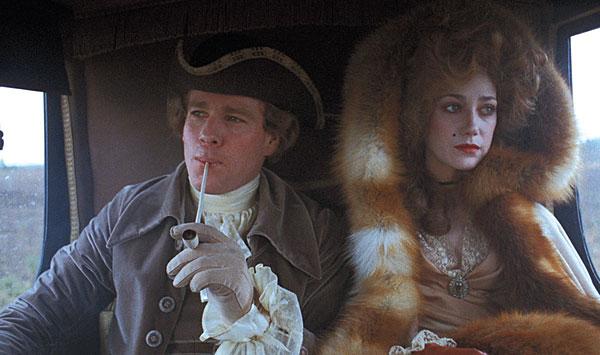
Reflections on characters and themes in "Barry Lyndon" (1975)


Reflections on “Barry Lyndon” (1975)

Written and directed by Stanley Kubrick

Based on a novel by William Makepeace Thackeray

Starring Ryan O’Neal, Marisa Berenson and Patrick Magee


 A video presentation of this material is available here.

When we first meet Redmond Barry, he is an innocent, naïve, gentle, principled and earnest young man for whom idealistic love is all-consuming.

The object of his affections is his considerably more worldly cousin, Nora, who teases and tempts Barry while also pursuing a relationship with a socially well-placed English soldier and landowner, John Quin, with whom she aims to secure her own future, prosperity and position, as well as those of her immediate family.

Outrage at the perceived theft by Quin of the object of Barry’s affections manifests itself in righteous indignation and a challenge to a duel. Barry’s virtuous and high-minded world crashes around him when he is informed he has killed Quin and he must flee, both because of Quin’s death and because of his family’s anger and disappointment at losing the income Quin would have brought to them.

Barry sets off for Dublin but is robbed by a famous highwayman and is compelled to join the army and serve in the Seven Years’ War.

Up to this point, Barry more or less accepts his lot. There are numerous references to destiny and Barry appears to meekly accept the hand fate plays him, though there can be no doubting his courage or the strength of his convictions. He acted on principle when he challenged Quin and he provoked and challenged a fellow soldier in his regiment to ensure he would not fall victim to bullying, but nonetheless, he appears to accept that the general direction of his life is decided by chance or events outwith his control.

That is, until he meets and loses in battle an old family friend, Captain Grogan, who informs Barry that the outcome of the duel (the origin of his present situation) was not as he thought. The ammunition used was not real and Quin had survived and married Nora. Indeed, the entire affair had been pre-arranged because Quin was afraid of Barry and Nora’s family did not want to lose Quin’s income.

This revelation, combined with his miserable and terrifying experiences of battle, pain, hardship and his narrow escapes from death, persuade him that he should no longer be a tacit victim of fate and circumstance, but an active participant in the game of life, taking action to exercise whatever control he can over his own fate and destiny, and refusing to quietly accede to the influence and authority of others.

He will abandon his previous idealistic and romantic principles and view of morality in favour of self-serving pragmatism.

Deciding the army is no longer for him, he turns a chance encounter to his own ends as he steals an officer’s uniform and papers before deserting and heading for freedom.

Next, we see to what extent his outlook has changed when he meets an attractive German girl on his travels. He uses his assumed identity and mission, but also a conscious change in manner and skill in judging the character of others to flatter and beguile the young woman. He uses his natural but calculated charm to engender compassion and sympathy, in complete contrast to the attitude he displayed at the start of the film. He is now playing a part with intelligence and skill and is willing to use others for his own ends.

Having said that, the young woman in question may not be a complete innocent being taken advantage of. She may also be playing a part, or at least have some awareness of what is going on but is willing to play along as having Barry in her life, if only briefly, serves her purpose as well.

Bolstered by this success, Barry is overconfident and lies excessively to Captain Potzdorf of the Prussian army, whose path he crosses on his route to freedom, until he is caught out by fact and must pay the price of his arrogance. He is forced to enlist in the Prussian army and thus, once again due to chance or fate, appears to lose control of his life.

However, Barry realises that control can be gained through the intelligent and knowing exercise of influence and manipulation and, recognising Potzdorf’s weakness for military heroism, flattery and position, he ingratiates his way into Potzdorf’s confidence, initially using his courage to save his life in battle and then currying favour through a variety of other services, and thus gains freedom from the army, though he remains in Potzdorf’s employ. Barry accepts the cards given to him by fate but now plays them with skill and forethought, and with his own purpose in mind.

Barry is given a mission to spy on the Chevalier de Balibari, a professional gambler who is, in turn, suspected of being a spy and Barry is to confirm this. However, on meeting the Chevalier, Barry is struck by a need to be honest with him, though even this honesty is used as a ruse to gain favour and will eventually serve as a means of extricating him from Potzdorf’s clutches and launching him in a new direction.

This compulsion to tell the truth, apart from satisfying his own purposes, is due, perhaps, to the fact that the Chevalier is a fellow Irishman who has adopted a false identity, lives by his wits and chance and is even working as a spy. He recognises no authority, law or morality and may thus be considered a kindred spirit by Barry. Indeed, they will form an alliance and work together to dupe and scam members of high society, maintaining the theme and metaphor of chance and manipulation of fate by playing cards with the wealthy and famous, but cheating quite elaborately to guarantee a positive outcome for themselves. Occasionally, they depend on Barry’s courage and skill with weaponry to ensure payment of a debt.

For Barry, people are now little more than targets for schemes to cheat or defraud them, or a means of self-advancement. The change in his character is quite marked. Due to a combination of personal disillusion, circumstance and the influence of others, Barry has become a con man who believes in nothing but his own survival and prosperity, and who now seeks the security of a permanent source of income and wealth. He spots the beautiful, wealthy and married Lady Lyndon and sets out to use his skills, charm and judgement to seduce her.

The ease and speed of her seduction may suggest that her marriage to the aged and decrepit Sir Charles Lyndon was not all it might have been, despite the birth of their young son, Lord Bullingdon. Perhaps, as in the case of the young German woman he previously befriended and seduced, Barry recognised signs of dissatisfaction and played on these. Though mutually beneficial, both socially and financially, Lady Lyndon’s dull, lifeless and passionless marriage to Sir Charles was unlikely to survive a challenge from a charming, passionate and daring younger man. Once again, using his skills of judgement of character and situation, Barry gently provokes the elderly and infirm Sir Charles into having a seizure, freeing Lady Lyndon to marry Barry a year later.

Sadly for Lady Lyndon, having served her purpose as a means of attaining wealth and position, Barry quickly loses personal interest in her, though they have a son, Bryan.

Barry was devoted to the pursuit of wealth and position, and developed skills, judgement and heartlessness to help him attain them but not to maintain them. He does not have the character or temperament to appreciate and augment his good fortune, merely to indulge in and squander it. He highlights his underlying character and flaws through a series of infidelities, poor business decisions and the build-up of huge debts, all calmly accepted by Lady Lyndon. Perhaps she feels she must meekly accept her fate, or perhaps she feels she is receiving her just desserts for introducing Barry into her household.

The notion of Karma, or even retribution, is developed in the second half of the film, as is the existential contention that our actions impact and influence the lives of others, leading to consequences for all concerned. As he grows up and becomes a young man, Lord Bullingdon achieves and maintains a clarity of vision and understanding with regard to his stepfather’s character, motives and actions, and his willingness to criticise Barry leads to conflict, threat and physical abuse, eventually leading to open assault and Barry’s social, financial and physical undoing.

In terms of emotional retribution, Barry suffers his greatest pain as his young son Bryan dies indirectly as a result of his actions and indulgence, and this loss traumatises Lady Lyndon and drives her to isolation and depression, increasing pressure on Lord Bullingdon who will eventually act to expel Barry from their lives, in a most dramatic and ironic way.

The duel between Bullingdon and Barry recalls that near the beginning of the film, but roles are reversed as here it is Bullingdon who acts out of honour and idealism and a desire to protect his mother, while Barry is now the pretender who has stolen the prize and offended principle. Just as Quin manipulated events in that duel, Barry now tries to control events to some extent, perhaps showing a vestige of humanity, but fails. Chance, fate or Karma see to it that Barry loses the duel and Bullingdon takes control of his mother’s estate.

It is interesting to note that Lady Lyndon shows what may be interpreted as just a hint of regret at the way things have turned out, suggesting this outcome had not been inevitable, but was due to choices made by Barry.

And so, Barry loses everything that he fought to gain, and all as a karmic result of the very actions he took to gain it. Although he reacted to circumstance and disillusion and many of the actions he took in the course of his evolution were amusing or without serious consequence, in the end he rejected principle, compassion and morality in favour of coldly using others to advance his own cause, often at their expense, and without thought of accountability or responsibility toward others.

I saw this film some 45 years after its release and was very pleasantly surprised by it. Stanley Kubrick’s script allows us to chart and sympathise with Barry’s rise and fall while beautifully depicting the society and times in which he lived. His evolution from principled, earnest innocent to disillusioned player to self-centred cad without conscience who eventually gets his comeuppance is captured brilliantly and is engaging, amusing and tragic.

Ryan O’Neal is aptly charming and engaging while the supporting cast fully flesh out their respective roles, lending the production intrigue, humour, intensity and intelligence, and it is a production I thoroughly recommend.


My thanks for taking the time to read this article. I hope you found it of some value.


Stuart Fernie    

I can be contacted at stuartfernie@yahoo.co.uk .


HOME


BLOG

Sunday, 30 August 2020

Reflections on "The Bridge at Remagen" (1969)


Reflections on “The Bridge at Remagen” (1969)

Directed by John Guillermin

Screenplay by William Roberts and Richard Yates

 from a story by Roger O Hirson

Starring George Segal, Robert Vaughn and Ben Gazzara

Music by Elmer Bernstein


According to a number of reviews of the film, “The Bridge at Remagen” is often dismissed as a somewhat run-of-the-mill war film with questionable casting and unexceptional direction. However, for me, this film is a particularly human and thought-provoking presentation in which courage, comradeship, initiative and determination are on display, but the effects of exhaustion, disenchantment and issues concerning the place of ambition and humanity are also thrown into the mix, making this a unique and highly engaging, if underrated and largely forgotten, production.

Interest is added by incorporating the points of view of both sides in the battle for the bridge, with the implication that these “enemies” may share certain outlooks and encounter vaguely similar problems with those in authority.

One of the main themes is the endurance of humanity and idealism in the face of the reality of the constant battle to survive and the ambition and pride of commanding officers on both sides of the conflict.

There is a very clear division between those giving orders and those whose job it is to undertake the action necessary to execute them. While commanders seek glory, a place in history or promotion, those under their command seek survival as they face and attempt to overcome the enemy.

Phil Hartman and his men are constantly pushed to advance the Allied front to reach the strategically important bridge at Remagen and are eventually ordered to take the bridge rather than simply destroy it.

Hartman’s immediate superior, Major Barnes, is keen to gain glory and claim credit through the actions of Hartman and his men, but he shows little understanding or appreciation of the skill, effort and cost to these men of their engagements. This is in direct contrast to Hartman who is all too aware of the effects of constant action on his men and he shows little or no respect for his superior as he addresses Barnes plainly and as a fellow human being, though he recognises he must accept his orders.

Of course, Barnes is, himself, merely following the orders of his superior who, inspired by the prospect of unexpected victory, callously points out that they may lose a few hundred men in taking the bridge rather than destroying it, but that action may shorten the war and assure them a place in history.

Hartman is eventually offered a citation by Barnes for his heroic actions in this assault but he ignores Barnes in favour of joining his friend and comrade, indicating a complete disregard for personal ambition and glory, and a recognition of the importance of relationships, trust and reliance on others built up through common experience and fellowship with his comrades in arms in the course of his wartime experiences.

On the German side of the conflict, Major Paul Krueger is expected to blow up the bridge in order to protect the Fatherland from foreign invasion, but he and his immediate superior are determined to keep it open as long as possible to facilitate  passage home for the remaining 75,000 German troops still in Western Europe. Krueger feels loyalty and duty toward his fellow soldiers who have fought and suffered in the name of the Nazi cause, but High Command considers their loss a reasonable price to pay for protecting Germany and Krueger displays disillusion with policies and orders issued by Hitler.

He is hindered in the fulfilment of both his official orders and his own take on the mission by lack of manpower, outdated information and, eventually, inadequate equipment and supplies, all the responsibility of his superiors. A man of honour, principle and compassion, Krueger is willing to destroy the bridge but delays execution of his orders as he values human life above immediate military and political gain, an act for which he will pay the ultimate price as his superiors do not share his priorities and deny truth, reality and responsibility.

It is ironic that Hartman and Krueger appear to share certain values and come under similar pressure from above, yet they are on opposing sides.

Humanity is also under pressure in the field, however. Hartman and his men may have lost the edge of idealism and purpose with their principles and values buried under the weight of accumulated disenchantment and fatigue as they face repeated encounters with a deadly and determined enemy, senior officers focused on ambition and advancement rather than the lives and morale of their men, and the constant grind of living in one another’s pockets.

Hartman and Sergeant Angelo (known as Angel) are forced to live and serve together and are united by common experience, purpose and general culture, but are divided by an almost existential difference in attitude toward death and commerce. Hartman wearily and respectfully moves on from combat, leaving behind evidence of the struggle to survive, wreckage and bodies, while Angel adopts a far more pragmatic approach, checking out the corpses of the enemy in search of items he can sell. Hartman clearly disapproves but Angel sees no reason why he shouldn’t profit from the war. Although this is a source of conflict between the two and a clear indication of a difference in temperament, there is an equally clear professional respect and trust between them which develops into friendship and brotherhood.

Angel’s conduct suggests a lack of sentimentality but his implied self-interest and cynicism have their limits as he shows compassion and understanding to the girl found in the police cells and he is visibly shaken when he is forced to kill the young sniper firing on his comrades from the hotel.

Hartman regularly displays a caring and compassionate nature, showing thought and consideration for his men and an awareness of the effects on them of the constant danger and threat they face. Yet he can also be cold and heartless if that is what it takes to ensure survival for him and his men.

Toward the end of the film, after several brushes with death and having been convinced that Angel had been fatally wounded, Hartman appears to jokingly accept Angel’s “foibles”, as he sees them, and opts to appreciate and value the courage, self-sacrifice and spirit of his friend. Perhaps Hartman and Angel complement and support one another. Hartman provides heart, direction and perhaps even inspiration for Angel while Angel keeps Hartman grounded in reality, drives him on and even protects him.

The public or common citizens are seen as virtual victims of circumstance forced to comply with whoever is in charge in order to survive. The French girl found in the cells was arrested by the Germans and offers to sleep with Hartman to ensure her own safety. The hotel owner curries favour with both the Germans and Americans and is treated shabbily by both Krueger and Hartman, who each have their own reasons for their conduct, and it transpires that the German officer in charge of bridge security was a schoolteacher before the outbreak of war and was presumably compelled to “volunteer” for military duty.

War affects everyone and for everyone there are consequences.

In my opinion, John Guillermin’s highly assured direction maintains pace, interest and emotional engagement as he handles intense and exciting battle scenes and more intimate scenes of character exposition and development with equal skill and aplomb.

Sympathetic (and sometimes unsympathetic) characters are well observed and drawn as they do their best to survive in situations and circumstances not of their making, and the script is cleverly lent breadth and a universal quality by examining similar themes and attitudes on both sides of the conflict, suggesting that ambition, power struggles and politics of all persuasions can have a negative impact on people and principle.

The performances throughout are excellent but those of the three leads deserve special mention and praise. Robert Vaughn takes a potentially difficult and unsympathetic character and makes him honourable, admirable and conflicted, while Ben Gazzara manages to make the at-times despicable Angel touching, loyal and appealing as well. George Segal is simply superb as he allows us to understand and share Hartman’s humanity, frustration, disenchantment, anger and relief.

The music by Elmer Bernstein is stirring, touching and highly memorable, and adds considerably to the whole experience.

As I suggested at the start of this video, for me this is an engrossing, entertaining and thought-provoking film which is greatly underrated and deserves a higher standing than it seems to hold in various reviews I have read.


My thanks for taking the time to read this article. I hope you found it of some value.

Stuart Fernie

I can be contacted at stuartfernie@yahoo.co.uk .

HOME

BLOG


Friday, 31 July 2020

Reflections on Le Mans 66 (Ford v Ferrari)

Reflections on “Le Mans ‘66” (Ford v Ferrari)

Directed by James Mangold  

Written by Jez Butterworth, John-Henry Butterworth and Jason Keller

Starring Matt Damon, Christian Bale, Jon Bernthal, Caitriona Balfe,

Tracy Letts and Josh Lucas


Billed as the story of Ford’s showdown with Ferrari at Le Mans in 1966, this film does, indeed, relate that tale but in the process, it says so much more. This is a study of the relationship and conflict between big business and those who passionately pursue auto racing perfection, the ingenuity, grit and determination of our heroes, and the essential importance of devoted friendship and family support in the face of adversity and setback. The story is recounted with no little humour, considerable excitement, and infectious and endearing positivity.


It is the early sixties and Ford sales are in decline. It is suggested Ford should enter the world of auto racing in order to pursue a different direction which might stimulate public interest and boost sales. The design and performance of cars produced by Enzo Ferrari are held up as the most impressive, desirable and potentially inspirational, and so a takeover of Ferrari is proposed by Ford but is rejected quite decisively by Ferrari who has used Ford’s interest to gain a more advantageous and more lucrative deal from Fiat. Incensed at Ferrari’s snub, Henry Ford 2nd announces he wishes to take on Ferrari at Le Mans, no matter the cost, and his staff are to assemble a team to produce the desired result.


Ford management, as depicted in the film, is clearly focused on the bigger picture. The management team consists of money men whose priorities are process and sales. They have built an image and reputation of solid, clean-cut reliability, and occupy (in their minds) an integral and revered place in American society. They have smugly concentrated on image, sales, loyalty and conformity rather than design and innovation and now, in something of a rut and faced with falling sales, they find themselves out of their depth in terms of design and performance that will appeal to the younger generation.

They must turn to someone who has a genuine interest in and understanding of the complexities involved in creating and producing the advanced and innovative technology and design which will allow them to produce a world-beating, or more precisely, a Ferrari-beating, vehicle. They must turn to someone driven by a passion not for making money but for developing a vehicle which enables the fusion of man and machine and a combination of speed and control.


They turn to Carroll Shelby, a former winner of Le Mans and designer and builder of sports cars, and he will turn to Ken Miles, a brilliant but demanding and difficult driver, to help him.


Shelby is devoted to and obsessed by the pursuit of automotive perfection, but he is also a businessman with his own small-scale production company and he is blessed with considerable personal charm and confidence. He is therefore considered the ideal candidate to carry forward Ford’s ambition of developing a car to defeat Ferrari at Le Mans, but he cannot drive professionally for health reasons and so he seeks the participation of the best driver he knows, Ken Miles.

Miles runs a small garage but we quickly discover he has no head for business as his enterprise is seized by the IRS, leaving him without income or means to support his family. He is remarkably outspoken and does not shrink from expressing his thoughts and opinions, often causing offence and creating a negative impression. He is entirely independent and will not compromise, even at his own expense, and appears to have little self-discipline, socially speaking. He is also, however, an enormously gifted and knowledgeable driver and mechanic with considerable experience and daring and is driven by his desire to produce the perfect lap at Le Mans.


And so, we have what appears to be the perfect combination of figures who, together, should be able to achieve something outstanding. Passion and ability require funding to bring their ideas to fruition while businessmen constantly seek projects or concepts in which to invest. In theory, this is a match made in Heaven, but Shelby must astutely and cunningly find compromise and middle ground between Ken’s obstinate but highly insightful input and driving skills, and Ford’s resolute insistence on conformity to company image and marketing issues.

Unfortunately, in the end, Shelby and Ken’s personal investment and obsession are sacrificed and subsumed into the ends of big business. Ford gains the marketing coup of their three cars crossing the finish line together but at the expense of the victory Ken Miles drove so hard to achieve. Although it was a moral victory for Shelby and Miles, the brand was the winner, with the efforts of those individuals who made it all happen passing into general oblivion, until now. It is interesting to note that Enzo Ferrari, who was also driven by a desire to create automotive perfection, seems to appreciate the talent and effort of Ken Miles at Le Mans more than his own employers as Ferrari tips his hat toward Miles after the race.


Underpinning their achievements are the constant and devoted support of Ken’s wife and son, and the understated but absolutely essential friendship between Shelby and Ken Miles.

Mollie and Peter offer Ken emotional and social stability and strength, especially when the chips are down. They express their belief in him and clearly admire and love him, and this empowers Ken to undertake and complete his work, and he includes and involves them in many aspects of his working life. This underplayed but essential incorporation of family life offers moments of reflection, security and humour not just to Ken, but to the audience as well, and is a welcome contrast to the action and drama on and off the track.

Shelby and Ken trust one another and have confidence in one another. Their friendship goes a long way to explain the progress they made together on their project. Each knows the other’s strengths and weaknesses and they complement one another. Each is willing to forgive and forget minor grievances, not just to benefit the project, but because they recognise pressures from outside and they genuinely care about and respect one another, though they would never openly express these feelings. They have a bond and an understanding forged by their common passions and obsessions but honed by common experience, mutual respect and admiration.


This could easily have been a dry tale of interest only to fans of motor sport but the script and direction broaden the characterisations and the themes to make this a relatively lightly told but highly effective and positive drama with exciting action and moments of humour. The performances of all involved are quite superb and totally engaging. In keeping with several of his other films, director James Mangold manages to combine heart-stopping action, tension, drama and humanity, and I have to say I found this film engrossing, gently thought-provoking and highly entertaining.

My thanks for taking the time to read this article. I hope you found it of some value.

Stuart Fernie

I can be contacted at stuartfernie@yahoo.co.uk .


HOME

BLOG