Sunday, 30 August 2020

Reflections on "The Bridge at Remagen" (1969)


Reflections on “The Bridge at Remagen” (1969)

Directed by John Guillermin

Screenplay by William Roberts and Richard Yates

 from a story by Roger O Hirson

Starring George Segal, Robert Vaughn and Ben Gazzara

Music by Elmer Bernstein


According to a number of reviews of the film, “The Bridge at Remagen” is often dismissed as a somewhat run-of-the-mill war film with questionable casting and unexceptional direction. However, for me, this film is a particularly human and thought-provoking presentation in which courage, comradeship, initiative and determination are on display, but the effects of exhaustion, disenchantment and issues concerning the place of ambition and humanity are also thrown into the mix, making this a unique and highly engaging, if underrated and largely forgotten, production.

Interest is added by incorporating the points of view of both sides in the battle for the bridge, with the implication that these “enemies” may share certain outlooks and encounter vaguely similar problems with those in authority.

One of the main themes is the endurance of humanity and idealism in the face of the reality of the constant battle to survive and the ambition and pride of commanding officers on both sides of the conflict.

There is a very clear division between those giving orders and those whose job it is to undertake the action necessary to execute them. While commanders seek glory, a place in history or promotion, those under their command seek survival as they face and attempt to overcome the enemy.

Phil Hartman and his men are constantly pushed to advance the Allied front to reach the strategically important bridge at Remagen and are eventually ordered to take the bridge rather than simply destroy it.

Hartman’s immediate superior, Major Barnes, is keen to gain glory and claim credit through the actions of Hartman and his men, but he shows little understanding or appreciation of the skill, effort and cost to these men of their engagements. This is in direct contrast to Hartman who is all too aware of the effects of constant action on his men and he shows little or no respect for his superior as he addresses Barnes plainly and as a fellow human being, though he recognises he must accept his orders.

Of course, Barnes is, himself, merely following the orders of his superior who, inspired by the prospect of unexpected victory, callously points out that they may lose a few hundred men in taking the bridge rather than destroying it, but that action may shorten the war and assure them a place in history.

Hartman is eventually offered a citation by Barnes for his heroic actions in this assault but he ignores Barnes in favour of joining his friend and comrade, indicating a complete disregard for personal ambition and glory, and a recognition of the importance of relationships, trust and reliance on others built up through common experience and fellowship with his comrades in arms in the course of his wartime experiences.

On the German side of the conflict, Major Paul Krueger is expected to blow up the bridge in order to protect the Fatherland from foreign invasion, but he and his immediate superior are determined to keep it open as long as possible to facilitate  passage home for the remaining 75,000 German troops still in Western Europe. Krueger feels loyalty and duty toward his fellow soldiers who have fought and suffered in the name of the Nazi cause, but High Command considers their loss a reasonable price to pay for protecting Germany and Krueger displays disillusion with policies and orders issued by Hitler.

He is hindered in the fulfilment of both his official orders and his own take on the mission by lack of manpower, outdated information and, eventually, inadequate equipment and supplies, all the responsibility of his superiors. A man of honour, principle and compassion, Krueger is willing to destroy the bridge but delays execution of his orders as he values human life above immediate military and political gain, an act for which he will pay the ultimate price as his superiors do not share his priorities and deny truth, reality and responsibility.

It is ironic that Hartman and Krueger appear to share certain values and come under similar pressure from above, yet they are on opposing sides.

Humanity is also under pressure in the field, however. Hartman and his men may have lost the edge of idealism and purpose with their principles and values buried under the weight of accumulated disenchantment and fatigue as they face repeated encounters with a deadly and determined enemy, senior officers focused on ambition and advancement rather than the lives and morale of their men, and the constant grind of living in one another’s pockets.

Hartman and Sergeant Angelo (known as Angel) are forced to live and serve together and are united by common experience, purpose and general culture, but are divided by an almost existential difference in attitude toward death and commerce. Hartman wearily and respectfully moves on from combat, leaving behind evidence of the struggle to survive, wreckage and bodies, while Angel adopts a far more pragmatic approach, checking out the corpses of the enemy in search of items he can sell. Hartman clearly disapproves but Angel sees no reason why he shouldn’t profit from the war. Although this is a source of conflict between the two and a clear indication of a difference in temperament, there is an equally clear professional respect and trust between them which develops into friendship and brotherhood.

Angel’s conduct suggests a lack of sentimentality but his implied self-interest and cynicism have their limits as he shows compassion and understanding to the girl found in the police cells and he is visibly shaken when he is forced to kill the young sniper firing on his comrades from the hotel.

Hartman regularly displays a caring and compassionate nature, showing thought and consideration for his men and an awareness of the effects on them of the constant danger and threat they face. Yet he can also be cold and heartless if that is what it takes to ensure survival for him and his men.

Toward the end of the film, after several brushes with death and having been convinced that Angel had been fatally wounded, Hartman appears to jokingly accept Angel’s “foibles”, as he sees them, and opts to appreciate and value the courage, self-sacrifice and spirit of his friend. Perhaps Hartman and Angel complement and support one another. Hartman provides heart, direction and perhaps even inspiration for Angel while Angel keeps Hartman grounded in reality, drives him on and even protects him.

The public or common citizens are seen as virtual victims of circumstance forced to comply with whoever is in charge in order to survive. The French girl found in the cells was arrested by the Germans and offers to sleep with Hartman to ensure her own safety. The hotel owner curries favour with both the Germans and Americans and is treated shabbily by both Krueger and Hartman, who each have their own reasons for their conduct, and it transpires that the German officer in charge of bridge security was a schoolteacher before the outbreak of war and was presumably compelled to “volunteer” for military duty.

War affects everyone and for everyone there are consequences.

In my opinion, John Guillermin’s highly assured direction maintains pace, interest and emotional engagement as he handles intense and exciting battle scenes and more intimate scenes of character exposition and development with equal skill and aplomb.

Sympathetic (and sometimes unsympathetic) characters are well observed and drawn as they do their best to survive in situations and circumstances not of their making, and the script is cleverly lent breadth and a universal quality by examining similar themes and attitudes on both sides of the conflict, suggesting that ambition, power struggles and politics of all persuasions can have a negative impact on people and principle.

The performances throughout are excellent but those of the three leads deserve special mention and praise. Robert Vaughn takes a potentially difficult and unsympathetic character and makes him honourable, admirable and conflicted, while Ben Gazzara manages to make the at-times despicable Angel touching, loyal and appealing as well. George Segal is simply superb as he allows us to understand and share Hartman’s humanity, frustration, disenchantment, anger and relief.

The music by Elmer Bernstein is stirring, touching and highly memorable, and adds considerably to the whole experience.

As I suggested at the start of this video, for me this is an engrossing, entertaining and thought-provoking film which is greatly underrated and deserves a higher standing than it seems to hold in various reviews I have read.


My thanks for taking the time to read this article. I hope you found it of some value.

Stuart Fernie

I can be contacted at stuartfernie@yahoo.co.uk .

HOME

BLOG


Friday, 31 July 2020

Reflections on Le Mans 66 (Ford v Ferrari)

Reflections on “Le Mans ‘66” (Ford v Ferrari)

Directed by James Mangold  

Written by Jez Butterworth, John-Henry Butterworth and Jason Keller

Starring Matt Damon, Christian Bale, Jon Bernthal, Caitriona Balfe,

Tracy Letts and Josh Lucas


Billed as the story of Ford’s showdown with Ferrari at Le Mans in 1966, this film does, indeed, relate that tale but in the process, it says so much more. This is a study of the relationship and conflict between big business and those who passionately pursue auto racing perfection, the ingenuity, grit and determination of our heroes, and the essential importance of devoted friendship and family support in the face of adversity and setback. The story is recounted with no little humour, considerable excitement, and infectious and endearing positivity.


It is the early sixties and Ford sales are in decline. It is suggested Ford should enter the world of auto racing in order to pursue a different direction which might stimulate public interest and boost sales. The design and performance of cars produced by Enzo Ferrari are held up as the most impressive, desirable and potentially inspirational, and so a takeover of Ferrari is proposed by Ford but is rejected quite decisively by Ferrari who has used Ford’s interest to gain a more advantageous and more lucrative deal from Fiat. Incensed at Ferrari’s snub, Henry Ford 2nd announces he wishes to take on Ferrari at Le Mans, no matter the cost, and his staff are to assemble a team to produce the desired result.


Ford management, as depicted in the film, is clearly focused on the bigger picture. The management team consists of money men whose priorities are process and sales. They have built an image and reputation of solid, clean-cut reliability, and occupy (in their minds) an integral and revered place in American society. They have smugly concentrated on image, sales, loyalty and conformity rather than design and innovation and now, in something of a rut and faced with falling sales, they find themselves out of their depth in terms of design and performance that will appeal to the younger generation.

They must turn to someone who has a genuine interest in and understanding of the complexities involved in creating and producing the advanced and innovative technology and design which will allow them to produce a world-beating, or more precisely, a Ferrari-beating, vehicle. They must turn to someone driven by a passion not for making money but for developing a vehicle which enables the fusion of man and machine and a combination of speed and control.


They turn to Carroll Shelby, a former winner of Le Mans and designer and builder of sports cars, and he will turn to Ken Miles, a brilliant but demanding and difficult driver, to help him.


Shelby is devoted to and obsessed by the pursuit of automotive perfection, but he is also a businessman with his own small-scale production company and he is blessed with considerable personal charm and confidence. He is therefore considered the ideal candidate to carry forward Ford’s ambition of developing a car to defeat Ferrari at Le Mans, but he cannot drive professionally for health reasons and so he seeks the participation of the best driver he knows, Ken Miles.

Miles runs a small garage but we quickly discover he has no head for business as his enterprise is seized by the IRS, leaving him without income or means to support his family. He is remarkably outspoken and does not shrink from expressing his thoughts and opinions, often causing offence and creating a negative impression. He is entirely independent and will not compromise, even at his own expense, and appears to have little self-discipline, socially speaking. He is also, however, an enormously gifted and knowledgeable driver and mechanic with considerable experience and daring and is driven by his desire to produce the perfect lap at Le Mans.


And so, we have what appears to be the perfect combination of figures who, together, should be able to achieve something outstanding. Passion and ability require funding to bring their ideas to fruition while businessmen constantly seek projects or concepts in which to invest. In theory, this is a match made in Heaven, but Shelby must astutely and cunningly find compromise and middle ground between Ken’s obstinate but highly insightful input and driving skills, and Ford’s resolute insistence on conformity to company image and marketing issues.

Unfortunately, in the end, Shelby and Ken’s personal investment and obsession are sacrificed and subsumed into the ends of big business. Ford gains the marketing coup of their three cars crossing the finish line together but at the expense of the victory Ken Miles drove so hard to achieve. Although it was a moral victory for Shelby and Miles, the brand was the winner, with the efforts of those individuals who made it all happen passing into general oblivion, until now. It is interesting to note that Enzo Ferrari, who was also driven by a desire to create automotive perfection, seems to appreciate the talent and effort of Ken Miles at Le Mans more than his own employers as Ferrari tips his hat toward Miles after the race.


Underpinning their achievements are the constant and devoted support of Ken’s wife and son, and the understated but absolutely essential friendship between Shelby and Ken Miles.

Mollie and Peter offer Ken emotional and social stability and strength, especially when the chips are down. They express their belief in him and clearly admire and love him, and this empowers Ken to undertake and complete his work, and he includes and involves them in many aspects of his working life. This underplayed but essential incorporation of family life offers moments of reflection, security and humour not just to Ken, but to the audience as well, and is a welcome contrast to the action and drama on and off the track.

Shelby and Ken trust one another and have confidence in one another. Their friendship goes a long way to explain the progress they made together on their project. Each knows the other’s strengths and weaknesses and they complement one another. Each is willing to forgive and forget minor grievances, not just to benefit the project, but because they recognise pressures from outside and they genuinely care about and respect one another, though they would never openly express these feelings. They have a bond and an understanding forged by their common passions and obsessions but honed by common experience, mutual respect and admiration.


This could easily have been a dry tale of interest only to fans of motor sport but the script and direction broaden the characterisations and the themes to make this a relatively lightly told but highly effective and positive drama with exciting action and moments of humour. The performances of all involved are quite superb and totally engaging. In keeping with several of his other films, director James Mangold manages to combine heart-stopping action, tension, drama and humanity, and I have to say I found this film engrossing, gently thought-provoking and highly entertaining.

My thanks for taking the time to read this article. I hope you found it of some value.

Stuart Fernie

I can be contacted at stuartfernie@yahoo.co.uk .


HOME

BLOG


Tuesday, 30 June 2020

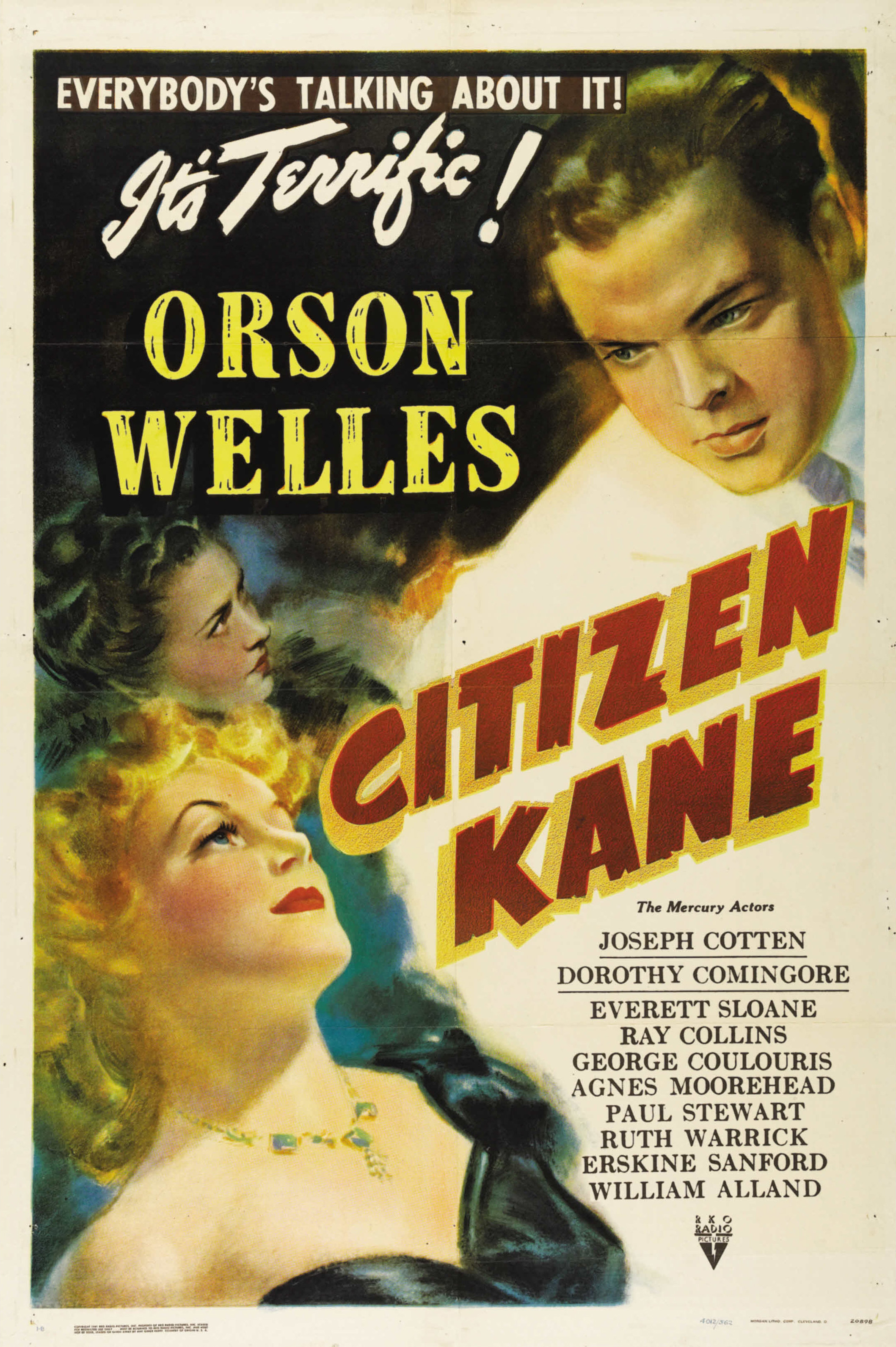
Rosebud - reflections on Charles Foster Kane (Citizen Kane)


Rosebud

Reflections on Charles Foster Kane


A video presentation of this material is available here.

The entire premise of “Citizen Kane” is to uncover the story behind tycoon Charles Foster Kane’s last word, “Rosebud”, and it is only at the end of the film that Rosebud is rather poignantly revealed to be the sledge with which Kane played as a child. Indeed, the young Charles is seen having fun with Rosebud the very day he is told that as a result of his mother coming into considerable wealth, his future care and education are to be entrusted to a total stranger, with the purpose of equipping him for a “better life”, though at the expense of the care, love, nurturing, stability and reassurance his parents might have provided.


Rosebud represents, therefore, Kane’s youthful innocence, idealism, trust, hope and potential, all suddenly diverted or redirected in the name of a more successful future. As time goes by and in the absence of parental affection, concern and advice, and doubtless bolstered by the reassurance of financial security and feeling no pressure to make a living or comply with standards and regulations, Kane displays little prudence and recognises no need to behave responsibly as he is expelled from a variety of schools and he confronts self-fulfilment but without the concept of integrity or altruism.

Seemingly to his great credit, he finds purpose and direction when he buys a failing newspaper in which he proudly declares his principles – to be truthful to his readers and to campaign on behalf of the underprivileged. While this declaration of apparent integrity is worthy, we are also aware of a willingness to apply manipulation and cunning to pursue broader aims and ambitions as he develops his newspaper empire by way of sensationalism and unfounded opinion pieces, allowing him to establish and expand social and personal influence.


He is willing to subsidise his paper with his personal fortune, however it becomes clear that this may be viewed as an investment in his own future as his editorial influence will eventually translate into aspirations toward political power when he sets his sights on becoming Governor and perhaps then President.

Out of the blue, we learn he is to marry the niece of the President. It becomes clear, however, that his relationship with Emily takes second place to the exercise of influence and the seeking of power, and this is brilliantly captured in the film by the ever-increasing distance and ever-deteriorating atmosphere between Kane and his wife at the breakfast table. It may be that each seeks to profit by the other’s position and political ambition. Each may have been dazzled by the prospect of social and political advancement but each is disappointed by the lack of personal fulfilment in the relationship. The marriage, like the newspaper empire, may have been something of a façade to cover broader ambitions.

This may go some way to explaining Kane’s attraction to Susan, a relatively simple but sincere failing singer. She is natural and she seems to like Kane for himself as she doesn’t know of him. She is easy to get on with and they appear to have a genuine bond of friendship and mutual appreciation as Kane offers to help her with singing lessons.

However, Kane’s political ambitions and his marriage are brought to an end by sensation-driven press coverage of Kane and Susan’s friendship sponsored by Kane’s opponent for the governorship. Kane marries Susan but is determined to transform her singing career into something worthy but also, more importantly, into a source of pride for him. Despite evidence of Susan’s limited singing ability and her own feelings of inadequacy, Kane has an entire Opera House built around her talent. Perhaps he aspires to social and cultural worth and standing, but in personalising the construction of the Opera House to promote his wife’s career and his own status, he is indulging in another sham which is doomed to failure.


It is at this point that he finally loses the friendship of his old ally, Jed Leland. Having moved to Chicago after a dispute with Kane over principle, Jed embarks on a review of Susan’s performance while she is on tour but he drinks himself into a stupor while writing and falls asleep before completing it. Kane reads what he has written and finishes it for him, giving a balanced, fair and damning review of his wife’s performance. He recognises the truth but refuses to accept it. By now corrupted by ego-driven desires fuelled by sufficient wealth to engender a feeling of entitlement, Kane will fire his friend Jed for refusing to twist events to suit his desired image of them, and at the same time will do away with whatever vestiges of integrity he had left. He will also push Susan to her limit and beyond before seeing things from another’s point of view and conceding that ambition and means are not enough to guarantee success.


Almost by way of compensation, Kane sets about constructing Xanadu, a vast home complex and playground which is essentially a shrine to money and ego. He fills it with artwork, statues, souvenirs and a whole variety of objects, yet his wife Susan wants to leave him because he fails to understand that giving her things and a palatial home are no substitute for taking a genuine interest in her. All he has built is hollow, a setting with no substance. He aspires to greatness and perhaps a place in history by buying and building artworks, influence and edifices but he fails to realise that a legacy of worth is often born of humanity, warmth, hope and principle, and tributes or monuments are only of worth if undertaken in honour of another.

Perhaps Charles Foster Kane was deprived of the avenue of true greatness when his mother (and he) became fabulously wealthy and his life was redirected on the path of perceived success, and while he certainly garnered money and the trappings of success, and attracted notoriety, he remained fundamentally unfulfilled, as suggested by his wistful whispering of “Rosebud” on his death bed.


My thanks for taking the time to read this article. I hope you found it of some value.


Stuart Fernie

I can be contacted at stuartfernie@yahoo.co.uk .


HOME


BLOG


Saturday, 20 June 2020

Reflections on characters and themes in The Deer Hunter (1978)


Reflections on “The Deer Hunter” (1978)

Directed by Michael Cimino

Screenplay by Deric Washburn

Story by Deric Washburn, Michael Cimino, Louis Garfinkle

 and Quinn K Redeker

Starring Robert De Niro, Christopher Walken, John Savage, Meryl Streep and John Cazale

Music by Stanley Myers


A video presentation of this material is available here.

“The Deer Hunter” is the story of three friends from an industrial town in Pennsylvania, Michael, Nick and Steven, who join the American army to fight in Vietnam toward the end of the war.

Although the Vietnam war is largely the context for the action of the film, political issues concerning American involvement in the conflict are avoided. We focus on the experiences of our three main characters and the effects these experiences have on them.

The film may usefully be thought to be divided into three sections; an examination of their “normal” lives in Clairton, their home town; the trauma they endure in Vietnam, especially when captured; and the consequences for all three on their physical health, their mental health, their relationships and their futures.

Normality


Through scenes in and around their workplace, Steven’s wedding and a hunting trip, a picture is built up of a blue-collar community in an industrial town in eastern America. We focus on a group of friends who are close, hard-working, relaxed and fun-loving. Their lives may be somewhat dull and predictable but they are unpretentious, honest and genuine. They are happy to be in work and are happy to have good friends with whom to share the ups and downs of their lives.

In scenes that are rich in characterisation and subtle plot development, we learn something more about each of the characters and their relationships, problems and feelings with virtually every segment.

Family and honour are clearly very important to Steven even if they can cause conflict. Nick and Linda are drawn to one another, though Michael also has unexpressed feelings for Linda, which he is avoiding. Stanley is disorganised and is something of a failure and he carries a gun to compensate. Axel is a fun-loving simple guy with a limited vocabulary and there are numerous other secondary characters who contribute to a bustling, positive atmosphere and the image of a group of diverse but devoted friends who appear willing to overlook foibles and potential minor conflict for the sake of their continued friendship. They may be considered typical of many close-knit communities across America.

Michael is a skilled hunter whose motto is “one shot”. Apparently, he believes that a hunter should restrict himself to a single shot when pursuing his prey, perhaps thus proving his prowess. He may feel that anything more would be an unfair advantage and would diminish the test of skill in this one-on-one contest. There is an essential difference between the prey and its armed hunter in that the prey will kill for survival while man will kill for sport and fun, an aspect of hunting and killing that will resonate with Michael in his wartime experiences and will eventually cause him to re-evaluate his attitude to hunting.

Two or three events indicate that change is coming. At Steven’s wedding, a lone soldier distractedly enters the hall and orders a drink. When Michael and Nick offer to buy him another in a gesture of respect and solidarity, the soldier raises his glass and glumly says “Fuck it”. While Michael and Nick laugh it off, this is something of a portent of what awaits them and provides a clear contrast of attitude between the idealistic volunteers and the experienced soldier.

When Steven and his bride Angela drive away, Michael runs off, stripping as he goes and he is eventually found by Nick who sits with him and they have a heart to heart chat. Nick reveals he loves his home town and his life, and he asks Michael not to leave him in Vietnam should the worst happen. Clearly, his upcoming departure and its potentially lethal consequences are causing Nick to reflect on and appreciate his life. Naturally, Michael promises his friend he will take care of him.

On the way to a hunting trip, the friends stop off to change and prepare. As usual, Stanley is disorganised and needs to borrow a pair of Michael’s boots. On this occasion, Michael surprises Stanley and the others by refusing to help Stanley out. There is a minor argument, but it is clear that Michael, no doubt thinking ahead to the situation and dangers that await him, is all too aware of the need to be prepared and to be independent. He wants to give Stanley a lesson in realism and responsibility, though Stanley, and perhaps the others, see only that Michael is refusing to help his friend. The very prospect of leaving for war is creating tension and is leading to change in perception and the dynamic of their friendship.

This part of the film ends with the friends gathered in their regular bar one last time before the departure of Michael, Nick and Steven, drinking contentedly to the future with the sanctity of friendship placed above all other considerations.

Trauma

In sudden and complete contrast with this familiar and calm sight, we are then assaulted, visually and audibly, by the brutal killings of innocent civilians by an unidentified assailant and then by the vicious response by Michael to these attacks.

We are no longer in polite, well-ordered society surrounded by the warmth of friendship and stability. This is war-ravaged Vietnam subjected to acts of inhumanity and abject cruelty in an attempt to instil fear and compliance. Michael has adapted to his circumstances and is willing to do whatever it takes to survive and overcome, including fighting fire with fire, literally.

In the immediate aftermath of this battle, Michael meets Nick and Steven who have arrived to help, but all three are captured and taken to a floating stockade where prisoners are forced to play Russian Roulette for the pleasure of their captors who place bets on their chances of survival.


Within the film, Russian Roulette (which was not, apparently, played during the Vietnam conflict) is an ingenious metaphor as it links with Michael’s one-shot hunting philosophy but it contradicts and negates the element of skill and focuses on chance and the end result of death by shooting for sport and fun. It may also represent any battle or combat in which one’s life is at risk, as bullets fly all around you, and it takes just one random bullet to end your life, while amply clarifying the devastating psychological pressure that risk entails.

Steven is gripped by fear and falls apart psychologically to the extent that he is unable to function, thus providing no sport for his captors but also offering no support to his captive friends, Michael and Nick.

Nick is profoundly unhappy and distressed but he is persuaded by Michael that there is a chance to survive and also to escape. Michael is unhappy but remains calm and calculating enough to formulate a daring plan in which he will turn his captors’ cruelty against them. Once again, Michael demonstrates realism and a willingness to do whatever is necessary in the most awful of circumstances.

The three friends escape, though Michael’s realism and determination have to be tempered by Nick’s devotion to friendship to ensure Steven’s survival. All three survive but they are separated and we learn that they suffer varying types and degrees of injury and trauma.

We join Nick in hospital and he is severely traumatised at first, barely able to communicate and function mentally, though he is physically well. When he has recovered sufficiently to be discharged, he tries to phone Linda at home but he gives up relatively easily. This is something of a turning point for Nick as he appears to turn his back on his past life. No direct explanation is offered for this but several factors may have contributed to this significant change of heart.

His service in Vietnam has effectively derailed his life. With his senses heightened and focused on survival in the face of very real threat to his life every day, he may have found it easier to cope with the present by not considering the past.

He is now in a completely different and far-off environment with no link or connection to his past. Perhaps he feels his past life is irrelevant as he faces fresh challenges and must make choices based on his current situation.

He hears bullets fired and is instantly transported back to his experiences at the hands of his captors when he was forced to play Russian Roulette. He discovers the game in progress, run by gangsters with volunteer participants, and he has a conflicted response to this as he is both repulsed and fascinated. Perhaps he is drawn to the game because everything is dull by comparison as the whole of life is reduced to a simple, uncomplicated but all-important choice and act. Yet he also recognises the waste and devaluation of life as onlookers place bets and seek to profit from others’ compulsion to play with their own lives.

We see him being driven off toward temptation and the indulgence of personal demons, pursued by Michael who fails to catch up with and protect his friend, and we will learn shortly that Nick is reported as AWOL.

Consequences


Michael returns home and is eventually reunited with his friends who are basically unchanged, but Michael is no longer the same man. There is an awkwardness in their encounters as they no longer have shared experiences to unite them and to discuss.

Michael has seen and done terrible things – he appears to be suffering from Post-Traumatic Stress Disorder - and these experiences affect his perception and help to form his response to situations. Having lived at a heightened level, it is difficult to return to what may now seem mundane and dull activities and tasks though they may have fulfilled him prior to his experience in Vietnam. Michael wears his military uniform almost constantly, accentuating the change in his outlook and demeanour, but also underscoring the new-found difference between him and his friends.

There is a burgeoning relationship with Linda but it is burdened by scruples over Nick, and Linda’s continued feelings for him.

On a hunting trip, Michael pursues a buck and has it in his sights but he cannot bring himself to kill it, and this may be because he has gained an appreciation for life, all life.

During this trip, Stanley light-heartedly threatens Axel with a gun, largely because he feels empowered by it. Axel does not take it seriously but Michael is distressed by the ease and lack of reflection with which Stanley endangers Axel’s life so he gives Stanley a taste of Russian Roulette in order to teach him a lesson about the value of life and responsibility. Needless to say, this leads to a rift in their friendship, fuelled by the different perceptions, values and outlook brought about by Michael’s time in Vietnam while Stanley appears not to have grown or developed.

Michael discovers that Steven is back from Vietnam and is resident in a military hospital. He was badly injured and is a multiple amputee. This has resulted not only in profound physical consequences but has also incurred problems with mental health, emotional wellbeing, relationship issues and a severe lack of self-esteem.

Desperate to restore things to how they were prior to the war, Michael wants to take Steven home and discovers a large cache of money in Steven’s things, money sent regularly from Vietnam, allowing Michael to surmise that it is coming from Nick.

Returning to Vietnam, Michael eventually finds Nick embroiled in the gangster-run games of Russian Roulette. Nick has been deeply psychologically damaged by his experiences and is now lost in a drug-addled but lucid state of denial and living for the moment. He appears to have rejected all thought of his previous life and has been overwhelmed by his gaming with life and death, to the point where his life may have no value to him except when it is under threat.

Nick rejects Michael’s attempts to reason with him and to remind him of his past and thus the value he attached to his life. In a last-ditch attempt to bring Nick back to himself, Michael takes him on at Russian Roulette, tells him he loves him and tries to resurrect memories from his past. This rekindles a vague and happy memory of hunting and Nick recalls, with considerable irony, Michael’s motto of “one shot” before raising a gun and shooting himself with the single bullet required to end his life, a bullet that didn’t need to be fired and a life that didn’t need to be lost.


After Nick’s funeral at home, his friends gather in the same bar where they all drank together before the three departed for Vietnam. There is an awkward atmosphere and uncomfortable attempts to chat until they all join in singing “God bless America”. This was a subject of some debate at the time of release, but I see it as an attempt to unite these friends torn apart by grief and experience, perhaps seeking to restore faith and confidence and maybe asking for help, guidance and direction at a time of uncertainty and disillusionment.


By building a richly detailed portrait of these people’s lives, this immensely powerful and emotionally charged film captures the pain, anguish, intensity, brutality, isolation, fraternity and love felt not only by those caught up in the Vietnam war, but by those involved in any such conflict. It deals with universal themes and is a study of the tragic, insidious and devastating effects of conflict on the common soldier and his or her family and loved ones.

The acting, direction, script and music combine to make it a highly memorable and worthwhile cinematic experience, if at times necessarily painful.


My thanks for taking the time to read this article. I hope you found it of some value.

Stuart Fernie


I can be contacted at stuartfernie@yahoo.co.uk .


HOME


BLOG