Saturday, 13 February 2021

Reflections on characters and themes in the Three Colours Trilogy


Reflections on The Three Colours Trilogy

Directed by Krzysztof Kieslowski

Written by Krzysztof Kieslowski and Krzysztof Piesiewicz

Starring Juliette Binoche, Julie Delpy, Zbigniew Zamachowski,

 Irène Jacob and Jean-Louis Trintignant


Foreword

Fundamental to each of these three films is the concept of existentialism, or a study of the consequence and effect one life can have on another in terms of action, emotion and influence. It seems to me that each film explores different aspects of existentialism and the ways in which we interact with one another and deal with life and its vagaries.

They were co-written and directed by Krzysztof Kieslowski who applies an artist’s skill and talent to the composition of his films. Details contained not just in the script but in the images, colours, camera angles and the very layout of scenes all contribute to what is being communicated and a vast amount of information is incorporated in virtually every scene.

I cannot say I am especially sensitive to this artistic creativity and the following reflections are certainly not intended to be comprehensive or exhaustive, but I wanted to offer my modest and relatively brief take on these excellent and thought-provoking films as a contribution to the discussion and debate they engender.

The reference to the three colours in the titles is generally accepted to allude to the colours of the French flag and the precepts of the French Revolution, liberty, equality and fraternity, and while broad links to these may be found in each film, I find that interpretation largely unsatisfactory.

Given the metaphysical nature of the content of the films, I think Kieslowski’s reference to and use of colour rather reflects an exploration of various modes of existence and reaction to events life can throw at us.

Blue may suggest coldness, depression and a desire to cut oneself off from humanity and associated emotion, pain and responsibility. White may represent an openness and an ability to survive, adapt to circumstances and assert oneself, while red may signify life itself, with all its complexities and interconnections, and perhaps a willingness to participate and show compassion for our fellow man.

Three Colours Blue

In each film, we join the action without preamble, prologue or exposition.

Julie loses her husband and her young daughter in a car crash and she gradually withdraws from society, opting to lead a life without attachments, pain and responsibility. She cannot or will not shed tears or grieve as she decides to put the family home up for sale.


There are a few hints at secrets, circumstances and issues in her marriage – she may have contributed to, or indeed have written her composer husband’s work, and we see photos of him with another woman.

Before she leaves the family home, she invites Olivier, a friend and colleague, to come round and make love to her. This may be viewed as a sort of goodbye to emotion and attachments.

Julie sets about dismantling her old life and starting afresh in a flat in Paris. She emphasises her independence and her self-sufficiency by only using money from her personal account, reverting to her maiden name and declaring she has no profession. She is thus entirely free from the past and focuses on the present without responsibility, ties and relationships. She has, however, retained a single blue lampshade from her daughter’s room in her former residence, a treasured souvenir of the past whose colour corresponds perfectly to her present emotional coldness and detachment.

Gradually, however, life’s events start to draw her back to humanity….

Late one night, she becomes aware a passer-by is being beaten in her locality and she avoids involvement though eventually she gives in to human curiosity and steps outside her flat to investigate. There is no sign of the man but she witnesses a young lady, Lucille, from the flat below her discreetly invite a male neighbour into her home. Glances are exchanged but no words are spoken and no action is taken. Despite events continuing to take place around her, Julie clearly wishes to maintain a neutral position of non-involvement.

This policy of non-involvement is underlined when she refuses to sign a petition seeking the eviction of Lucille from the building due to her perceived lack of moral standards. It transpires, rather ironically, that inaction (or voluntary non-involvement) can have the same effect as a positive action since, due to Julie’s refusal to get involved, Lucille cannot be evicted. Julie has therefore managed to influence events exactly by not participating, demonstrating the existential precept of influence by mere existence.


Lucille visits Julie to express her gratitude. She is open, honest, intelligent and perceptive. She sees that Julie is holding back but persists in her attempt to show gratitude and befriends her, indicating that while an individual may pursue a particular course, he/she cannot control how another individual will react to him/her. Julie is therefore left with a burgeoning friendship she did little to encourage, yet she will not reject it because she does not wish to cause offence or hurt.

A meeting is arranged between Julie and a young lad who witnessed her car accident. He picked up a necklace that belonged to Julie’s daughter at the scene and he wishes to return it to her, but she invites him to keep it as she clearly wishes to maintain her detachment from the past.

There are several scenes in which music seems to overwhelm Julie, whatever she happens to be doing at the time it comes to her. It may be that her gift for writing music is irrepressible and her true nature will come to the fore despite all her efforts and measures to hide away and avoid the past, pain and responsibility. Olivier manages to trace Julie and while his friendship is rejected and she wishes to maintain her isolation, she does show interest in the music her husband had been working on with Olivier.

Julie visits her mother on a couple of occasions. Her mother suffers from dementia and Julie sees the effect of oblivion and detachment, albeit enforced in the case of her poor mother. From these visits, Julie may start to appreciate the importance of living for the present, but also the value of the past, attachments, love and relationships.

She receives an urgent and distressed phone call from Lucille and Julie goes to her place of work, a lowly exotic dance club. Lucille had spotted her father in the audience and asked her friend to help her. When Julie asks Lucille why she works there, she replies that she cannot live without love and affection. Extreme though it may be, this experience may serve to remind Julie of that whole aspect of existence, an aspect she has done her best to abandon.

While at the club, Julie sees a few seconds of a TV programme about her husband. In it she sees photos of him with another woman, the same one we saw previously, and there is an interview with Olivier in which he suggests he may try to complete the musical work on which her husband was working when he died. This news provokes a response in Julie and she goes to considerable lengths to see Olivier to discuss the matter. Clearly, she considers that this is as much her work as anyone else’s and her desire to contribute and participate in the creation of music, but also, perhaps, in life itself, is being rekindled. Perhaps the thought of her input and effort being repudiated may also be reviving a sense of pride and self-respect, traits largely fostered by social interaction. Olivier is convinced he is capable of completing the work alone. He may love Julie but he will not place her above his own self-respect and aspirations. The situation remains unresolved, though she understands and approves of his ambition.


Julie sets out to meet Sandrine, her husband’s lover, and she discovers that Sandrine is pregnant with her husband’s child. This appears to be the final push she needed to re-join humanity and society. Influenced, no doubt, by Lucille’s love of life, friendship and love itself, combined with her gradual rediscovery of purpose and creation in terms of her music and the understanding through her mother that everything is ephemeral, Julie appears to be willing, once again, to invest in life and love, no matter the source.

Sandrine and her child will live in her unsold home and in the final shot of Julie we see her doing what she could not or would not do at the beginning of the film – she cries. Perhaps seeing a way forward has allowed her to come to terms with the past and her loss, and she feels able to grieve.


Three Colours White

We join Polish immigrant Karol as he attends court proceedings regarding his divorce from Dominique. We learn that Karol has been unable to consummate their marriage and Dominique offers this as the principal reason for the divorce.


During these proceedings and in a meeting shortly afterward, Dominique shows herself to be decisive, determined and dominant while Karol is rather meek and subservient to the point of effective emasculation.

Dominique makes it clear she wants nothing more to do with him and Karol is left penniless and without prospects. As a result of a chance encounter with a fellow Polish national, Karol manages to return to Poland but is stripped of all belongings and dignity so he is forced to take on menial jobs to ensure his survival.

Necessity, they say, is the mother of invention and the same might be said of desperation and initiative.

Up to this point Karol has been a nice guy, playing by the rules, doing the right thing and he has been taken advantage of by all and sundry, but now he spots an opportunity to make some money, though it means doing the dirty on some associates. He overhears plans to buy up tracts of land that are about to increase in value due to a proposed development and he gathers enough money to buy a few areas that are essential, forcing his associates to pay over the odds if they want to see their plans through.

This is a painful process but he is utterly determined to see it through and success gives him the confidence to invest his new-found wealth in deals which may not be illegal but are perhaps dubious and require nerve and assertiveness, qualities he has developed as a result of seeing where he ended up as a principled and respectful nobody.

Karol has gone from a toady to a somebody by fighting for himself, developing ambition and showing less consideration for the appeasement of others. He has become bold and forceful as a result of taking control of his circumstances and deciding to participate in life rather than simply observing it and trying to please others.


In a sense, the friend who arranged Karol’s return to Poland has gone through the same process. Tired of life and seeing no positive way forward, Mikolaj invites Karol to kill him and Karol fires a blank bullet at him, forcing him to recognise the value of life and its possibilities, if you are willing and able to partake of them.

The sight of a funeral cortège inspires Karol, and it is eventually revealed that Karol has formulated an elaborate plan to avenge himself on Dominique, his ex-wife. He intends to fake his own death and frame her for murder, having left her a substantial sum in his will.

After his funeral, his new-found confidence, sense of self-worth and assertiveness allow him to confront Dominique and it appears she finds these qualities admirable and appealing as they make love and she rediscovers genuine feelings for Karol.

Dominique is arrested on suspicion of murder and Karol positions himself in the prison courtyard so they can see one another. Dominique is strangely serene and mouths and gesticulates to the effect she loves him and wishes to marry him while Karol sheds a tear and wears a wry smile.

This is open to a couple of interpretations. Maybe he is happy his plan has worked and he derives great satisfaction from the fact his ex-wife has now lost everything, including her freedom, as a result of devastating his life, yet she has ironically rediscovered her feelings for him. Or, maybe he thinks that all his pain, tribulations and effort were worth it if Dominique has regained her love for him and now, as the schemer and manipulator he has become, he will work to gain her release so they can be together….

While I prefer the existential interpretation of an appeaser being rejected, hitting rock bottom and learning to adapt, assert himself and make his way in the world to be admired and appreciated by society, there is, I suppose, another less philosophical interpretation. Poland tried for years to appeal to and appease the EU in order to gain membership and I have no doubt that, after decades of Soviet dominance, many were keen to exercise freedom and develop strength and independence without being tied to yet another group and this may be viewed as an expression of that desire.


I can’t help but feel this is the weakest of the three films. For me, the storyline is somewhat unconvincing and unappealing even if I appreciate the points it makes. It is necessarily the least introspective, given the fact it is about a man who learns to impose his will on others. Consequently, again for me, it fosters less empathy and engagement than the others though it remains intriguing and thought-provoking.


Three Colours Red

Just as in the first two films, we join the characters as they live their lives and there is no preamble or exposition.

At first the direction of the film is unclear as we observe, without fully understanding, numerous threads of the characters’ lives which, rather like the telephone wires at the beginning of the film, may run parallel to one another but will not necessarily cross without interference or influence despite proximity and opportunity.

There is a huge amount of detail to take on board, nearly all of which will become pertinent as the story unfolds and existential connections are made.

Valentine, a young student and model, accidentally hits a dog, Rita, with her car and seeks to return her to her owner. She receives a fairly frosty reception from the elderly owner, Joseph Kern, who appears to be leading an almost hermit-like existence and who wishes to recognise no attachments or relationships.


Valentine is a thoughtful and responsible girl who sees to it that the dog receives treatment and she consequently receives much more than enough money to cover it from Kern. Being honest and considerate, she returns to the old man’s home and she eventually discovers he is listening in to his neighbours’ private phone calls.

Kern sees that she is horrified and disgusted at this invasion of privacy and invites Valentine to inform on him. He even directs her to the right house. However, Valentine learns it is not so easy to reveal truth as this may have repercussions for the neighbour, his wife, his daughter, the neighbour’s interlocutor and of course for Kern himself, and Valentine is not ready to take that responsibility. That said, she learns how tempting it is to judge others when you have personal interest or knowledge as Kern points out another neighbour he suspects is responsible for dealing in drugs and, presumably because of her brother’s involvement in drug-taking, she passes on a vaguely threatening message to him by phone.

She has a number of conversations with Kern and we learn more about him, along with Valentine. He claims to have invaded people’s privacy all his life, but this may be a reference to the fact he is a retired judge. It was his job to listen to cases and arrive at a judgment of others’ actions and it appears he has not managed to break the habit of listening. Perhaps listening to and understanding others came to surpass his duty to judge according to the law – we all seek knowledge and understanding and this human trait is being exercised by our very own Valentine as she questions Kern about his actions and his motives.

He recounts the story of one man he knew to be guilty under the law but because he understood the reasons for his desperate actions, he acquitted him and the man went on to lead a good and useful life. Valentine is impressed and praises him but Kern points out that this understanding undermined the validity and purpose of his position and he asks if he shouldn’t have done the same for many others.


He felt his objectivity and therefore his sense of justice may have been compromised when he found against a man who wronged him personally in the past, even though this man’s actions had cost lives, so he sought early retirement. Now, in retirement, he continues to gather information and understanding but he refuses to judge, indeed he appears to have embraced an emotional detachment and avoids responsibility.

Kern reveals that he came to the conclusion that judging others amounts to a form of vanity, suggesting that understanding and empathy cloud the ability to make objective or fair adjudications. Kern even states that in all probability he would have acted in the same way as many of those he had to judge if he had shared their circumstances and experience. Indeed, if subjective understanding is so overwhelming, doubt is cast on the very existence of a single, objective truth and the right to judge.

Kern and Valentine share confidences and develop a friendship which evolves into a closeness. In fact, at one point he even suggests she may be the woman of his dreams he never met. Valentine asks Kern to cease his eavesdropping activities and that evening Kern denounces himself to the police and his neighbours, prompting a court case.

As part of his spying activities, he has observed a young lawyer, Auguste, a neighbour of Valentine, and his girlfriend Karin who is one of his own neighbours, and he suggests that Karin is not right for him. It transpires there are many similarities between Kern and Auguste. Indeed, they seem to be leading more or less the same life, though separated by a number of years, and Kern, having observed others’ lives and witnessed life’s repetitions and patterns, is aware of this and explains, with reference to personal experience, why he thinks that Karin is wrong for Auguste.


All of this may explain why Kern takes the unexpected and unnecessary step of handing himself in to the police and provoking a court case. As witnesses gather outside the court, Karin meets and flirts with a young man and one thing leads to another… When Auguste discovers their relationship, he is devastated and decides to take a ferry to England for a few days. The direction of a life can be altered by chance encounters and Kern may have manipulated events in the hope of bringing about this outcome.

A recurring element is Valentine’s relationship with her absent but highly manipulative, selfish and insensitive boyfriend. This is clearly an unhealthy relationship but because Valentine is considerate, caring and understanding, she compromises and arranges to meet him in London, crossing the Channel by ferry.

Valentine and Auguste come close to meeting by chance but they are almost literally thrown together by a tragic turn of events when, due to awful weather, the ferry is capsized and only a handful of passengers survive. This whole episode may, perhaps, be viewed as an allegory for our journey through life, a journey that can be ended or diverted by nature, incidents or chance encounters. Our input consists of how we react to these events and those we meet on our journey.


It must also be mentioned that other survivors of the ferry disaster include Julie and Olivier from “Blue” and Karol and his ex-wife Dominique from “White”. Their inclusion allows us to assign feelings of positivity and hope to their stories. As with several other occasions in the films, it is left to the viewer to ascribe motive and intention, but presumably Julie has decided to work with Olivier on their music, confirming her return to a life of participation, while Karol appears to have arranged the release of Dominique and they are making a life together.

Toward the end of the film, we see Kern staring through a broken window pane (representing, perhaps, his ageing and damaged viewpoint) wearing a slight smile of satisfaction after he has seen TV news coverage of this event which, while tragic for so many, gives him hope for Valentine and Auguste.

Just as Kern may have influenced the lives of Valentine and Auguste, Valentine has certainly transformed Kern’s life, and all through her caring and considerate response to a random event when she hurt Kern’s dog. Kern was detached, uncaring and without hope when Valentine came into his life and her charitable and compassionate efforts to communicate and reason with him rekindled an interest and humanity in him. At one point Kern advises Valentine that the best way to help her drug-addicted brother is simply to be – to be herself and do what comes naturally to her, offering positive influence and acts of kindness and consideration.

Far from wanting nothing to do with his dog Rita, at the end of the film he is caressing and caring for one of her pups and he is able to see television coverage of the ferry disaster and Valentine and Auguste’s rescue only because Valentine had organised the gift of her brother’s spare television set. Once again, this demonstrates the ripple effect and consequences of the crossing of people’s lives.

I would suggest that the colour red, of which considerable use is made throughout the film, represents life, love, affection and a willingness to get involved in the lives of others while showing respect and consideration. The film ends with a shot of Valentine before an overwhelmingly red background, mirroring almost exactly the image used for her chewing gum advert on which the text reads “La fraîcheur de vivre”, translated in the subtitles as “The breath of life”. This cannot be mere coincidence.


There are, of course, very many images, situations and lines of dialogue that I have not discussed here. Kieslowski was, as I said at the beginning, an artist and it would take a much longer work than this to do justice to his work, but I hope I have encouraged you to watch and enjoy this trio of insightful, thoughtful and highly engaging films.


My thanks for taking the time to read this article. I hope you found it of some value.

Stuart Fernie (stuartfernie@yahoo.co.uk)

HOME

BLOG

Wednesday, 20 January 2021

Reflections on characters and themes in Jojo Rabbit (2019)


Reflections on “Jojo Rabbit”

Written and directed by Taika Waititi

Based on “Caging Skies” by Christine Leunens

Starring Roman Griffith Davis, Thomasin MacKenzie,

Scarlett Johansson, Sam Rockwell and Taika Waititi


Although this film is set in Germany in 1945 and it deals with issues arising from that context, it uses contemporary sensitivities and structural techniques to impart its messages.

10-year-old Jojo has been conditioned and radicalised by the Nazi Third Reich and Adolf Hitler’s rhetoric. There are numerous examples of the means and methods of moulding the minds and bodies of these youthful citizens, and these are often presented with a knowing and conspiratorial humour as absurd and at odds with modern ideals of respect and humanity, especially as Jojo attends a Youth Camp where he is to be trained in combat and survival. Activities are organised and presided over by Klenzendorf, an officer whose wounds have precluded further front-line service and whose cynical barbs have little meaning for his youthful audience but they may resonate with the adult viewing audience.

Hitler, or a camp child-like version of him, is Jojo’s imaginary best friend, emphasising the absolutely essential part he has played in Jojo’s development and psyche, yet he is adapted to incorporate Jojo’s underlying insecurities, attitudes and anxieties. He is a sort of friendly guiding mentor who shares and tries to respond to Jojo’s fundamental questions and doubts. However, as the film progresses and Jojo experiences events, feelings and an understanding that cause him to come into conflict with Hitlerian ideals, this Hitler mentor loses his Jojo qualities and reverts more to type, allowing Jojo to see him more clearly for what he is.

Jojo is keen to maintain the security achieved through conformity and compliance, emphasised by his regular wearing of a Nazi-style uniform, but his underlying and essential humanity and empathy assert themselves when he is required to kill a rabbit, thus proving he has the strength and willpower to kill for the Fuhrer but he takes flight instead. Determined to show his courage and prove himself worthy, he attempts to lob a grenade but ends up wounded and disfigured, perhaps thus embodying the scarring of the nation’s youth through these actions.

Jojo’s natural compassion and tolerance are further exercised and developed when he discovers his mother has been sheltering a Jewish girl in his home. Contact with this girl, Elsa, provides the opportunity to put to the test and disprove some of the plainly ridiculous Nazi claims regarding Jews and as he converses with Elsa, Jojo develops a relationship with her, subliminally causing him to doubt the validity of his imposed Nazi outlook and views.

There are some nicely observed scenes between Jojo and his mother, revealing relationship problems which are exacerbated by Nazi models and conditioning, but which can always be resolved by love and humanity. Jojo is plunged into confusion and vengeful anger when his beloved mother is hanged for anti-Nazi activities, a discovery he makes while appreciating the beauty, freedom and innocence of nature, contrasting violently with the eye-opening consequences and brutal reality of living under the oppressive Nazi regime. Driven by a desire to strike out and in keeping with his indoctrination, Jojo tries to stab Elsa but his heart and his gentle nature are not in it and she helps him recover as they turn to one another to survive.

As the Allied forces converge on their town, German forces, including Youth Leader Klenzendorf, make a last-ditch attempt to defend their position. Jojo is implicated in these actions because he has been given a Nazi Youth jacket and he is due to be summarily executed along with Klenzendorf and the others.

In a way, Klenzendorf may be viewed as an adult equivalent of Jojo. Although regularly used as a tool for poking fun at the Nazis, he has displayed attitudes and has passed cynical and knowing remarks which reflect a degree of experience, reflection and doubt about the worth of the Nazi cause. He protected Elsa when she gave an incorrect date of birth during an interrogation and now, as Jojo is about to be executed at his side, he removes the Nazi Youth jacket from Jojo, rather symbolically stripping him of all remaining vestiges of overt Nazi influence and pointedly pushes him away, claiming he is a Jew, knowing that will ensure his safety. Klenzendorf served his country faithfully and is willing to pay the price for acts he has committed to that end, but reflection and humanity have led him to abandon the faith that brought him to this point.

Jojo returns home to free Elsa though he tries, childishly and unsuccessfully, to manipulate her into staying with him and eventually, without a shred of Nazi uniform and in total freedom, they dance to celebrate their emancipation.

Just prior to this, Jojo is confronted by his best friend Adolf who now more distinctly resembles his namesake when he rants and gesticulates in anger at Jojo as he tries to re-assert his influence. However, by now Jojo has experienced what it truly means to be a Nazi and, having reflected on these experiences and allowed himself to be guided by reason and humanity, he rejects Hitler and his ethos in no uncertain terms. He has become an independent thinker, unreliant on and perhaps immune to indoctrination based on hate and manipulative lies used to channel energy and effort to a dubious cause.


It was with some trepidation that I approached this film as I often fail to appreciate what are billed as “black comedies”. The clips I had seen suggested an anarchic style which seemed to break the fourth wall, with characters virtually addressing the audience, and I find that is rarely successful and requires a very delicate yet sure-handed touch behind the camera. Fortunately, Taika Waititi possesses such a touch and I thoroughly enjoyed his self-aware and funny, yet thought-provoking, touching and engaging film.

As the film’s narrative is largely presented from the perspective of a ten-year-old child, the almost naïve and direct style of presentation is entirely apt and touchingly affecting as it incorporates the child’s mind-set and understanding, yet the very purpose and controlled composition of the film, knowing asides and moments of humour make this a very adult and intelligent film.

My thanks for taking the time to read this article. I hope you found it of some value.

Stuart Fernie (stuartfernie@yahoo.co.uk)

HOME                                      BLOG

Thursday, 17 December 2020

Reflections on characters and themes in "Jeremiah Johnson" (1972)


Reflections on “Jeremiah Johnson” (1972)

Directed by Sidney Pollack

Written by John Milius and Edward Anhalt

Starring Robert Redford, Delle Bolton and Will Geer


“Jeremiah Johnson” is a western unlike any other. Filmed entirely on location, we follow the adventures and evolution of the titular character as he heads into the Rocky Mountains to become a mountain man and trapper, encapsulating, at least to some extent, the experience and spirit of the conquest of the American Old West.

Though background details are scant, Johnson is clearly keen to abandon city life and put behind him a stint in the army. Tired, perhaps, of societal constraints, impositions and conflicts, he has decided to return to nature where he can follow a path he considers of value and lead a life of self-sufficiency and independence, or so he hopes.

As Johnson returns to nature, we learn about his nature and character through a series of encounters and events which take place over a period of time and which may even be said to form his own Spring, Summer, Autumn and Winter.

We see that while Johnson seeks independence and his own path, he is generally unwilling to impose his will on others. He accepts the lot fate deals to him by chance, adapts, and tries to make the best of situations in which he finds himself without shirking responsibility and a sense of duty and honour.

The idea that we are not complete masters of our own destinies is also pursued as chance encounters with others have an impact and influence, with control being exercised in how we react and adapt to our changes in circumstance.

Johnson is polite, honest, determined, hard-working and proud, but he realises very quickly, if somewhat reluctantly, that he does not have the knowledge and skills required to be a successful mountain man, or indeed even to survive. Fortunately, he comes across Chris Lapp, known as Bear Claw, a fellow trapper who specialises in hunting Grizzly Bears. Bear Claw is experienced, kindly and willing to share not just accommodation and food, but his knowledge and skills as well.

Bear Claw nurtures Johnson’s growth and development but we see that Johnson has more spirit and ambition than his mentor and, while Bear Claw is content with his life of solitude and self-sufficiency, Johnson wishes to move on, explore and test himself.

However, before his departure, he and Bear Claw encounter a Crow chief named Paints His Shirt Red when returning from a hunting trip. We are informed that they are on Crow territory and that essentially, they are trespassing. When Paints His Shirt Red arrives in a mildly threatening way, Bear Claw uneasily prepares to negotiate a mutually acceptable deal to allow safe passage, but Johnson defuses the situation by recognising the chief’s position and offering a generous gift or payment from the spoils of their hunt. This respectful and unselfish act impresses Paints His Shirt Red and he clearly regards Johnson with some esteem while we see that Johnson is more concerned with respect and honour than material goods and personal wealth.

Fate intervenes and diverts Johnson from his plans when he comes across a distraught woman whose home has been raided by a party of Blackfeet and whose children have been brutally killed. Johnson reacts with sympathy and compassion as he unhesitatingly volunteers to bury her children and completes a few repairs to her home. He discovers a young lad who has been struck dumb by the horrors he has witnessed and the woman insists on entrusting the boy to Johnson’s care before running off, unable to recover from this shattering experience.

Johnson has behaved with kindness and consideration but now shows great benevolence and compassion by accepting a duty of care for and displaying sensitivity and understanding toward the young lad whom he names Caleb. He has placed humanity and the needs of others above his own ambitions.

Johnson and Caleb then run into Del Gue, another mountain man and trapper who has also fallen foul of the Blackfoot raiding party who have stolen his goods and left him buried up to his neck. Johnson further demonstrates compassion by releasing Del and offering to help him recover his stolen goods as Johnson finds that only just, but he makes it clear he has no wish to do the Blackfeet any harm as they have done nothing to him and he may have dealings with them at a later date. This demonstrates an existential awareness and respect for others, yet a willingness to act for what he perceives as a just cause.

However, Del is far less enlightened than Johnson and their joint venture leads to violence and the deaths of the Blackfeet. Del reveals himself to be affable but, in contrast with Johnson, he is self-centred, manipulative and totally untrustworthy.

Fate once again intervenes and when one of Del’s schemes for self-preservation amusingly misfires, they find themselves in the good graces of the Flatheads, with whom they are more than willing to trade.

Johnson has no desire to profit from the deaths of the Blackfeet – to do so would infringe his code of honour, self-sufficiency and independence – and he makes a very generous offer of the Blackfoot ponies to the Flathead chief, seeking to be accommodating and respectful. However, it is a gift the chief feels he must match and the only offering he can make of similar value is his daughter, Swan, as Johnson’s wife….

Once again, Johnson accepts his new-found responsibility although he is initially understandably less than enthusiastic. He, like his new-found wife and child, is willing to adapt to what life throws at him and make the best of the situation. None of these three people planned to have their lives go in this direction but through compassion, mutual respect and positivity, these three from very diverse backgrounds and cultures go on to build a life together. It is not easy and efforts must be made, but the suggestion appears to be that the route to happiness and fulfilment is to yield and adapt, to work with fate and nature and to make the best of things.

As a family, they choose a suitable place to build a home and work together to create it, constructing a log cabin in the wilderness from the wilderness, using whatever materials are available to them.

If the period in which he grew and developed may be viewed as Johnson’s Spring, this time of flourishing and blooming may be considered his Summer.

They appear to have become integrated with nature, down to having to defend themselves in a wolf attack. They are content, self-reliant and are on good terms with their native American neighbours, perhaps because they share similar values in terms of respect for nature and respect and consideration for others.

However, Johnson’s fundamental compassion and willingness to help others, whose repercussions he has always accepted and adapted to, will lead to tragic personal consequences when he reluctantly concedes to pressure to lead a contingent of soldiers to a party of settlers stranded in the wilderness. As a result of time pressure, Johnson’s own sense of humanity, and disrespect among the soldier contingent for Indian customs, traditions and beliefs regarding the spirits of the dead, against his better judgment Johnson leads the group through a Crow burial ground.

Just as Johnson’s respect for nature and his fellow human beings have impressed his Indian neighbours, his apparent disrespect for the spirits of their dead incites fury and a desire for revenge. Swan and Caleb are brutally killed by a Crow raiding party and, overcome by the pain of loss and grief, Johnson is overwhelmed by instinct and rage and sets off to take his revenge. He finds the raiding party and takes them on. He is so engulfed by anger and adrenalin that he reacts to wounds he has received in the course of the action only after he has sated his desire for revenge as he kills all but one of the Crow party. There is a pause in his pursuit of this last member of the raiding party when the man sings a death chant. This lull is enough to break Johnson’s almost trance-like focus and he comes to his senses, allowing the man to escape his vengeance.

It appears that, even when apparently living at one with nature and society, conflict is inevitable. Nature consists not just of harmony, but challenge and adversity as well as each participating element defends, protects and upholds its way of life.

And so begins what we may view as Johnson’s Autumn period, a time of hostility, difficulty and determination to survive.

Johnson is credited with being a great enemy, undoubtedly because of his considerable skill and courage but perhaps also because of the humanity and compassion he showed in letting one man survive his vengeful attack. In any case, he is pursued by a series of braves who each honour their respected enemy by trying to defeat him. Johnson’s status only increases to the level of legend as he displays resolution, determination and strength of spirit in his refusal to concede, qualities required by nature to survive and greatly admired by his enemies who have a profound respect for nature.

It is important to note that Johnson does not carry the fight to his opponents. As already indicated, he accepts, adapts and defends himself. He does not seek to do harm but will fight to survive and to be respected. In a sense, this suggests that life is a battle but remaining true to ourselves and our code means we are worthy of respect.

His deeds are reported, embellished and appreciated but we see the truth as these regular attacks take their toll on his fitness and health.

Just as nature is cyclic, Johnson starts to retrace his steps and he revisits people and places we saw earlier in the film, building our awareness of changes in Johnson and the impact he has had as he transitions into his Winter.

Once again, we meet Del who, after witnessing an attack, advises Johnson to capitulate and take shelter in a town, but Johnson declines and shows his same old spirit and determination while Del reveals his character as he declares he will leave Johnson in the morning.

We return to the cabin where he saved Caleb. Nature and life continue their cycle and although a considerable time has passed, a new owner reveals familiar problems with his neighbours, but he points out a sort of shrine erected by Crow braves in honour of Johnson, their well-respected enemy.

This may suggest that underlying circumstances and issues in life do not change greatly and the most we can aspire to is to deal with our circumstances with honour and dignity, and gain the respect of our peers in so doing.

Johnson continues his return journey and comes across Bear Claw who has heard of his exploits and tells Johnson he has done well, but Bear Claw sees the pain and suffering etched on Johnson’s face and present in his body language. Bear Claw has lived in relatively insignificant anonymity while Johnson has made a mark on those whose paths he has crossed, but Bear Claw asks him if it was worth it, a question Johnson answers with bravado, neatly avoiding a genuine response.

Finally, he encounters Paints His Shirt Red at a distance. He is assumed to be behind the ceaseless attacks and Johnson prepares to defend himself, but Paints His Shirt Red raises a hand in friendship, indicating, perhaps, that the feud is over and Johnson painfully reciprocates. Each side has paid a heavy price to achieve this moment of peace, but respect gained over time perhaps outweighs the offence caused by initial disrespect and it may be time to set aside the past in order to focus on the future.

This occasionally melancholic revisionist western paints a relatively realistic picture of life on the Old West Frontier but it goes beyond encapsulating the spirit of the Old West and reinforces the idea that a person’s worth should be measured not by wealth, career or social status, but by respect, humanity and spirit.

The script by John Milius has been accused of being ponderous but I felt the story developed at a steady pace and clearly showed the growth and evolution of the characters as well as the consequences of both tolerance and intolerance.

Sydney Pollack’s direction is highly assured and even manages to mix regular moments of humour with the drama.

In terms of performance, all involved acquitted themselves admirably and I thought that Robert Redford has rarely been better as he injected moments of light relief amid the intensity of the drama and occasional tragedy.

Special mention should be made of the music by Tim McIntire and John Rubinstein which captures the general feel and atmosphere of the time and place as well as moments of emotional intensity.

My thanks for taking the time to read this article. I hope you found it of some value.

Stuart Fernie (stuartfernie@yahoo.co.uk)               HOME                 BLOG

Monday, 23 November 2020

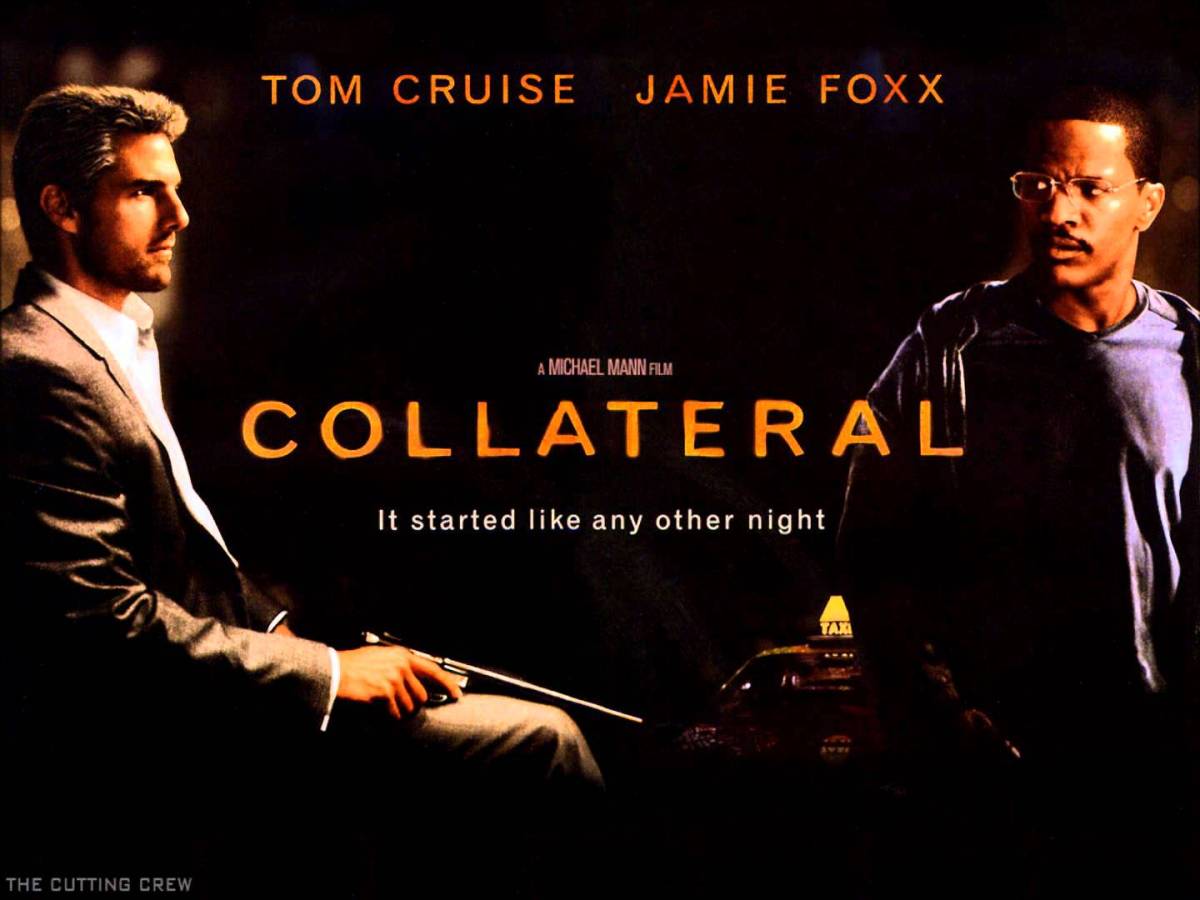
Reflections on "Collateral" (2004) as an existential thriller


Reflections on “Collateral” (2004)

Directed by Michael Mann

Written by Stuart Beattie

Starring Jamie Foxx and Tom Cruise


Although “Collateral” works perfectly well as an entertaining neo-noir suspense film, I am firmly of the opinion that our appreciation of the film is enhanced if it is also viewed as an existential thriller offering an intriguing representation of the conflict between existential humanity and nihilism, with Max and Vincent embodying these two viewpoints.

Max is a taxi driver and, in keeping with the principles of existentialism, he is keen to do his best to avoid negative impact on clients within his sphere of control and his working environment. He is fastidious, polite, helpful, respectful, thoughtful and resolutely honest. He takes pride in his work and he is independent and insular - when he closes his taxi door, he leaves behind the outside world and assumes responsibility for the service he provides to his clients. This is a professional service and there is little personal or meaningful engagement with clients as both driver and client are using one another for their mutual benefit, perhaps reflecting commercial and social interaction in society in general as we all contribute to society by offering services others can use without necessarily becoming involved in one another’s lives.

Max’s profession also incorporates the element of existential chance. He never knows who he will meet or where his encounters will take him and he generally remains fairly detached as he goes about his business.

However, after randomly picking up a fare, a lawyer named Annie, Max strikes up a conversation that leads to interest, empathy and engagement. Annie expresses social and professional anxiety which strikes a chord with Max and he offers words of comfort and advice while sharing his own thoughts and ambitions for the future. He reveals his strategy for coping with stress, which consists of contemplating a postcard of a rather symbolic island destination at times when he feels under pressure, tantamount to a form of meditation, and he insists on giving the card to Annie as her need is greater than his. He also discusses his idealistic plans for a limo hire company, aptly named Island Limos. Both Max and Annie are comforted by their encounter but neither seems willing or able to go from engagement to involvement.

We learn a lot about each of these characters in the course of their conversation but also, perhaps, about the place of the thoughtful individual in a career-driven society in which professional pressures to comply and achieve are almost unbearable and personal relationships are tentative and to be approached with caution and perhaps even apprehension.

Max’s next fare will provide a stark contrast in attitude and will present life-changing challenges to Max and his outlook on life.

 Once again underlining the role of chance and the impact of random choices on our lives, Vincent approaches Max for a ride and is ready to walk on to another cab when Max appears to ignore him, but Max calls him back and apologises for his reverie, clearly wishing to do his best for a potential client.

Max and Vincent chat pleasantly enough and their conversation is vaguely similar to the one Max has just had with Annie but it remains business-like and lacks engagement. Vincent is purposeful, confident, sociably curious and pleasant enough but he does not display the sympathy and empathy we witnessed in Max’s conversation with Annie. Vincent questions Max astutely about his career and Max reveals his dream plans for a limo company have been in the works for some twelve years, casting doubt on the probability of them coming to fruition. Vincent has thus gleaned the reality rather than the romanticised version shared with Annie. Vincent is intelligent, cunning and calculating as he gauges Max’s character and situation while apparently engaging in meaningless chat.

Vincent explains he has a series of five meetings to attend through the night and invites Max to take him to his various destinations. Max is reluctant as this breaks company policy but Vincent tempts him to break the rules by offering him money and alluding to his ambitions. Vincent has gathered background information and has shown an ability to read character, allowing him to manipulate Max to suit his own ends. We shall also discover in the course of an argument he has with Max’s boss that he has a masterful knowledge and understanding of rules, regulations and perhaps propriety, and while he has no respect for any of them, he displays the same talent for interpretation and manipulation of rules and as he did for reading character. He is thus willing and able to engineer situations and steer people who are compliant with traditional values and codes of conduct.

It transpires that Vincent has taken the ultimate step in terms of his lack of respect for traditional values and morality as he is, he reveals, a hitman and as such he presents, perhaps, the supreme expression of existential freedom in the form of nihilism. In the course of several philosophical conversations he has with Max, Vincent upholds the theories of chaos and amorality by suggesting there are no good reasons for anything, there is no grand scheme and we are all totally insignificant. He also affirms that those he kills probably deserve their fates but in any case he remains detached and coldly feels no guilt for his actions as he reduces everything to mere mechanical cause and effect, deductively concluding that while he fired a gun at his first victim of the night, it was the bullets and then the fall from an upper floor, for which he claims his victim was responsible, that killed him.

When Vincent’s first victim (of his five targets) falls on to Max’s taxi, again quite by chance, the impact affects not just the car but also Max’s life and outlook. Max is a man who does his best to fulfil his duties while diligently avoiding unnecessary involvement or participation in the lives and actions of others, yet he is now quite directly embroiled in murder and mayhem.

Vincent will force Max to become increasingly involved in his schemes, eventually compelling Max to abandon his neutrality, take a stance and act in accordance with his values.

Max is tethered to the steering wheel of his car in a side street while Vincent goes to dispatch his second victim and the dim view of human nature represented by Vincent is reinforced by the attitude and actions of passers-by who, drawn by Max’s efforts to attract attention, threaten Max and steal Vincent’s briefcase which contains equipment and information relating to his intended victims. Vincent arrives and turns the thieves’ own standard of morality on them, albeit taken to the extreme, as he cold-bloodedly shoots them in the street. Interestingly, Vincent tries to persuade Max that he is responsible for their deaths through his actions as he should have known how he, Vincent, would react. He clearly regards himself as an immutable force of nature bound to follow his path without question or doubt, while he regards Max’s humanity as a weakness, and one to be exploited.

Max is drawn more deeply into Vincent’s activities when he witnesses the murder of Vincent’s third victim close up and he struggles to cope with what he sees, applying his familiar code of morality, honour and truth, only to be told by Vincent that these things do not exist.

Threat is made personal and immediate when Max and Vincent visit Max’s mother in hospital. Vincent attempts to manipulate the situation but Max realises he must take action if he is to prevent Vincent from taking more lives. However, he cannot bring himself to cause harm to Vincent, so instead seizes his briefcase which contains his instructions, and destroys it and them.

Vincent must seek another copy of his mission documents from his employer and Max takes another step from neutrality toward participation when he is forced to play the part of Vincent and collect Vincent’s papers. Although he is initially ill at ease in his interview, when he realises he has nothing to lose as his very survival is in doubt, he takes on Vincent’s persona, adopts his attitude and repeats some of the ideas and words Vincent has used when speaking to him. In so doing, this frightened and careful man is briefly liberated and empowered as he feigns freedom from moral constraint and he obtains the information required, but he is also starting to gain the confidence, conviction and strength to act, as himself.

At a night club we witness the full impact of Vincent’s nihilism as he shoots more or less indiscriminately, causing numerous random deaths on top of the calculated and professional killings of his opponents, in an attempt to complete this part of his mission, as the police close in on him. Vincent saves Max’s life when he shoots a gunman about to fire on Max, and he kills a policeman who tries to lead Max to safety. He claims he did this because Max is good at what he does and they’re in this together but it is possible that, just as Max is being influenced by Vincent’s moral vacuum, Vincent has been touched, even if only slightly, by Max’s humanity and he wants to protect him, even if only to serve his own purposes.

However, the chaotic killing in the night club and the death of the policeman, combined with a beautifully constructed philosophical discussion with Vincent as they flee (in which Max confronts some home truths and comes to doubt the value and point of his own life), push Max over the edge and into the realm of action. He throws caution aside, drives his car at high speed and initiates a potentially lethal crash, leaving their combined destinies to fate.

Both survive and Vincent heads off to fulfil his contract by killing Annie who is due to launch a high-level prosecution the following day. When Max realises who Vincent’s final victim is to be, he sets off to warn and protect her.

There is an elaborate, exciting and suspenseful chase sequence which also incorporates several elements of chance, but the upshot is that Max takes action. He overcomes his fear in the face of Annie’s imminent demise and sets out to participate, however reluctantly, in whatever action is necessary to protect Annie, ending in a showdown with Vincent, a conflict Max wins largely by chance.

Fatally wounded in an underground carriage, with his dying breaths Vincent recalls a story of death on the metro he recounted earlier to Max, a sad and haunting tale that accentuated the insignificance of our lives, and in so doing he actually manages to add a touch of pathos to the end of our nihilistic hitman.

Set in the harsh, cold beauty of the cityscape of Los Angeles, whose myriad of roads may represent the continual random crossing of human lifepaths, the action takes place largely during the night, suggesting darkness of intent and lack of clarity, both visually and morally. It is no accident, then, that at the end Max and Annie head toward the rising sun whose light lends clarity and hope for the future.

This clash between nihilism and existential humanity is captured in a richly detailed and literate script by Stuart Beattie and directed with pace and attention to mood and atmosphere by Michael Mann. It presents philosophical opposition and argument yet it is intrinsically human and engaging.

In terms of performance, I thought all involved acquitted themselves admirably but Jamie Foxx and Tom Cruise did remarkably well and lent thought, depth and authenticity to their roles.

The film performed well at the box office on its release and it carries very respectable scores on review sites, yet it seems to have passed largely into obscurity, a fate this highly engaging, thought-provoking and richly observant film certainly does not deserve.


My thanks for taking the time to read this article. I hope you found it of some value.


Stuart Fernie


I can be contacted at stuartfernie@yahoo.co.uk .


HOME

BLOG